
Which compound is used in contraceptive pills?
- (a)Cholecalciferol
- (b)Levonorgestrel
- (c)Vanlaflexine
- (d)Cetrizine
Answer
Why
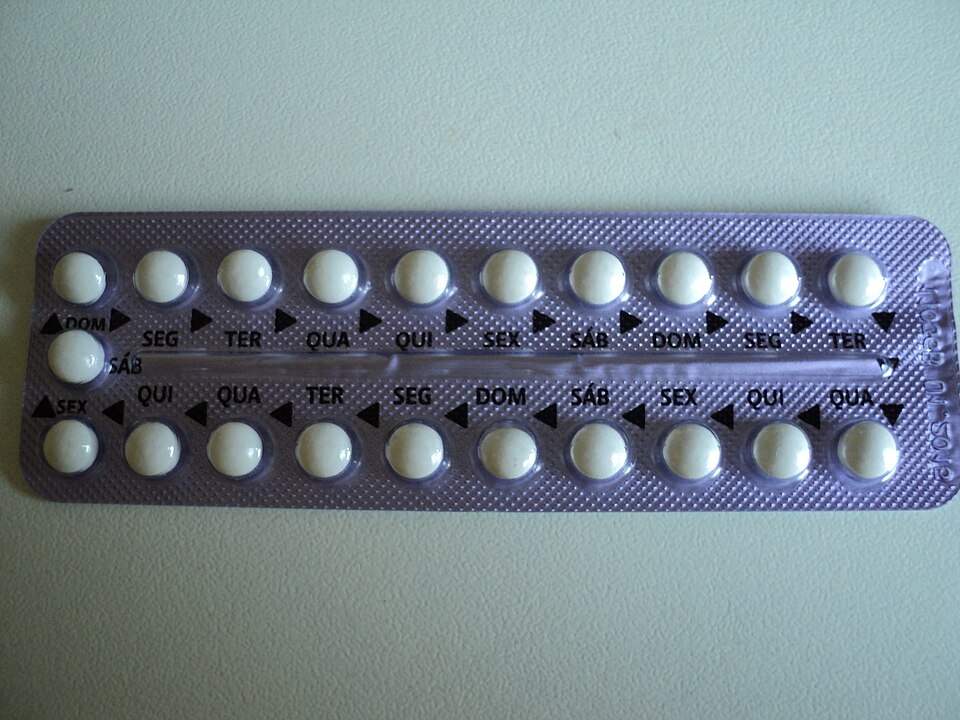
Correct — B, Levonorgestrel. It is a progestin — a laboratory-made analogue of the natural hormone progesterone — and it is the workhorse molecule of hormonal contraception worldwide. It was patented in 1960, introduced for medical use in 1970 in combination with the oestrogen ethinylestradiol, and it sits on the World Health Organization's Model List of Essential Medicines. It reaches contraceptive pills in three distinct ways, and the doses are worth keeping apart. In a combined oral contraceptive it is taken daily alongside ethinylestradiol, in monophasic strengths of 100–250 micrograms or triphasic strengths of 50, 75 and 125 micrograms. In a progestogen-only pill, the so-called mini-pill, it is used alone at roughly 30 micrograms a day. As an emergency contraceptive — the morning-after pill, sold over the counter in India — it is a single 1.5 mg dose, or two 0.75 mg doses twelve hours apart, taken within 72 hours of unprotected sex, with the effect falling the longer one waits. The same molecule is the active agent in hormonal intrauterine devices such as Mirena and in implants such as Jadelle. Its mechanism is straightforward: it prevents or delays ovulation, so no egg is released, and it thickens cervical mucus so that sperm cannot get through. The International Federation of Gynecology and Obstetrics states that the progestogen-only emergency pill works by inhibiting ovulation and thickening cervical mucus, that it is ineffective once ovulation has already occurred, and that it has not been found to act on implantation — which is why it is classed as a contraceptive and not as an abortifacient. The other three options are all real, widely used medicines, but each belongs to an unrelated therapeutic class.
Why the others are wrong
- (a)Cholecalciferol — Cholecalciferol is vitamin D₃ — the form the skin manufactures from a cholesterol derivative under ultraviolet-B light and the form sold as a supplement. Its function is to raise the absorption of calcium and phosphate from the gut; deficiency produces rickets in children and osteomalacia in adults. It is chemically a secosteroid, a broken-ring relative of the steroids, and that faint family resemblance to the steroid sex hormones is the only thing that makes it look plausible here. It is a nutrient, not a drug that acts on ovulation.
- (c)Vanlaflexine — This is the booklet's spelling of venlafaxine, a serotonin–noradrenaline reuptake inhibitor prescribed for major depressive disorder and for anxiety disorders. It raises the amount of serotonin and noradrenaline available at the synapse, so it acts on the brain and not on the reproductive axis, and it has no contraceptive property at all. Its only pull is that it sounds convincingly pharmaceutical to a candidate who recognises none of the four names.
- (d)Cetrizine — The booklet's spelling of cetirizine, a second-generation H1 antihistamine taken for allergic rhinitis, hay fever and urticaria. It blocks the histamine H1 receptor and is called non-sedating because, unlike the older antihistamines, it crosses the blood–brain barrier poorly. It is among the most familiar over-the-counter medicines in India, and that familiarity — not any relevance to reproduction — is exactly what makes it a tempting tick for a candidate guessing on name recognition.
Concept
Hormonal contraception works by imitating the body's own signal that ovulation is unnecessary. The menstrual cycle runs on a feedback loop: the hypothalamus releases GnRH in pulses, the anterior pituitary answers with FSH and LH, the ovary responds by maturing a follicle and secreting oestrogen and progesterone, and a surge of LH triggers ovulation. Supply a steady level of progestogen from outside — with or without an oestrogen — and the pulsing is damped, the LH surge does not occur, and no egg is released. Progestogens add two further barriers: they thicken cervical mucus so sperm cannot ascend, and they thin the endometrium. Vocabulary matters here, because examiners exploit it. Progesterone is the natural hormone; a progestin or progestogen is a synthetic one, and levonorgestrel belongs to the family derived structurally from testosterone. Pills come in two designs — combined pills carrying an oestrogen plus a progestogen, and progestogen-only pills used where oestrogen is unsuitable, as during breastfeeding — and the same hormones are delivered by injection, implant and intrauterine device as well. India adds a distinctive chapter to this chemistry: centchroman, or ormeloxifene, is a non-steroidal selective oestrogen receptor modulator taken twice weekly for the first twelve weeks and once a week thereafter, discovered at the Central Drug Research Institute in Lucknow and marketed from 1991 as Saheli.
This is a recognition question with four real drugs, and it is solved by matching each name to its therapeutic class rather than by knowing anything about contraception in particular. Two of the names are among the commonest medicines in any Indian household: cholecalciferol is the vitamin D on the chemist's shelf, and cetirizine is the anti-allergy tablet. Recognising either is enough to strike it out, because neither has any endocrine action on the reproductive axis. Venlafaxine, printed here as 'Vanlaflexine', is a psychiatric drug, and its unfamiliar spelling is the only thing that gives it a chance. That leaves levonorgestrel, and the single discriminating fact is buried in the name itself: the suffix -gestrel, like -gestin and -gest, marks a progestogen, the synthetic cousin of progesterone, and progesterone is the hormone of the luteal phase and of pregnancy. Learn the suffix and the question answers itself even if the molecule is new to you — just as -olol marks a beta blocker, -pril an ACE inhibitor, -statin a lipid-lowering drug and -cillin a penicillin. The trap is cholecalciferol, which reads as the most 'chemical' of the four and is genuinely a secosteroid, so a candidate who reasons only as far as 'contraceptives are steroids, this looks like a steroid' can talk themselves into it. Reasoning from the class is safe; reasoning from the look of a formula is not.
Key facts
- Levonorgestrel is a synthetic progestin patented in 1960 and introduced with ethinylestradiol in 1970; it is on the WHO Model List of Essential Medicines. Combined pills carry 100–250 micrograms (monophasic) or 50, 75 and 125 micrograms (triphasic); a progestogen-only pill uses about 30 micrograms a day.
- As emergency contraception it is a single 1.5 mg dose, or two 0.75 mg doses twelve hours apart, taken within 72 hours; effectiveness falls with delay. FIGO holds that it works by inhibiting or delaying ovulation and thickening cervical mucus, is ineffective once ovulation has occurred, and has not been found to affect implantation.
- India was the first country in the world to launch a National Programme for Family Planning, in 1952. The public-sector basket today includes the combined oral pill Mala-N, the injectable contraceptive MPA under the Antara programme, centchroman as Chhaya, IUCD 380A and Cu IUCD 375, condoms as Nirodh, emergency contraceptive pills, and sterilisation by minilap, laparoscopy or no-scalpel vasectomy.
- Centchroman (ormeloxifene) is India's own contribution — a non-steroidal selective oestrogen receptor modulator taken at 30 mg, twice weekly for the first twelve weeks and weekly after that, discovered at the Central Drug Research Institute, Lucknow, marketed as Saheli from 1991–92 and supplied free in the national programme as Chhaya, with a failure rate of about 1–2% in ideal use.
- Mission Parivar Vikas began in 146 high-priority districts across seven high-focus states — Bihar first among them, with Uttar Pradesh, Assam, Chhattisgarh, Madhya Pradesh, Rajasthan and Jharkhand — and now covers every district of those seven states and the six north-eastern states. NFHS-5 puts contraceptive use among currently married women aged 15–49 at 66.7%, modern-method use at 56.5% and unmet need at 9.4.
Study next
Common traps
- Picking cholecalciferol because vitamin D₃ is a secosteroid and contraceptive hormones are steroids — chemical family resemblance is not pharmacological function
- Treating the emergency pill as an abortion pill; FIGO's position is that levonorgestrel acts by preventing or delaying ovulation and has not been found to affect implantation, while the abortion pill mifepristone is a different drug in a different class
- Mixing up the doses — roughly 30 to 250 micrograms daily in a regular pill against a single 1.5 mg dose for emergency use, a difference of roughly six-fold against the top of that daily range and about fifty-fold against the mini-pill
BPSC likes straight drug-name recognition: four real medicines from four unrelated classes, and the candidate must match one name to one use. UPSC has never asked for a contraceptive by molecule name. It goes either one layer down to the endocrinology — which gland secretes progesterone, in 2000 — or one layer up to policy and demography, asking in 2005 whether India's family planning programme was the world's first and when Kerala reached replacement fertility, and in 2024 for the exact definition of the total fertility rate. Learn the molecule for BPSC and the programme for UPSC.
Related PYQs
Match List I (Endocrine glands) with List II (Hormones secreted) and select the correct answer using the codes given below the Lists: List I I. Gonads II. Pituitary III. Pancreas IV. Adrenal List II A) Insulin B) Progesterone C) Growth hormones D) Cortisone Codes:
- (a) I-C, II-B, III-D, IV-A
- (b) I-B, II-C, III-D, IV-A
- (c) I-B, II-C, III-A, IV-D
- (d) I-C, II-B, III-A, IV-D
Answer(c) I-B, II-C, III-A, IV-D
The hormone at the centre of both questions is the same one. UPSC asks which gland secretes progesterone; BPSC asks for the drug that imitates it. Levonorgestrel is a progestin, a synthetic stand-in for the gonadal progesterone this matching item tests, and knowing that link is what makes the -gestrel suffix meaningful rather than arbitrary.
Consider the following statements: 1. India is the second country in the world to adopt a National Family Planning Programme. 2. The National Population Policy of India, 2000 seeks to achieve replacement level of fertility by 2010 with a population of 111 crores. 3. Kerala is the first State in India to achieve replacement level of fertility. Which of the statements given above is/are correct?
- (a) 1 only
- (b) 1 and 2
- (c) 2 and 3
- (d) 1, 2 and 3
Answer(c) 2 and 3
The policy face of the same subject, and the reason statement 1 fails is worth carrying: India was the first country in the world to launch a national family planning programme, in 1952, not the second. Levonorgestrel-based pills are one of the methods that programme delivers, so the BPSC molecule and this UPSC policy item are two ends of one syllabus line.
Practice
- practice — not a real PYQ
Centchroman (ormeloxifene), the world's first non-steroidal weekly oral contraceptive, marketed in India as Saheli, was developed by
- (a)Central Drug Research Institute, Lucknow
- (b)Indian Institute of Science, Bengaluru
- (c)National Institute of Immunology, New Delhi
- (d)Bhabha Atomic Research Centre, Mumbai
Answer(a) Central Drug Research Institute, Lucknow — the CSIR laboratory that discovered ormeloxifene, launched commercially as Saheli in 1991–92 and supplied free under the national family planning programme as Chhaya. It is taken twice weekly for the first twelve weeks and once a week thereafter, unlike the daily steroidal pill. - practice — not a real PYQ
India launched the world's first National Programme for Family Planning in the year
- (a)1947
- (b)1952
- (c)1976
- (d)2000
Answer(b) 1952 — India was the first country in the world to adopt a national family planning programme. 1976 saw the first National Population Policy statement and the emergency-period sterilisation drive, and 2000 the National Population Policy that set replacement-level fertility as the goal.