
The art of crafting which item in Meerut has received a GI tag?
- (a)Sports Goods
- (b)Musical Instruments
- (c)Laddoo
- (d)Scissors
Answer
Why
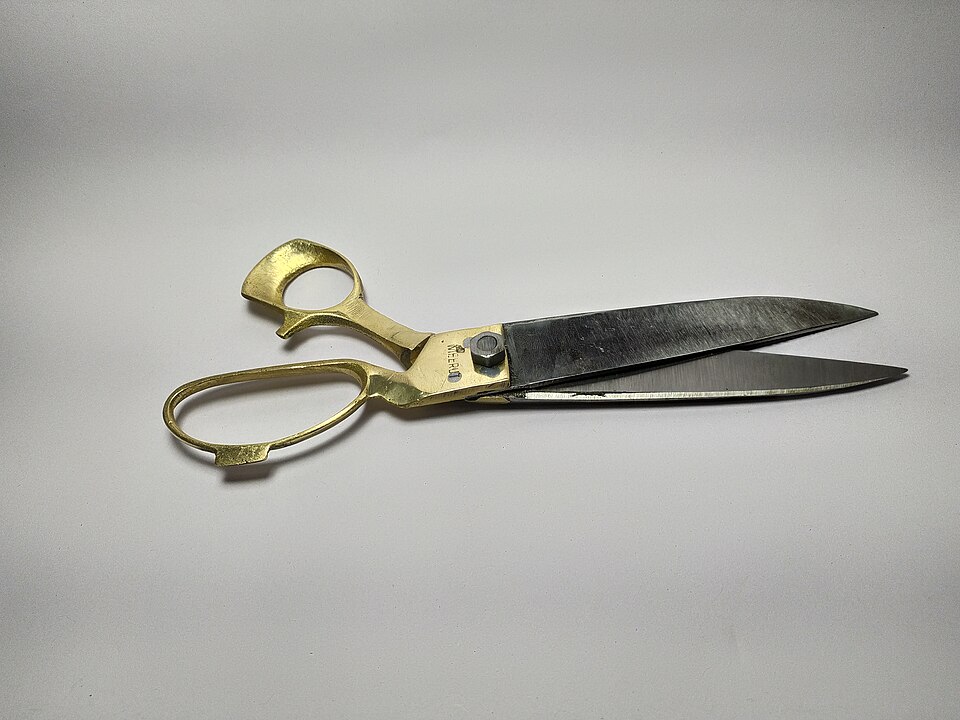
Correct — D, Scissors. The registered indication is 'Meerut Scissors', geographical indication application no. 389, granted in the 2014–15 GI year in the 'Manufactured' class for Uttar Pradesh. Meerut is traditionally known for handloom work and for its hand-forged scissors, and it is that older craft — not any of the city's larger modern industries — that carries the tag. Being precise here matters, because the other three options are not filler. Meerut genuinely is one of the two centres of sports-goods manufacturing in India, the other being Jalandhar; Sanspareils Greenlands (SG), Sareen Sports (SS) and BDM are all based in the city, and bats used by M. S. Dhoni and Virat Kohli have been made there. Meerut also produces a large share of India's musical instruments. Neither industry holds a geographical indication — in fact no sports-goods GI has been registered anywhere in India. That is the whole lesson of this question. A GI is not a certificate of fame or of output; it is a registered right under the Geographical Indications of Goods (Registration and Protection) Act, 1999, in force from 15 September 2003, protecting a name whose qualities or reputation are essentially attributable to its geographical origin. Somebody has to file an application, prove the link between the good and the place, and get the name entered on the register. Meerut's scissor-makers did that; its bat-makers and instrument-makers did not. The register settles it: 'Meerut Scissors' sits at application no. 389, and there is no sports-goods entry against Meerut or against Uttar Pradesh at all.
Why the others are wrong
- (a)Sports Goods — The most dangerous option on the paper, because the premise is true and only the conclusion is false. Meerut is one of India's two sports-goods hubs alongside Jalandhar, home to SG, Sareen Sports and BDM, and its bats have been used by international cricketers. But no sports-goods GI exists for Meerut — or, on the register, anywhere in India. Industrial fame is not a geographical indication.
- (b)Musical Instruments — Also a real Meerut industry — the city produces a large number of India's musical instruments — and also unregistered. It is the second true-but-irrelevant option on the list, and it works precisely because a candidate who has heard of Meerut's instrument trade treats that familiarity as evidence of a tag that was never applied for.
- (c)Laddoo — There is a famous GI-tagged laddu in India, but it belongs to Andhra Pradesh: the Tirupathi Laddu, application no. 121, registered in the 2009–10 GI year in the 'Food stuff' class. No sweet from Meerut is on the register. The option works by lifting a genuine food GI off one map and dropping it onto another.
Concept
A geographical indication is a sign used on goods that have a specific geographical origin and possess qualities or a reputation essentially due to that origin. India protects them through the Geographical Indications of Goods (Registration and Protection) Act, 1999, which came into force on 15 September 2003 and was enacted to meet the country's obligations under the WTO's TRIPS Agreement. Registration lasts ten years and is renewable, and the register covers agricultural goods, natural goods, manufactured goods, handicrafts and foodstuffs — so an industrial article such as a pair of scissors is fully eligible and sits in the 'Manufactured' class. The defining feature of a GI, and the sharpest contrast with a trade mark, is that it is a community right rather than an individual one: under section 24 a registered geographical indication cannot be transferred, mortgaged, assigned or licensed, except where an authorised user's rights pass by inheritance on death. India's first GI was Darjeeling tea, in 2004–05.
The trap here is that the obvious question and the actual question are different. 'What is Meerut famous for?' returns sports goods, and that answer is not wrong about Meerut — it is wrong about the register. What the question asks is which craft has been formally registered, and registration follows an application by a producer body, not economic size, which is why a GI so often attaches to the small traditional craft while the large modern industry has none. A second and more mechanical check is the class. GIs are grouped as agricultural, natural, manufactured, handicraft or foodstuff, and scissors are hand tools that fall squarely under 'Manufactured' — which is exactly the heading under which 'Meerut Scissors' is entered at application no. 389 in 2014–15. Look at Uttar Pradesh's other GIs and the pattern is unmistakable: Allahabad Surkha guava (no. 50, 2007–08), Lucknow Chikan craft (no. 119, 2008–09), Banaras brocades and sarees (no. 99, 2009–10), Kannauj perfume (no. 157, 2013–14), Kalanamak rice (no. 205, 2013–14). Every one is a named traditional craft or produce. None is a modern factory industry.
Key facts
- Meerut Scissors — GI application no. 389, registered in the 2014–15 GI year, class 'Manufactured', State Uttar Pradesh
- Meerut is one of the two centres of sports-goods manufacturing in India, the other being Jalandhar, with SG (Sanspareils Greenlands), Sareen Sports and BDM based there — yet no sports-goods geographical indication appears on the Indian register for Meerut, for Uttar Pradesh or for any other State
- The GI-tagged laddu is the Tirupathi Laddu of Andhra Pradesh, application no. 121, registered in 2009–10 under the 'Food stuff' class
- The Geographical Indications of Goods (Registration and Protection) Act, 1999 came into force on 15 September 2003 to meet India's TRIPS obligations as a WTO member; a GI is registered for ten years and is renewable, and Darjeeling tea was India's first GI, in 2004–05
- A GI is a community right: under section 24 a registered geographical indication cannot be transferred, mortgaged, assigned or licensed, except where an authorised user's rights pass by inheritance on death — the clearest line between a GI and a trade mark
Study next
Common traps
- Answering with what the town is famous for rather than what is on the register — Meerut's sports-goods industry is real and large, and still has no GI
- Assuming a GI covers only farm produce and handicrafts — the register has a 'Manufactured' class, and Meerut Scissors is registered in it
- Attaching the Tirupathi Laddu's GI to any other town's sweets — it is registered to Andhra Pradesh, application no. 121 of 2009–10
BPSC asks it as a single place-to-product match and hides the difficulty inside the option list, where two of the three wrong answers are genuine Meerut industries that simply never applied. UPSC almost always asks GIs as a multi-item verification — 'which of the following has/have been accorded Geographical Indication status' — or tests the law behind the tag, such as the difference between a trade mark and a GI, or which body's obligations the 1999 Act was passed to meet.
Related PYQs
Which of the following has/have been accorded 'Geographical Indication' status? 1. Banaras Brocades and Sarees 2. Rajasthani Daal-Bati-Churma 3. Tirupathi Laddu Select the correct answer using the code given below.
- (a) 1 only
- (b) 2 and 3 only
- (c) 1 and 3 only
- (d) 1, 2 and 3
Answer(c) 1 and 3 only
Exactly the same discipline — 'is this particular item actually on the GI register?' — and it hinges on the same kind of near-miss, a famous regional dish that has never been registered. It also names the Tirupathi Laddu, which is the real owner of the sweet GI that option (c) tries to relocate to Meerut.
In order to comply with TRIPS Agreement, India enacted the Geographical Indications of Goods (Registration & Protection) Act, 1999. The difference/differences between a “Trade Mark” and a Geographical Indication is/are 1. A Trade Mark is an individual or a company’s right whereas a Geographical Indication is a community’s right. 2. A Trade Mark can be licensed whereas a Geographical Indication cannot be licensed. 3. A Trade Mark is assigned to the manufactured goods whereas the Geographical Indication is assigned to the agricultural goods/products and handicrafts only. Which of the statements given above is/are correct ?
- (a) 1 only
- (b) 1 and 2 only
- (c) 2 and 3 only
- (d) 1, 2 and 3
Answer(b) 1 and 2 only
The law behind the BPSC answer, and it disposes of the one objection a student might raise — statement 3, that a GI attaches only to agricultural goods and handicrafts, is the false statement here. Manufactured goods are eligible, which is precisely how a pair of scissors comes to be registered under the 'Manufactured' class.
Practice
- practice — not a real PYQ
The Geographical Indications of Goods (Registration and Protection) Act, 1999 came into force in which year?
- (a)1999
- (b)2001
- (c)2003
- (d)2005
Answer(c) 2003 — the Act was passed in 1999 but came into force on 15 September 2003, and Darjeeling tea became India's first registered GI in 2004–05. The gap between the two years is what the question is testing: a statute's year of enactment and its date of commencement are routinely different, and here they are four years apart. - practice — not a real PYQ
Which one of the following pairs of a GI-tagged product and its State is correctly matched?
- (a)Tirupathi Laddu — Tamil Nadu
- (b)Meerut Scissors — Uttar Pradesh
- (c)Mithila Makhana — West Bengal
- (d)Kannauj Perfume — Madhya Pradesh
Answer(b) Meerut Scissors — Uttar Pradesh, registered as application no. 389 in 2014–15 under the 'Manufactured' class. The Tirupathi Laddu (no. 121, 2009–10) belongs to Andhra Pradesh and not Tamil Nadu; Mithila Makhana (no. 696, 2022–23) is Bihar's, not West Bengal's; and Kannauj Perfume (no. 157, 2013–14) is another Uttar Pradesh GI, not a Madhya Pradesh one.