
Who among the following achieved the distinction of being the first Indian mountaineer to scale Mount Everest and Mount Lhotse twice in one season ?
- (a)Sunil Rohilla
- (b)Satyadeep Gupta
- (c)Kaamya Karthikeyan
- (d)Premlata Agarwal
Answer
Why
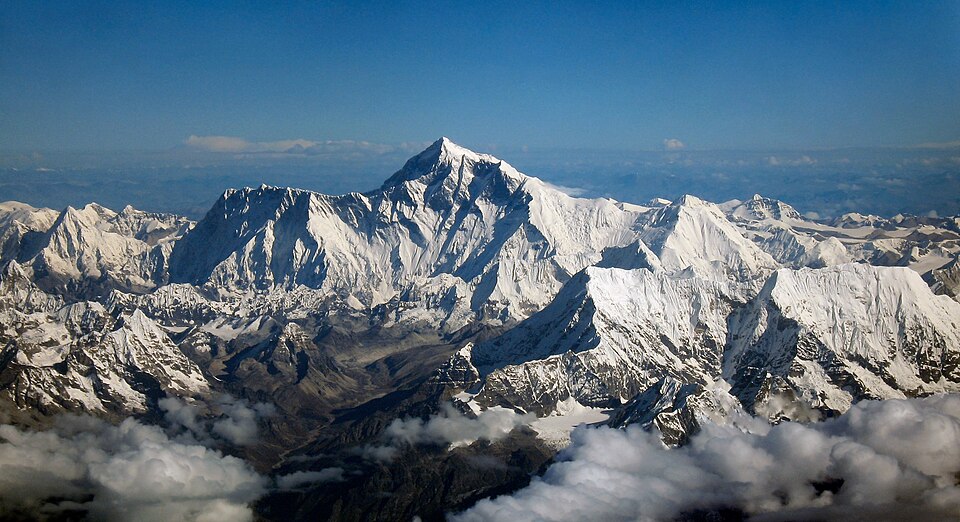
Correct: B, Satyadeep Gupta. In the spring season of 2024, Satyadeep Gupta summited both Mount Everest and Mount Lhotse, and then did it again within the same season: the feat his expedition organisers called a 'double dual ascent'. The agency report of 28 May 2024 is explicit: he became the first person to scale Everest and Lhotse twice in one season, and the first Indian to traverse the two peaks in 11 hours and 15 minutes. The first round was Everest on 21 May 2024 and Lhotse on 22 May; on the repeat he topped Lhotse (8,516 m) at noon and Everest (8,849 m) at 12:45 am, climbing with the guides Pastemba Sherpa and Nima Ungdi Sherpa. The stem, if anything, understates the record: he was not merely the first Indian but the first person in the world to complete the double dual ascent. Why the pairing is possible at all is worth understanding: Everest and Lhotse share a route almost to the top. Climbers on the Nepal side follow the same Khumbu Icefall, Western Cwm and Lhotse Face and part company only at the South Col, about 7,900 m, where one path turns up the South-East Ridge to Everest and the other continues to Lhotse's summit. That shared approach is what lets a fit, acclimatised climber take both peaks in a single push, and, in Gupta's case, twice over in one weather window.
Why the others are wrong
- (a)Sunil Rohilla: No account of the 2024 double dual ascent names him: the reports credit Satyadeep Gupta, climbing with Pastemba Sherpa and Nima Ungdi Sherpa. In a four-name current-affairs question, at least one option is usually a name with no connection to the record, and its function is to absorb the guess of a candidate who did not follow the season.
- (c)Kaamya Karthikeyan: The strongest decoy, because she set a genuine Everest record in exactly the same news cycle: on 20 May 2024, at sixteen, she became the youngest Indian and the second youngest girl in the world to summit Everest from the Nepal side. In December 2024 she went on to become the youngest female to complete the Seven Summits. A different record, one day earlier, on the same mountain.
- (d)Premlata Agarwal: A famous name from an earlier generation. Premlata Agrawal, born in 1963 in Darjeeling, summited Everest in 2011 at the age of 48 and became the first Indian woman to complete the Seven Summits; she received the Padma Shri in 2013 and the Tenzing Norgay National Adventure Award in 2017. Her records are about age and the Seven Summits, not about repeat ascents in a season.
Concept
Lhotse, at 8,516 metres the fourth-highest mountain on earth, is Everest's immediate neighbour, separated from it by the South Col. Because the standard south-side routes coincide from Base Camp through the Khumbu Icefall and up the Lhotse Face, an Everest permit-holder is already most of the way to Lhotse, and a Lhotse summit the day after an Everest summit has become a recognised objective for elite climbers. The limiting factor is not distance but the weather window: the pre-monsoon season on Everest opens for only a handful of days in late May when the jet stream lifts off the summit, and every expedition is queuing for the same window. Doing the pair twice inside one such season means descending, recovering and re-climbing above 8,000 metres (in the zone where the body cannot acclimatise and only deteriorates) which is why the achievement registered as a world first rather than an Indian one.
Current-affairs questions of this type are decided by pairing each name with the record it actually holds, because the paper deliberately fills the option set with real achievers. Here three of the four names belong to genuine Indian mountaineers and only the specific record separates them: Kaamya Karthikeyan is the youngest-summit story of 2024, Premlata Agrawal is the Seven Summits and oldest-Indian-woman story of 2011, and Satyadeep Gupta is the repeat-ascent story of May 2024. The discriminator to carry is the phrase 'twice in one season', which describes only one climber. A useful habit for the whole sports-and-awards section: when you read a record in the news, note the exact wording of the claim (youngest, oldest, fastest, first woman, first from a state, most repeats) because the exam turns that qualifier into the question.
Key facts
- Satyadeep Gupta completed the first double dual ascent of Everest and Lhotse in a single season in May 2024, reported as a world first, not merely an Indian one
- First round: Everest on 21 May 2024, Lhotse on 22 May 2024; on the repeat he summited Lhotse at noon and Everest at 12:45 am
- He was also reported as the first Indian to traverse Everest to Lhotse in 11 hours and 15 minutes
- Everest stands at 8,849 m and Lhotse at 8,516 m (the highest and the fourth-highest peaks on earth) and the two share a climbing route up to the South Col at about 7,900 m
- Kaamya Karthikeyan summited Everest on 20 May 2024 aged 16 and completed the Seven Summits in December 2024; Premlata Agrawal summited Everest in 2011 aged 48 and was the first Indian woman to complete the Seven Summits
Study next
Common traps
- Matching the right mountaineer to the wrong record: three of the four names here are real climbers with real but different achievements
- Assuming the newest Everest story of the year is the youngest-climber story; 2024 produced two separate Indian records within two days
- Reading 'first Indian' as the limit of the claim; Satyadeep Gupta's double dual ascent was reported as a world first
BPSC asks sports and adventure current affairs as a bare name recall with a precisely worded record in the stem, and packs the options with other genuine record-holders from the same year. UPSC almost never asks a single sports name; when it does touch this ground it uses a match list pairing distinguished persons with what they are known for, so the person-to-achievement mapping is the transferable skill.
Related PYQs
Match List-I (Distinguished Person) with List-II (Achievement/Known as) and select the correct answer using the codes given below the lists: List I (A) Guenter Grass (B) Trevor Huddleston (C) Dicky Dolma (D) Kim Campbell List II 1. First woman Prime Minister of Canada 2. Nobel Prize winner for literature 3. Leading campaigner against apartheid in South Africa 4. Youngest woman to climb the Mt. Everest 5. American violinist
- (a) A 5 B 3 C 2 D 1
- (b) A 2 B 3 C 4 D 1
- (c) A 5 B 3 C 4 D 2
- (d) A 2 B 1 C 3 D 5
Answer(b) A 2 B 3 C 4 D 1
The same skill in match-list form: pairing a climber with the precise Everest record she holds, where 'youngest woman to climb Mt Everest' is exactly the kind of qualifier the BPSC stem turns on.
Match List I with List II and select the correct answer using the codes given below the Lists: List I (Person) I. Santosh Yadav II. Oprah Winfrey III. Oscar Wilde IV. P. Sainath List II (Distinguished as) A) T.V. Host B) Journalist C) Mountaineer D) Dramatist and Author
- (a) I-C, II-A, III-D, IV-B
- (b) I-A, II-C, III-B, IV-D
- (c) I-C, II-A, III-B, IV-D
- (d) I-A, II-C, III-D, IV-B
Answer(a) I-C, II-A, III-D, IV-B
Santosh Yadav (the first woman in the world to summit Everest twice) appears here as the mountaineer to be identified, the same person-to-record matching the BPSC question demands two decades later.
Practice
- practice, not a real PYQ
Mount Lhotse, the peak climbed alongside Everest in the 2024 double dual ascent, is the
- (a)second highest mountain in the world
- (b)third highest mountain in the world
- (c)fourth highest mountain in the world
- (d)fifth highest mountain in the world
Answer(c) fourth highest mountain in the world: 8,516 m, behind Everest (8,849 m), K2 and Kangchenjunga. - practice, not a real PYQ
Which Indian mountaineer became, in May 2024, the youngest Indian to summit Mount Everest from the Nepal side ?
- (a)Premlata Agarwal
- (b)Kaamya Karthikeyan
- (c)Satyadeep Gupta
- (d)Arunima Sinha
Answer(b) Kaamya Karthikeyan: she summited on 20 May 2024 at the age of 16 and completed the Seven Summits later that year.