
Which of the following is a technopolis ?
- (a)London
- (b)Silicon valley
- (c)Moscow
- (d)Paris
Answer
Why
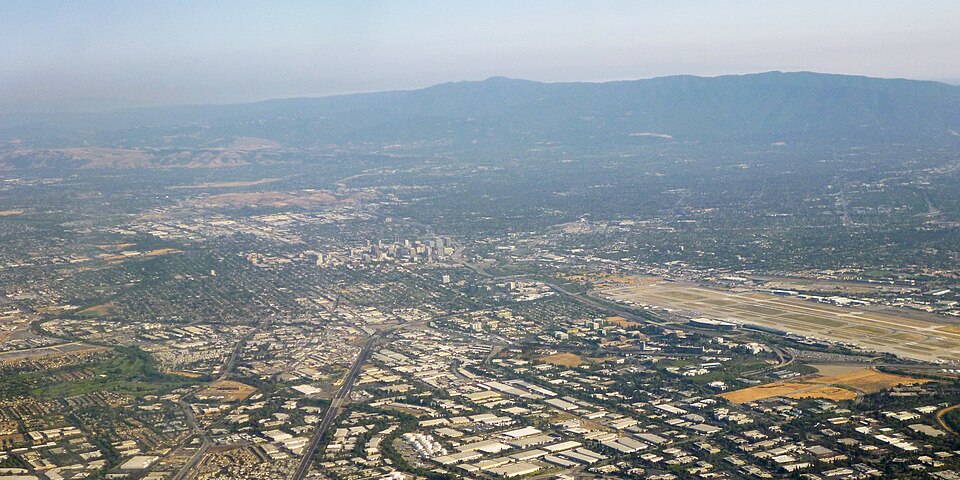
Correct: B, Silicon valley. A technopolis, or technopole, is not simply a big city with computers in it: economic geography uses the term for a planned or deliberately nurtured concentration of high-technology research and production, built around universities and research institutes, in which firms, laboratories, venture finance and skilled labour cluster and feed one another. Silicon Valley is the textbook case and is widely described as the world's leading technopole. It occupies the Santa Clara Valley in the San Francisco Bay Area of California, the belt running south-east from Palo Alto through Sunnyvale and Santa Clara to San Jose. Its origin is exactly the university-industry linkage the definition demands: Frederick Terman, professor and later dean of engineering at Stanford University, encouraged his students (among them William Hewlett and David Packard) to found companies nearby, and in 1951 helped establish the Stanford Research Park, which anchored the cluster. Semiconductors gave it the name; the informal movement of engineers between small firms, and the social networks that survived those moves, gave it the knowledge spillovers that later writers identified as the real engine. London, Moscow and Paris are ancient multifunctional capitals whose economies rest on administration, finance, culture and trade; each has technology districts inside it, but none was created as a technology pole and none is offered in the literature as the defining example.
Why the others are wrong
- (a)London: A global financial and administrative capital whose defining function is banking and services, not technology manufacture. Britain's recognised technology clusters lie outside the historic city: the 'Western Crescent' counties of Berkshire and Hampshire, Hertfordshire to the north, and 'Silicon Fen' around Cambridge: with East London Tech City a district within London rather than the city's identity.
- (c)Moscow: A political and industrial capital whose primacy comes from being the seat of government and the hub of a centralised transport network. Russia's attempt at a purpose-built technology city, Skolkovo, is a separate planned development on the city's outskirts, not Moscow itself, and nothing about Moscow's economic base fits the technopolis definition.
- (d)Paris: Another multifunctional primate capital. Tellingly, France's own technopoles are named separately from it: Sophia Antipolis near Nice, Cannes and Antibes was the first, and there are others near Rennes, Grenoble, Toulouse and Lyon. The Paris-Saclay cluster south of the city is a distinct planned science campus, which is precisely the point: the technopole is the campus, not the capital.
Concept
Settlement geography classifies towns by dominant function (administrative, commercial, port, industrial, mining, religious, garrison, resort) and the technopolis is the newest of these functional types, a product of the shift from manufacturing to quaternary, knowledge-based activity. Four conditions are usually required: a critical mass of research and development facilities; physical proximity to universities so that research and teaching reinforce each other; firms competent enough to demand and absorb that research; and investment willing to back start-ups and spin-offs. The term 'technopole' was coined by the geographer Allen J. Scott in 1990 for the fast-growing high-technology regions of Southern California, and was given wide currency by Manuel Castells and Peter Hall's 1994 study of technology complexes worldwide. Japan gave the idea its most systematic state expression: from 1983 its Ministry of International Trade and Industry designated more than twenty-five technopoles, among them Okayama, Hiroshima, Yamaguchi and Kumamoto.
The reasoning is a matter of applying the definition rather than recalling a list. Three of the four options are national capitals of long standing, and a capital is by definition multifunctional: it cannot be characterised by a single industry. The fourth is not a city at all in the administrative sense but a valley named after a semiconductor material, which is the clue: places nicknamed for a technology (Silicon Valley, Silicon Fen, Silicon Glen) are being described by their dominant function, which is exactly what the technopolis category means. If it helps, use the university test: a technopolis has an anchor institution whose research spills into the firms around it, as Stanford does at Palo Alto; London, Moscow and Paris have great universities but their urban economies were not built out of them.
Key facts
- Silicon Valley occupies the Santa Clara Valley in California's San Francisco Bay Area, running south-east from Palo Alto through Sunnyvale and Santa Clara to San Jose
- Frederick Terman of Stanford University helped establish the Stanford Research Park in 1951 and backed student ventures including that of William Hewlett and David Packard
- The term 'technopole' was coined by Allen J. Scott in 1990; Manuel Castells and Peter Hall's 1994 study popularised the comparative analysis of such complexes
- Japan's Ministry of International Trade and Industry designated more than 25 technopoles from 1983 onwards, including Okayama, Hiroshima, Yamaguchi and Kumamoto
- Sophia Antipolis, near Nice, Cannes and Antibes, was France's first technopole; Route 128 outside Boston is the other classic American example alongside Silicon Valley
Study next
Common traps
- Reading 'technopolis' as 'any large modern city': the term is functional, and a capital city is by definition multifunctional
- Confusing a technopolis with a Special Economic Zone or an industrial estate; the defining feature is research and university linkage, not a tax boundary
- Assuming a technopolis must be state-planned: Silicon Valley grew organically around a university, while Japan's technopoles were designated by government
BPSC asks terminology questions like this as one-line 'which of the following is a X' identifications, with three obvious decoys and no reasoning required beyond knowing the word. UPSC rarely tests the label itself; it asks the geography behind it: why an industry locates where it does, what quaternary activity is, or which factor explains a plant's siting, so the definition has to be understood rather than memorised.
Related PYQs
No directly related past PYQ was found.
Practice
- practice, not a real PYQ
Which one of the following is the correct description of a technopolis in settlement geography ?
- (a)A city whose primary function is administration of a national government
- (b)A planned high-technology complex organised around research institutions and universities
- (c)A port city specialising in the export of manufactured goods
- (d)A city that has grown beyond ten million inhabitants
Answer(b) A planned high-technology complex organised around research institutions and universities: the four usual conditions are R&D mass, university proximity, competent firms and start-up finance. - practice, not a real PYQ
Sophia Antipolis, often cited as an early European technopole, is located in
- (a)Germany
- (b)Italy
- (c)France
- (d)the Netherlands
Answer(c) France: it lies near Nice, Cannes and Antibes on the Côte d'Azur and was the first French technopole.