
Which type of rock is formed from cooling and solidification of lava ?
- (a)Sedimentary
- (b)Igneous
- (c)Metamorphic
- (d)Crystal
Answer
Why
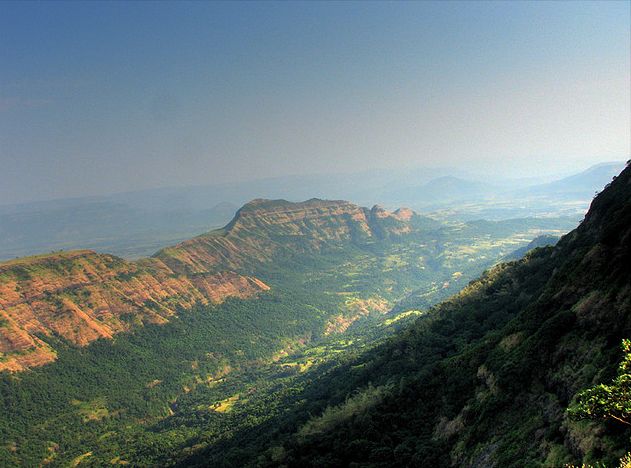
Correct: B, Igneous. Igneous is the class defined by exactly this process: rock that has solidified from a melt. The name says so: it is from the Latin ignis, 'fire'. The melt has two names depending on where it is. Below the surface it is magma; once it has erupted and is flowing in the open air it is lava. So a rock formed from cooling lava is not just igneous, it is the extrusive or volcanic sub-type of igneous rock, and the word 'lava' in the stem is what pins it there. That distinction shows up in the grain. Lava at the surface loses heat in hours or days, so its crystals have no time to grow and the rock comes out fine-grained (basalt, andesite, rhyolite), or with no crystals at all if it chills fast enough: obsidian is volcanic glass, and pumice is lava frothed by escaping gas until it is light enough to float. Magma cooling kilometres down takes thousands of years and grows crystals big enough to see, which is why granite and gabbro are visibly coarse. Basaltic magma is also hotter than silica-rich magma, erupting at roughly 1,100–1,250 °C against about 800–1,000 °C for rhyolitic melts, and the runnier basalt is what builds the great flood-basalt sheets. India's own Deccan Trap is precisely that (fissure-erupted basalt lava) and its weathering produces the black cotton soil (regur) of the Deccan. Igneous rocks are also, for the same reason, unstratified and fossil-free: nothing living survives 1,000 °C.
Why the others are wrong
- (a)Sedimentary: Sedimentary rock is built at or near the Earth's surface out of material that already existed: pre-existing rock is weathered, the debris is transported by the hydrological system, deposited, then compacted and cemented. Its signatures are the opposite of a lava flow's: it occurs in layers, and it is the only one of the three classes that contains fossils. Sandstone, shale, limestone and coal are sedimentary; none of them ever passed through a melt.
- (c)Metamorphic: Metamorphic rock is pre-existing rock altered in the solid state by heat, pressure or chemically active fluids: the crucial point being that it does not melt. Melting would put it back in the igneous box. Limestone becomes marble, sandstone becomes quartzite, shale becomes slate, granite becomes gneiss, coal becomes graphite. Heat is involved, which is why the option tempts, but transformation without melting is a different process from solidification from lava.
- (d)Crystal: There is no rock class called 'crystal'. A crystal is a solid whose atoms are arranged in an ordered, repeating lattice: a property that a mineral grain has or lacks, not a statement about how a rock originated. Granite is full of visible crystals and is igneous; marble is crystalline and is metamorphic. The option works as a decoy only because cooling melts really do grow crystals, so the word feels adjacent to the right answer.
Concept
Rocks are classified by origin, into three classes and only three. Igneous rocks solidify from a molten silicate melt. Sedimentary rocks accumulate from debris or chemical precipitates at the Earth's surface and are then compacted and cemented. Metamorphic rocks are earlier rocks of either class recrystallised in the solid state under heat and pressure. The three are linked in the rock cycle: igneous rock weathers into sediment, sediment lithifies into sedimentary rock, burial converts it to metamorphic rock, and further heating melts it back to magma, which cools to igneous rock again. Igneous rocks are called primary rocks because they are the only ones that do not need an earlier rock to exist first: everything else is ultimately recycled from them. Within the igneous class the split is by depth of cooling: extrusive or volcanic rocks freeze at the surface from lava, hypabyssal rocks freeze in shallow dykes and sills, and intrusive or plutonic rocks freeze at depth from magma.
The stem hands you the answer if you read one word carefully. 'Lava' means molten rock that has reached the surface, and a rock made by freezing a melt can only be igneous, that is the definition of the class, not a fact about it. Everything else in the option list fails on a definitional test rather than on a detail: sedimentary rock is deposited, not frozen; metamorphic rock is changed in the solid state, explicitly without melting; and 'crystal' is not a class of rock at all. The single most useful refinement is knowing that lava versus magma decides sub-type rather than type. Both give igneous rock; lava gives fine-grained or glassy extrusive rock, magma gives coarse-grained intrusive rock. BPSC has used the same trick in reverse before (describing a rock by its constituents or its age and asking which system it belongs to) so the habit worth building is to read the stem for the process word (cooling, deposition, heat-and-pressure) and let it select the class before you look at the options at all.
Key facts
- Magma is molten rock below the surface; lava is magma that has erupted. Both solidify to igneous rock, but lava cools fast and gives fine-grained or glassy rock, while magma cools slowly at depth and gives coarse-grained rock such as granite.
- Basaltic magma erupts at roughly 1,100–1,250 °C, hotter and much runnier than silica-rich rhyolitic magma at about 800–1,000 °C, which is why basalt spreads in thin sheets and rhyolite piles into domes.
- Sedimentary rocks are the only class that contains fossils and the only one characteristically stratified; both facts follow from being laid down grain by grain at the surface.
- Standard metamorphic pairs: limestone to marble, sandstone to quartzite, shale to slate, granite to gneiss, coal to graphite: heat and pressure, no melting.
- India's Deccan Trap is fissure-erupted basalt lava; its in-situ weathering produces the black cotton soil (regur) that UPSC has keyed as the product of 'fissure volcanic rock'.
- Bihar's own surface has very little igneous rock: as the 69th CCE tested, the plain is Quaternary alluvium laid by Himalayan and peninsular rivers, the south-western Kaimur hills are Vindhyan sandstone-limestone-shale country, the southern uplands expose Archaean granite and gneiss, and Tertiary rocks appear in West Champaran.
Study next
Common traps
- Reading 'crystal' as a rock class. Crystallinity is a description of atomic order in a mineral; it cuts across all three rock classes and names none of them.
- Treating metamorphic as 'the hot one'. Metamorphism uses heat but stops short of melting: once the rock melts and re-solidifies, it is igneous again.
- Assuming lava and magma give the same rock. They give the same class but different textures, and questions that hinge on grain size or on 'extrusive' expect that distinction.
BPSC asks the rock classes as bare one-line definitions: 'formed from cooling of lava', 'which rock contains fossils', or as a match-list tying a named Indian rock system to its constituents, as the 69th did with Bihar's Dharwar, Vindhyan, Quaternary and Tertiary systems. UPSC rarely asks the definition itself; it asks a multi-statement question about how a class behaves (are sedimentary rocks layered, do they hold fossils, is basaltic magma hotter) where you must judge three or four propositions at once.
Related PYQs
Consider the following statements: I. Most magmas are a combination of liquid, solid and gas. II. Water vapour and carbon dioxide are the principal gases dissolved in a magma. III. Basaltic magma is hotter than the silicic magma. Which of these statements are correct?
- (a) I only
- (b) I and II
- (c) II and III
- (d) I, II and III
Answer(d) I, II and III
The same subject one level deeper: what the melt behind an igneous rock actually is, and the temperature contrast between basaltic and silicic magma that decides how a lava flow spreads and what texture it freezes into.
Consider the following statements made about the sedimentary rocks: I. Sedimentary rocks are formed at Earth’s surface by the hydrological system. II. The formation of sedimentary rocks involves the weathering of pre-existing rocks. III. Sedimentary rocks contain fossils. IV. Sedimentary rocks typically occur in layers. Which of these statements are correct?
- (a) I and II
- (b) I and IV
- (c) II, III and IV
- (d) I, II, III and IV
Answer(d) I, II, III and IV
The mirror image of this question: it defines the class in option (a) by the four properties (surface formation, derivation from weathered rock, fossils and layering) that a lava-cooled rock cannot have.
The black cotton soil of India has been formed due to the weathering of
- (a) brown forest soil
- (b) fissure volcanic rock
- (c) granite and achist
- (d) shale and limestone
Answer(b) fissure volcanic rock
The Indian pay-off of the same fact: 'fissure volcanic rock' is the Deccan Trap basalt, lava that cooled at the surface, and the regur soil of the Deccan is what that igneous rock turns into on weathering.
Bihar’s geographical structure consists of rock systems. Match the rock systems with their descriptions : a. Dharwar rock system b. Vindhyan rock system c. Quaternary rock system d. Tertiary rock system 1. Created by the rapid deposition of alluvium by Himalayan and Peninsular rivers 2. Can be found in the West Champaran district 3. Part of the oldest Archaean rock system 4. Sandstone, limestone, dolomite, quartzite and shale are the main constituents of this rock system Select the correct answer using the codes given below.
- (a) a b c d 3 4 1 2
- (b) a b c d 1 3 2 4
- (c) a b c d 2 3 4 1
- (d) a b c d 4 2 3 1
Answer(a) a b c d 3 4 1 2
The 69th asked the same classification with Bihar's own geology as the material: you have to know that Vindhyan means a sedimentary pile of sandstone and limestone and that Quaternary means river alluvium, which is the identical read-the-process-word skill this 70th question tests on lava.
Practice
- practice, not a real PYQ
Which one of the following is an example of an extrusive igneous rock ?
- (a)Granite
- (b)Gabbro
- (c)Basalt
- (d)Quartzite
Answer(c) Basalt: it solidifies from lava at the surface, which is why it is fine-grained. Granite and gabbro cooled slowly at depth and are coarse-grained intrusive rocks, and quartzite is metamorphosed sandstone. - practice, not a real PYQ
Fossils are found chiefly in which one of the following types of rock ?
- (a)Igneous
- (b)Sedimentary
- (c)Metamorphic
- (d)Plutonic
Answer(b) Sedimentary: remains are buried and preserved as sediment accumulates in layers. Igneous rock forms from a melt hot enough to destroy any organism, and metamorphism deforms or erases whatever fossils the parent rock held.