
Match the List – I with List – II and choose the correct answer : List – I Organization I. Swadeshi Sevak Home II. United India House III. Yugantar Ashram IV. INA or Azad Hind Fauj List – II Headquarter a. Vancouver b. Seattle c. San Francisco d. Rangoon
- (a)I – d, II – c, III – b, IV – a
- (b)I – d, II – c, III – a, IV – b
- (c)I – a, II – b, III – c, IV – d
- (d)I – c, II – d, III – a, IV – b
Answer
Why
Correct: C, I – a, II – b, III – c, IV – d. The two lists have been printed in the same order, so the answer is the straight-through pairing, and each half of it is separately attested. The Swadesh Sevak Home belongs to Vancouver: it grew out of the Gurmukhi paper Swadesh Sevak, the companion edition to Taraknath Das's English journal Free Hindustan, and the standard accounts of the Ghadar Party record the Swadesh Sevak Home at Vancouver alongside the United India House at Seattle: the same sentence that fixes the second pair. Seattle was the natural second node: it was the port where Punjabi migrants such as Sohan Singh Bhakna landed (4 April 1909) and took mill work, and the United India House served them as a hostel and organising centre. The Yugantar Ashram is the best documented of the four: the Ghadar Party's headquarters and printing press at 436 Hill Street, San Francisco, from which the Ghadar weekly issued its first Urdu edition on 1 November 1913 and its first Punjabi edition on 9 December 1913. And Rangoon is the INA pairing: Subhas Chandra Bose took charge of the Indian Independence League and the revived Indian National Army at the Cathay Building, Singapore on 4 July 1943 and proclaimed the Provisional Government of Free India there on 21 October 1943, but in January 1944 he shifted his provisional capital to Rangoon to be near the front for the Imphal–Kohima campaign. Since Singapore is not on the list and Rangoon is, item IV can only pair with (d), and that alone eliminates options (b) and (d), both of which send the INA to Seattle.
Why the others are wrong
- (a)I – d, II – c, III – b, IV – a: Places the Swadesh Sevak Home in Rangoon and the Indian National Army in Vancouver: a complete inversion that puts a Burma-based wartime army on Canada's Pacific coast. It also moves the Yugantar Ashram from San Francisco to Seattle, which is the single most firmly documented pairing in the set.
- (b)I – d, II – c, III – a, IV – b: Keeps all four cities in play but scrambles every one of them: Rangoon for the Swadesh Sevak Home, San Francisco for the United India House, Vancouver for the Yugantar Ashram and Seattle for the Indian National Army. Not a single pair survives; the giveaway is the INA in Seattle, an American port it never operated from.
- (d)I – c, II – d, III – a, IV – b: Sends the Swadesh Sevak Home to San Francisco, the United India House to Rangoon and the INA to Seattle. It is designed to catch a candidate who correctly associates San Francisco with the Ghadar movement but attaches it to the wrong organisation: San Francisco is the Yugantar Ashram, not the Swadesh Sevak Home.
Concept
Between 1907 and 1914 a network of Indian revolutionary organisations grew up along North America's Pacific coast, sustained by Punjabi migrant labour in the timber mills and railways of British Columbia, Washington, Oregon and California. Taraknath Das started Free Hindustan and its Gurmukhi edition Swadesh Sevak from the Vancouver area; hostels and organising centres such as the Swadesh Sevak Home at Vancouver and the United India House at Seattle followed. The strands converged in the Hindustani Association of the West Coast, founded at Portland in 1912 with Sohan Singh Bhakna as president and Guran Ditt Kumar as general secretary, which was formally constituted as the Ghadar Party on 15 July 1913 at the Finnish Socialist Hall in Astoria, Oregon, with Har Dayal as general secretary. Its headquarters, the Yugantar Ashram at 436 Hill Street in San Francisco, housed the press that produced the Ghadar weekly. The Indian National Army belongs to a different theatre and a later war (South-East Asia, 1942 to 1945) and is placed in this list to test whether a candidate can hold two separate geographies apart.
The efficient route through a four-pair matching question is never to solve all four. Find the one pairing you are surest of, eliminate every option that contradicts it, and see what survives. Here the surest pairing is III – c: the Ghadar Party's San Francisco headquarters is one of the most repeated facts in modern Indian history, and UPSC has itself asked it directly. That single anchor kills options (a), (b) and (d) at once, because none of them puts the Yugantar Ashram in San Francisco. The second-surest anchor is IV: the INA operated in South-East Asia, so of the four cities on offer only Rangoon is even geographically possible, and that too eliminates (a), (b) and (d). The likely stumble is the Singapore reflex: the INA was revived and the Provisional Government proclaimed at Singapore, so a well-prepared candidate may hesitate at Rangoon. The resolution is chronological: Singapore is where the INA was organised in 1943, Rangoon is where its headquarters moved in January 1944 for the advance on Imphal and Kohima. Both are true of the INA; only one is on the list.
Key facts
- The Ghadar Party set up the Swadesh Sevak Home at Vancouver and the United India House at Seattle
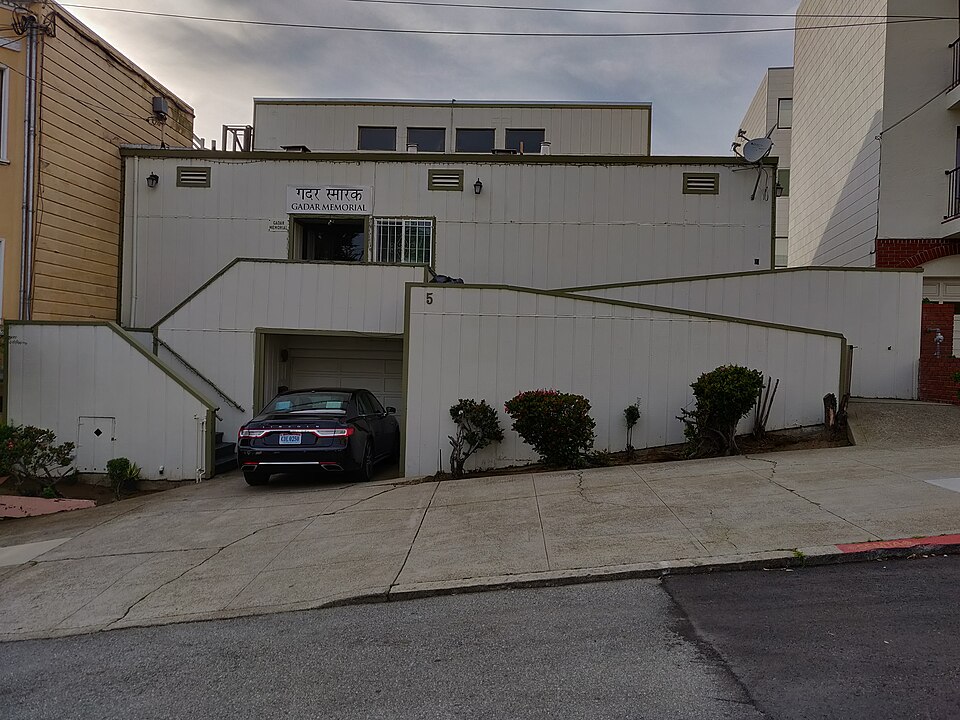
- The Yugantar Ashram: the Ghadar Party's headquarters and press: stood at 436 Hill Street, San Francisco; a Ghadar Memorial now stands at 5 Wood Street in the same city
- The Ghadar weekly's first Urdu edition appeared on 1 November 1913 and its first Punjabi edition on 9 December 1913; the party itself was constituted on 15 July 1913 at Astoria, Oregon
- Taraknath Das published Free Hindustan in English with a Gurmukhi edition titled Swadesh Sevak, from which the Vancouver home took its name; Guran Ditt Kumar, who reached Vancouver on 31 October 1907, helped produce it
- Subhas Chandra Bose took over the Indian Independence League and the INA at Singapore on 4 July 1943 and proclaimed the Provisional Government of Free India there on 21 October 1943, then moved his provisional capital to Rangoon in January 1944
- About 90 per cent of the Ghadar Party's membership were Punjabi Sikh men, roughly half of them veterans of the British Indian Army
Study next
Common traps
- Assuming the INA must pair with Singapore and then rejecting Rangoon: Singapore is where it was organised in 1943, Rangoon is where its headquarters moved in January 1944
- Knowing that San Francisco matters to the Ghadar story but attaching it to the wrong organisation; option (d) is built for exactly that error
- Trying to solve all four pairs when one certain pair plus elimination settles the question in seconds
BPSC likes four-by-four matching in modern history, and it usually builds the wrong options by rotating a correct set rather than by inventing false facts, so the candidate who can anchor one pair firmly can often discard three options at a stroke. UPSC has largely dropped the matching format from Prelims and asks the same content as a single crisp statement instead: what the Ghadr was, where the INA came into existence, who Shah Nawaz Khan and Prem Kumar Sehgal were.
Related PYQs
The Ghadr (Ghadar) was a
- (a) revolutionary association of Indians with headquarters at San Francisco
- (b) nationalist organization operating from Singapore
- (c) militant organization with headquarters at Berlin
- (d) communist movement for India’s freedom with headquarters at Tashkent
Answer(a) revolutionary association of Indians with headquarters at San Francisco
The exact pairing that anchors this matching question: the Ghadar movement's headquarters at San Francisco, which is where the Yugantar Ashram stood.
The Indian National Army (INA) came into existence in 1943 in
- (a) Japan
- (b) Burma
- (c) Singapore
- (d) Malaya
Answer(c) Singapore
The other half of item IV, and the reason candidates hesitate over Rangoon: the INA was organised at Singapore in 1943, and only moved its headquarters to Rangoon in January 1944.
Who got an opportunity to become Professor of Indian Philosophy in the University of California in 1911?
- (a) Sohan Singh Bhakna
- (b) Virendranath Chattopadhyay
- (c) Har Dayal
- (d) Shyamji Krishna Varma
Answer(c) Har Dayal
The same Pacific-coast revolutionary network on the next paper, seen through its people rather than its buildings: Har Dayal was the Ghadar Party's founding general secretary at the San Francisco headquarters this question asks you to locate.
Who assumed the command of the Indian National Army and gave famous battle cry, 'Chalo Delhi'?
- (a) Rash Behari Bose
- (b) Mohan Singh
- (c) Shah Nawaz Khan
- (d) Subhash Chandra Bose
Answer(d) Subhash Chandra Bose
Item IV of this list, asked in its own right a year later: the INA under Bose, whose headquarters moved to Rangoon in January 1944.
Practice
- practice, not a real PYQ
The Yugantar Ashram, headquarters of the Ghadar Party, was located in
- (a)Vancouver
- (b)Seattle
- (c)San Francisco
- (d)Portland
Answer(c) San Francisco: the Ashram at 436 Hill Street housed the party's office and the press that printed the Ghadar weekly from 1913. - practice, not a real PYQ
Subhas Chandra Bose shifted the provisional capital of Azad Hind to which city in January 1944 ?
- (a)Singapore
- (b)Rangoon
- (c)Tokyo
- (d)Moirang
Answer(b) Rangoon: the move brought the headquarters close to the front for the Imphal–Kohima campaign; Singapore was where the Provisional Government had been proclaimed on 21 October 1943.