
Which of the following is a major cause of air pollution ?
- (a)Burning of fossil fuels
- (b)Disposal of plastics
- (c)Excessive use of pesticides
- (d)Deforestation
Answer
Why
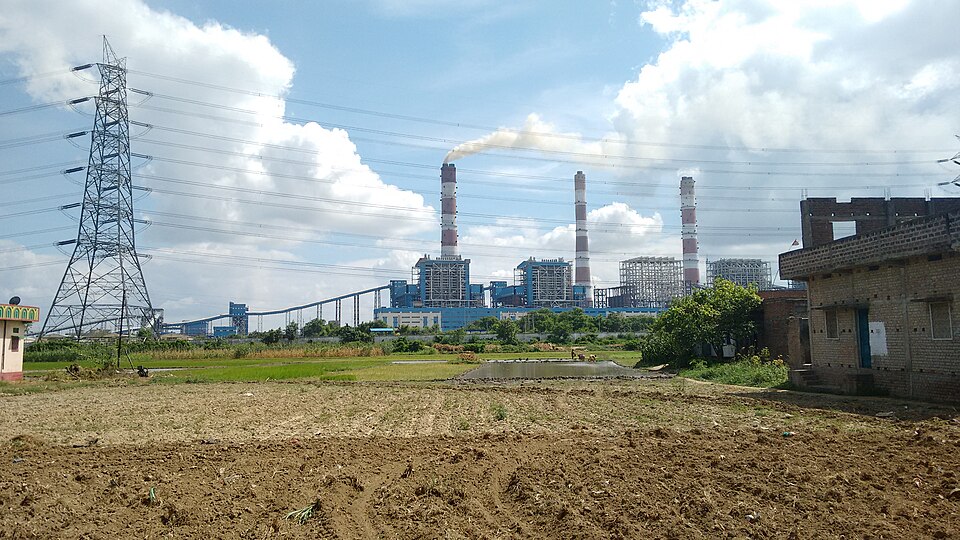
Correct: A, Burning of fossil fuels. Combustion of coal, petroleum products and natural gas in power stations, vehicles, industrial boilers, brick kilns and household stoves is the single largest human source of air pollution, and it is the only option here whose primary output goes straight into the atmosphere. What comes out of a flame is a standard list: sulphur dioxide from the sulphur in coal and diesel, oxides of nitrogen formed when atmospheric nitrogen is oxidised at high flame temperatures, carbon monoxide and unburnt hydrocarbons from incomplete combustion, and fine particulate matter: the PM2.5 and PM10 that the Air Quality Index actually measures. Those primary emissions then react in sunlight to make secondary pollutants: ground-level ozone and peroxyacetyl nitrate in photochemical smog, and sulphate and nitrate aerosols that fall out as acid rain. The dominance is not a textbook generalisation but a measured one: the United States Environmental Protection Agency attributes the largest share of sulphur dioxide emissions to power plants burning fossil fuels, and India's own Air Quality Index is built around carbon monoxide, nitrogen dioxide, sulphur dioxide, ozone, PM2.5, PM10, ammonia and lead, of which the combustion-derived species are the majority. The other three options are real environmental problems whose principal medium is soil, water or the biosphere rather than air; each touches air only through a secondary or indirect pathway, which is the distinction the word 'major' is testing.
Why the others are wrong
- (b)Disposal of plastics: Plastic disposal is chiefly a land and marine pollution problem: landfill accumulation, drain blockage, microplastics in rivers and oceans. It becomes an air problem only when plastic is set alight, which releases dioxins, furans and particulates; that is open burning, a different act from disposal, and it is why municipal rules prohibit it.
- (c)Excessive use of pesticides: Pesticide overuse is a soil and water contamination issue: residues in groundwater, runoff into ponds and rivers, and biomagnification up the food chain, the classic DDT story. Spray drift and volatilisation do put some pesticide into the air locally, but nothing on the scale or geographic reach of combustion emissions.
- (d)Deforestation: Felling forests removes a carbon sink and exposes soil to wind erosion, so it worsens dust and raises atmospheric carbon dioxide indirectly. But it emits no pollutant of its own unless the clearing is done by fire; it takes away an absorber rather than adding a source, which is a different mechanism from the one the question is after.
Concept
Air pollutants are classified two ways, and both classifications matter for questions like this. By origin, a primary pollutant is emitted directly (sulphur dioxide, oxides of nitrogen, carbon monoxide, particulate matter, unburnt hydrocarbons) while a secondary pollutant is formed in the atmosphere from primary ones, such as ground-level ozone and peroxyacetyl nitrate in photochemical smog, or the sulphuric and nitric acids of acid rain. By source, pollution is either natural (volcanic ash, forest fires, dust storms, pollen) or anthropogenic. Fossil-fuel combustion sits at the head of the anthropogenic list because it produces primary pollutants in every one of those chemical families at once, in enormous volume, and continuously. India measures the result through the National Air Quality Index, which reports eight pollutants (PM2.5, PM10, nitrogen dioxide, sulphur dioxide, carbon monoxide, ozone, ammonia and lead) on a 0 to 500 scale.
The trap in this question is that all four options are things a candidate has been taught are 'bad for the environment', so a reader who scans for a familiar villain can pick any of them. The discriminator is the medium. Ask of each option: what does it put into the air, directly, in large quantity? Only combustion answers. Plastic disposal loads land and water; pesticide overuse loads soil and water; deforestation removes a sink rather than adding a source. A second useful check is whether the option can explain the pollutants that are actually monitored (sulphur dioxide, nitrogen dioxide, carbon monoxide, PM2.5) and again only fossil-fuel burning does. Bihar makes this concrete rather than abstract: Patna, Gaya and Muzaffarpur were all named among the non-attainment cities under the National Clean Air Programme, and their winter pollution is driven by exactly this list (vehicle exhaust, diesel generator sets, brick kilns, biomass and coal burning) not by plastics or pesticides.
Key facts
- Fossil-fuel combustion releases sulphur dioxide, oxides of nitrogen, carbon monoxide, unburnt hydrocarbons and particulate matter: the primary pollutants from which photochemical smog and acid rain are then formed
- According to the United States Environmental Protection Agency, power plants burning fossil fuels are the largest source of sulphur dioxide emissions (asked directly in UPSC Prelims 2024)
- India's National Air Quality Index reports eight pollutants (PM2.5, PM10, nitrogen dioxide, sulphur dioxide, carbon monoxide, ozone, ammonia and lead) on a 0 to 500 scale
- The National Clean Air Programme was launched on 10 January 2019 by the Ministry of Environment, Forest and Climate Change, initially covering 102 non-attainment cities and now 131 cities including Million-Plus cities
- Patna, Gaya and Muzaffarpur are Bihar's non-attainment cities under the National Clean Air Programme; the programme's original target was a 20–30 per cent cut in PM2.5 and PM10 by 2024 against a 2017 base, later revised to 40 per cent by 2025-26
Study next
Common traps
- Picking whichever option sounds most environmentally harmful rather than the one whose pollutant actually enters the air
- Confusing burning plastic (which does pollute air) with disposing of plastic, which is a land and water problem
- Treating deforestation as an emission source; it removes a carbon sink, which is a different mechanism from adding a pollutant
BPSC asks environment at a definitional level (one clean stem, four familiar labels, and the work is in classifying the medium correctly) and it repeats the same handful of ideas across editions. UPSC almost never asks a bare 'which is a cause of pollution'; it asks for the largest measured source, the exact gases used in computing the Air Quality Index, or the guideline value of a named pollutant, so the same knowledge has to be held with numbers and attribution attached.
Related PYQs
According to the Environmental Protection Agency (EPA), which one of the following is the largest source of sulphur dioxide emissions ?
- (a) Locomotives using fossil fuels
- (b) Ships using fossil fuels
- (c) Extraction of metals from ores
- (d) Power plants using fossil fuels
Answer(d) Power plants using fossil fuels
The same claim, sharpened to a single pollutant and a named authority: fossil-fuel combustion is the dominant source, and UPSC asked it in the same year as this BPSC paper.
In the cities of our country, which among the following atmospheric gases are normally considered in calculating the value of Air Quality Index? 1. Carbon dioxide 2. Carbon monoxide 3. Nitrogen dioxide 4. Sulfur dioxide 5. Methane Select the correct answer using the code given below.
- (a) 1, 2 and 3 only
- (b) 2, 3 and 4 only
- (c) 1, 4 and 5 only
- (d) 1, 2, 3, 4 and 5
Answer(b) 2, 3 and 4 only
Names the pollutants that combustion actually produces and that India monitors (carbon monoxide, nitrogen dioxide and sulphur dioxide) which is the evidence behind calling fossil-fuel burning the major cause.
Match List-I with List-II List-I a) Perform, Achieve and Trade (PAT) scheme b) Mangrove Initiative for Shoreline Habitats & Tangible Incomes (MISHTI) c) The Lifestyle for Environment (LiFE) initiative d) National Clean Air Programme (NCAP) List-II 1) Introduced in the Union Budget for 2023-24 2) Aims to reduce emissions in energy-intensive industries 3) Launched in 2019 as a national-level strategy 4) Launched at COP26 in Glasgow in November 2021 a b c d
- (a) 1 3 2 4
- (b) 3 4 1 2
- (c) 2 1 4 3
- (d) More than one of the above
Answer(c) 2 1 4 3
The policy side of the same subject on the next BPSC paper: the National Clean Air Programme and the Perform, Achieve and Trade scheme both exist to cut exactly the combustion emissions this question identifies as the major cause.
Practice
- practice, not a real PYQ
Which of the following is a secondary air pollutant ?
- (a)Sulphur dioxide
- (b)Carbon monoxide
- (c)Ground-level ozone
- (d)Particulate matter
Answer(c) Ground-level ozone: it is not emitted directly but formed in the atmosphere when oxides of nitrogen and volatile organic compounds react in sunlight; the other three are emitted straight from combustion. - practice, not a real PYQ
The National Clean Air Programme (NCAP) was launched in which year ?
- (a)2015
- (b)2017
- (c)2019
- (d)2021
Answer(c) 2019: launched on 10 January 2019 by the Ministry of Environment, Forest and Climate Change, with 2017 as the base year for its particulate-reduction target.