
Which of the following statements is correct?
- (a)Natural gas is found in Dharwar rock formation.
- (b)Mica is found in Kodarma.
- (c)Cuddapah series is famous for diamonds.
- (d)Petroleum reserves are found in Aravalli hills.
Answer
Why
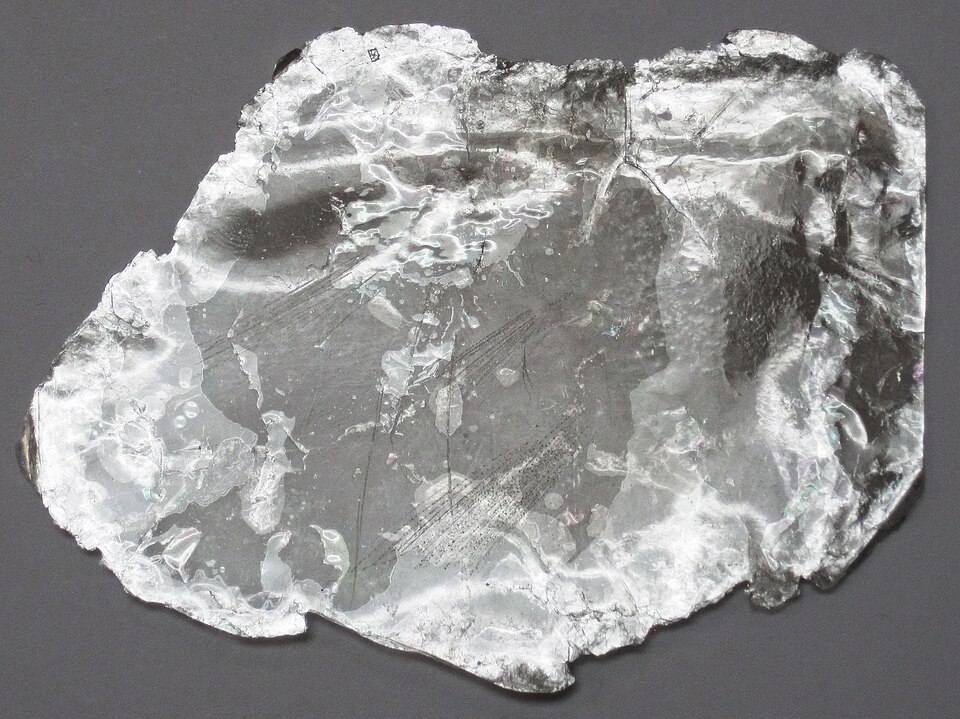
Correct: B, Mica is found in Kodarma. Kodarma (also spelt Koderma), in northern Jharkhand (territory that formed part of undivided Bihar until 15 November 2000) is the centre of the Kodarma–Giridih–Hazaribagh mica belt, the largest muscovite-bearing tract in India and long described as the mica capital of the country. The mica sits in coarse pegmatite veins intruding the Precambrian gneisses and schists of the Chhotanagpur plateau, and that is not an incidental detail: pegmatites are the only rocks that grow mica crystals large enough to be split into sheets, which is why sheet mica is a pegmatite mineral everywhere on Earth and never a sedimentary one. The grade won here is muscovite of such clarity that the trade names it "India ruby mica", and it is the material used as the dielectric in precision capacitors; India has long been the world's leading producer of sheet mica (about 3,500 tonnes in 2010 against Russia's 1,500, on USGS figures).
The Indian Bureau of Mines still records the belt exactly where the option puts it. IBM's Indian Minerals Yearbook 2023, reviewing Jharkhand, lists the state's mica occurrences as "mica in Giridih and Koderma districts" and names no others: two adjoining districts of the same pegmatite tract. The same volume's Bihar review shows what the 2000 bifurcation left behind: Bihar's one recorded mica occurrence is in Nawada district, while the state keeps 94 per cent of India's pyrite resources and has limestone as its only major mineral in production. The trade tables add a caution about what "mica" now means. India exported 1,15,898 tonnes of mica in 2022-23 worth about ₹556 crore, but just 1,433 tonnes of that was block mica; 80,825 tonnes was powder and 12,755 tonnes waste and scrap. Kodarma is still the mica capital of India, but what it ships today is overwhelmingly ground and scrap mica rather than the hand-split sheet that made the name.
There is a second reason to be confident. This is one of the stems on the 69th paper that BPSC lifted almost word for word from a UPSC prelims question. UPSC 2013, General Studies Paper I, Q63 asked candidates to judge three statements: "1. Natural gas occurs in the Gondwana beds. 2. Mica occurs in abundance in Kodarma. 3. Dharwars are famous for petroleum", and the official UPSC key is (b), 2 only. BPSC has taken the same three ideas, split them into standalone options and shuffled which false pairing appears, but the one surviving true statement is identical, down to the "Kodarma" spelling. An official Government of India key therefore stands behind this answer, even though the 69th CCE has no key of its own.
Why the others are wrong
- (a)Natural gas is found in Dharwar rock formation.: The Dharwars are Archaean: the craton formed between about 3.6 and 2.5 billion years ago, built of tonalite–trondhjemite–granodiorite gneisses, greenstone belts and granitoids, and the oldest continental crust in peninsular India. Hydrocarbons need three sedimentary things: an organic-rich source rock, a porous reservoir and an impermeable seal. Crystalline and metamorphosed rock of that age has none of them. What the Dharwars are genuinely famous for is iron ore, manganese and gold, including the Kolar and Hutti fields.
- (c)Cuddapah series is famous for diamonds.: In the rock-system table Indian exams use, diamonds belong with the Vindhyan, not the Cuddapah: the Panna belt of Madhya Pradesh runs about 80 km across the town, and NMDC's Majhgawan mine there is the country's only mechanised diamond mine. Even the Andhra diamonds that gave "Golconda" its name were won from the Banganapalle conglomerate of the Kurnool Group: a younger unit lying unconformably on top of the Cuddapah Supergroup, not within it. The Cuddapah's own reputation rests on limestone, barytes and asbestos. The option tempts because the Cuddapah basin and the Kurnool diamond tract are next-door neighbours in the same corner of Andhra Pradesh, and IBM's own listing makes the trap explicit. Its Indian Minerals Yearbook 2023 groups India's diamond fields into four tracts, the first of which is "the South Indian tract of Andhra Pradesh, comprising parts of Anantapur, Kadapa, Guntur, Krishna, Mahabubnagar and Kurnool districts": Kadapa the district is on the list, the Cuddapah the rock system is not the host. The weight of the resource lies elsewhere anyway. On National Mineral Inventory figures as on 1 April 2020, India's 31.72 million carats of diamond reserves and resources are 90.14 per cent in Madhya Pradesh against 5.74 per cent in Andhra Pradesh and 4.11 per cent in Chhattisgarh, and all 388 carats produced in 2022-23 came from three public-sector mines in Panna.
- (d)Petroleum reserves are found in Aravalli hills.: The Aravallis are a Precambrian folded belt of quartzite, schist, gneiss and marble: crystalline again, and again barren of hydrocarbons. Their wealth is metallic and industrial: the zinc–lead ores of Zawar and Rampura Agucha, the Khetri copper belt, Makrana marble, and mica in the Bhilwara–Ajmer tract. Rajasthan does produce crude oil, which is exactly what makes this option sound plausible, but it comes from the Barmer basin in the far west of the state: a young rift basin filled with Cenozoic sediments that lies beyond the range, not from the hills.
Concept
Indian physical geography sorts the subcontinent's rocks into a handful of "systems", and each carries a standard mineral signature that exams test directly. The Archaean gneisses and schists form the basement. The Dharwar system, roughly 3.6 to 2.5 billion years old and the oldest metamorphosed sedimentaries of the peninsula, is the richest metallic host: iron ore, manganese, gold, copper. The Cuddapah system, Proterozoic sediments resting on the Archaean of Andhra Pradesh, gives limestone, barytes, asbestos and building stone. The Vindhyan system, younger Proterozoic sandstone, shale and limestone, is the diamond-bearing one at Panna and supplied the red sandstone of the Red Fort and Fatehpur Sikri. The Gondwana system, Upper Carboniferous to Jurassic, holds the overwhelming bulk of India's coal. Hydrocarbons belong to none of these: petroleum and natural gas come from Tertiary and Mesozoic sedimentary basins: Mumbai High, Krishna–Godavari, Cauvery, Cambay, Assam–Arakan and Barmer. Mica, finally, is a pegmatite mineral, found in the Precambrian of the Chhotanagpur plateau, the Nellore belt of Andhra Pradesh and the Bhilwara–Ajmer belt of Rajasthan.
Three of the four options fall to a single principle rather than to four separately memorised facts: hydrocarbons need sediments. Option (a) puts natural gas in the Dharwar craton and option (d) puts petroleum in the Aravalli fold belt: both crystalline Precambrian terrain, and neither able to host oil or gas, because a source rock, a porous reservoir and a trap are sedimentary structures that metamorphism destroys. One test disposes of both. Option (c) then needs the rock-system table: diamonds sit with the Vindhyan and Panna in the exam's scheme, and even the Andhra stones come from the Kurnool Group lying above the Cuddapah rather than from the Cuddapah itself. What survives is (b), and it is independently secure: Kodarma is the one mineral locality in eastern India that every syllabus names. The habit worth building is to ask of any "mineral X in rock system Y" claim whether the rock named is crystalline or sedimentary; that question alone settles most of them, and it is faster than recall.
Key facts
- Kodarma (Koderma) district in northern Jharkhand (part of undivided Bihar until 15 November 2000) anchors the Kodarma–Giridih–Hazaribagh belt, India's largest muscovite mica tract and long called the mica capital of India
- Sheet mica forms only in pegmatites; the Kodarma pegmatites intrude the Precambrian gneisses and schists of the Chhotanagpur plateau
- The high-clarity muscovite of this belt is traded as "India ruby mica" and used as the dielectric in precision capacitors; India led world sheet-mica output with about 3,500 tonnes in 2010 against Russia's 1,500 (USGS)
- The Dharwar craton is Archaean, formed 3.6–2.5 billion years ago from TTG gneisses, greenstone belts and granitoids: the oldest crust in peninsular India, and a metallic province (iron ore, manganese, gold at Kolar and Hutti), not a hydrocarbon one
- India's diamonds come from the Panna belt of Madhya Pradesh, about 80 km across, where NMDC's Majhgawan mine is the only mechanised diamond mine in the country, and from the Mainpur kimberlite field of Raipur district, Chhattisgarh
- National Mineral Inventory figures as on 1 April 2020 put India's diamond reserves and resources at 31.72 million carats: 90.14% in Madhya Pradesh, 5.74% in Andhra Pradesh, 4.11% in Chhattisgarh; production in 2022-23 was 388 carats, every carat of it from Panna (IBM, Indian Minerals Yearbook 2023)
- Rajasthan's crude oil is produced from the Barmer basin in the far west of the state (a Cenozoic rift basin) and not from the Precambrian Aravalli hills
- India's other mica belts are the Nellore belt of Andhra Pradesh and the Bhilwara–Ajmer belt of Rajasthan; IBM's 2023 yearbook records Jharkhand's mica in Giridih and Koderma districts, and Bihar's single surviving occurrence in Nawada district
- India exported 1,15,898 tonnes of mica in 2022-23 worth about ₹556 crore, but only 1,433 tonnes of it was block (sheet) mica: 80,825 tonnes was powder and 12,755 tonnes waste and scrap (IBM foreign-trade tables)
Study next
Common traps
- Assuming an ancient rock system must be rich in every mineral. Hydrocarbons need a sedimentary basin; Precambrian antiquity produces the opposite of the conditions they require.
- Reading "Rajasthan produces oil" as "the Aravallis contain oil". The Barmer basin lies west of the range and is geologically unrelated to it.
- Pinning diamonds on the Cuddapah because Golconda is in Andhra Pradesh. The diamond-bearing Banganapalle conglomerate belongs to the younger Kurnool Group that rests on the Cuddapah Supergroup.
- Writing that Kodarma is in Bihar. The mica belt was Bihar's before the split, but Kodarma has been a Jharkhand district since 15 November 2000.
BPSC compresses the UPSC format into a single "which statement is correct" with four independent claims, which is the easier version: you need to recognise one true pairing rather than adjudicate three at once. UPSC prefers the statement set ("1. Natural gas occurs in the Gondwana beds…", 2013) or the two-column mineral–locality match (1997, 2004), and it likes to fire the trap directly, as in 2007 when it paired Balaghat with diamonds and Majhgawan with manganese and made both statements false. The underlying drill is identical: the mineral–locality–rock-system table.
Related PYQs
Consider the following statements : 1. Natural gas occurs in the Gondwana beds. 2. Mica occurs in abundance in Kodarma. 3. Dharwars are famous for petroleum. Which of the statements given above is/are correct?
- (a) 1 and 2
- (b) 2 only
- (c) 2 and 3
- (d) None
Answer(b) 2 only
The parent question. BPSC has recast UPSC's three statements as four standalone options: keeping the true one ("Mica occurs in abundance in Kodarma") verbatim, keeping the false hydrocarbon-in-crystalline-rock pairings, and adding a diamond claim of its own. UPSC's official key of (b), 2 only, is direct external corroboration for the BPSC answer, which is unusual on a paper that has no key.
Match List I with List II and select the correct answer by using the codes given below the lists: List I (Minerals) I. Coal II. Gold III. Mica IV. Manganese List II (Typical areas of Occurrence) A) Bhandara B) Karanpura C) Hutti D) Nellore Codes:
- (a) I-A, II-C, III-B, IV-D
- (b) I-B, II-C, III-D, IV-A
- (c) I-C, II-D, III-B, IV-A
- (d) I-B, II-A, III-D, IV-C
Answer(b) I-B, II-C, III-D, IV-A
The same mineral-to-locality table in match format, and it fills in the other half of the mica picture: UPSC's key pairs mica with Nellore, India's second mica belt, while gold goes to Hutti in the Dharwar country: the mineral the Dharwars really are famous for, as against the natural gas that option (a) of the BPSC item wrongly attributes to them.
Gold is found in which district of Bihar?
- (a) Gaya District
- (b) Jamui District
- (c) Nalanda District
- (d) Bhagalpur District
Answer(b) Jamui District
The same drill two years later, narrowed to Bihar: match a mineral to the district that actually holds it. Both questions are answered from the Indian Bureau of Mines state review, which lists Bihar's gold in Jamui and Bihar's mica in Nawada, and Jharkhand's mica in Giridih and Koderma. If you build that one-page mineral-to-district table for Bihar and its Jharkhand neighbours, you answer both items and most of what BPSC asks in this area.
Practice
- practice, not a real PYQ
The Gondwana rock system of India is most important as the source of which one of the following?
- (a)Diamond
- (b)Coal
- (c)Mica
- (d)Petroleum
Answer(b) Coal: the Gondwana beds hold the overwhelming bulk of India's coal reserves. Diamonds go with the Vindhyan (Panna), mica with Precambrian pegmatites, and petroleum with Tertiary and Mesozoic basins. - practice, not a real PYQ
Which one of the following is the principal mica-bearing belt of Andhra Pradesh?
- (a)Nellore
- (b)Anantapur
- (c)Kadapa
- (d)Guntur
Answer(a) Nellore: the Nellore–Gudur belt is Andhra Pradesh's mica tract, and India's second great mica belt after Kodarma–Giridih–Hazaribagh.