
The three-day celebration of Thadingyut Festival is celebrated in which country?
- (a)Chile
- (b)Nepal
- (c)Germany
- (d)Myanmar
Answer
Why
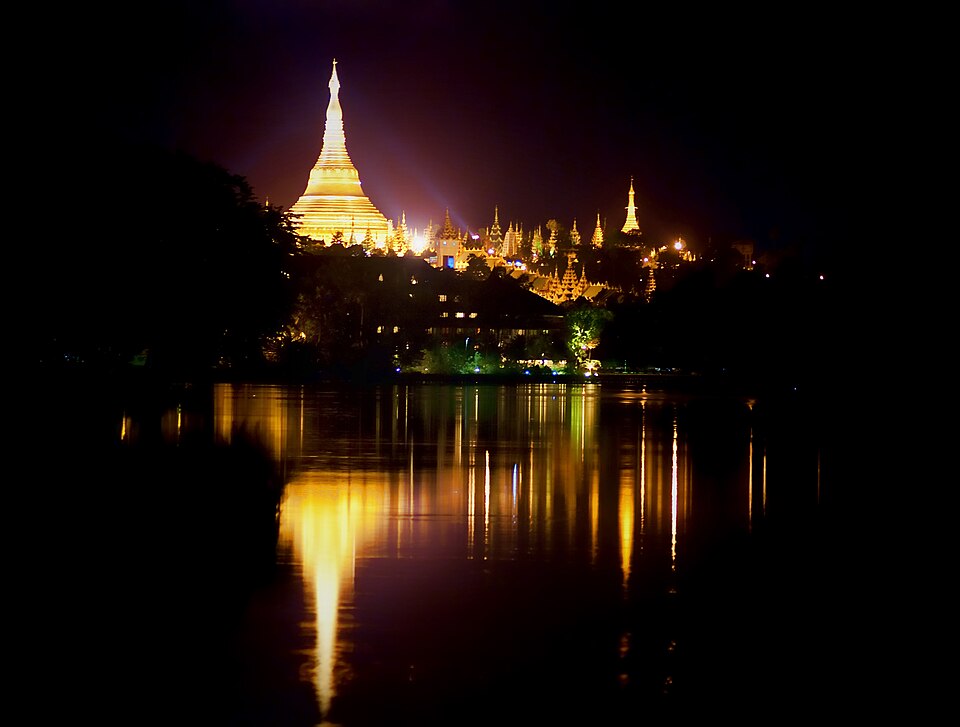
Correct: D, Myanmar. Thadingyut is the name of the seventh month of the Burmese lunar calendar, and the Thadingyut Festival: Myanmar's Lighting Festival: is held on the full-moon day of that month, which falls in October in most years. Its three days are fixed by that full moon: the day before it, the full-moon day itself, and the day after, which is exactly the "three-day celebration" the stem describes. The festival marks the end of Vassa, the three-month Buddhist rains retreat that begins on the full moon of Waso in July, during which monks stay in one monastery and lay observance is at its strictest. Religiously it welcomes the Buddha back to the human world after he spent those three Lenten months in the Tavatimsa heaven preaching the Abhidhamma to his mother Maya, who had died seven days after his birth and been reborn there; by tradition Sakra, the ruler of that heaven, had three stairways built for the descent, and the lamps, candles and coloured bulbs strung along Burmese streets, houses and pagodas at Thadingyut stand for those three stairways. It is the second most popular festival in Myanmar after Thingyan, the New Year water festival. The customs are unmistakably Burmese: offerings and homage at pagodas and monasteries, fasting on the full-moon day by some, zat pwe musical plays and food stalls in the streets, and gadaw: young people paying respect to parents, teachers and elders, asking forgiveness for the year's wrongdoings and receiving a blessing in return. Individual towns add their own water rites: at Dawei alms bowls filled with flowers, oil lamps and joss sticks are set adrift at sea to Shin Upagutta, and at Shwegyin coloured oil lanterns are floated down the Shwegyin River, a practice traced to the Konbaung period and dated locally to 1851.
Why the others are wrong
- (a)Chile: Chile is a South American country with a Roman Catholic majority and no Theravada Buddhist tradition of its own, so an end-of-Buddhist-Lent festival has no home there. Its own great national celebration is Fiestas Patrias in September, which marks the first steps towards independence from Spain. Nothing in Chilean religious or civic life is dated by a Burmese lunar month.
- (b)Nepal: This is the designed trap and the only distractor a prepared candidate can fall for, because Nepal is genuinely a Buddhist-linked country: Lumbini, the Buddha's birthplace, is in Nepal, and Nepal really does hold a multi-day festival of lights, Tihar. But Tihar runs five days, not three, and it belongs to the Hindu calendar; Nepal dates its festivals by the Bikram Sambat months, in which no month called Thadingyut exists. The name itself is Burmese and settles the matter.
- (c)Germany: Germany is a European country with Christian and secular traditions and no indigenous Theravada Buddhist calendar. It is in the option set because it has a famous October festival (Oktoberfest in Munich) and Thadingyut usually falls in October, so a candidate matching on month alone can be pulled towards it. Oktoberfest is a Bavarian folk and beer festival with no religious content and no fixed relation to a full moon.
Concept
Myanmar is a Theravada Buddhist country whose public calendar runs on the Burmese lunar-solar calendar, with months such as Tagu, Kason, Waso, Thadingyut and Tazaungmon; most national festivals are pinned to a full-moon day of one of those months. The rhythm of the religious year is set by Vassa, the rains retreat: it opens on the full moon of Waso, runs for three months while monks remain in one place, and closes on the full moon of Thadingyut. The same event is observed across the Theravada world under different names (Vap Full Moon Poya in Sri Lanka, Wan Ok Phansa in Thailand, Boun Suang Huea in Laos) and has a Mahayana-Vajrayana counterpart in Lhabab Duchen in Tibet and Bhutan. Myanmar then follows Thadingyut with a second festival of lights, Tazaungdaing, in the next month. Knowing that a Burmese month name is embedded in the festival's name is the whole question. For a General Studies paper the country itself is worth holding alongside the festival: Myanmar is India's eastern neighbour, sharing a land border with four north-eastern States (Arunachal Pradesh, Nagaland, Manipur and Mizoram) as well as a maritime boundary in the Bay of Bengal; it also borders Bangladesh, China, Laos and Thailand. Its administrative capital is Nay Pyi Taw, shifted there in the mid-2000s from Yangon, which remains the largest city and the site of the Shwedagon Pagoda; Bagan's temple plain is its best-known Buddhist landscape. Almost every India–Myanmar item in an exam sits on one of three legs: this border and its insurgency and trade dimensions, the connectivity projects that cross it, and the Buddhist heritage the two countries share.
The answer is inside the word, and that is the transferable lesson. Festival questions of this kind are rarely a memory test of the festival itself; they are a test of whether you can recognise the language a name comes from. 'Thadingyut' is a Burmese month, in the same family as Thingyan, Tazaungdaing and Waso, and none of the other three countries in the option set uses that calendar. Work it in two strokes. First, the religious filter: the stem describes a festival, and of Chile, Nepal, Germany and Myanmar only two have a Buddhist claim of any kind, so Chile and Germany fall away at once even if the name means nothing to you. Second, the calendar filter: between Nepal and Myanmar, Nepal is Hindu-majority and dates its festivals by Bikram Sambat months (Kartik, Mangsir), and its light festival, Tihar, is five days; Myanmar dates its festivals by Burmese lunar months, and Thadingyut is one of them. The single discriminating fact, then, is that Thadingyut is a month name, not a deity, a place or a rite, which fixes the country before you know anything about the celebration.
Key facts
- Thadingyut is the seventh month of the Burmese calendar; the Thadingyut Festival is held on its full-moon day, usually in October, and lasts at least three days: the day before the full moon, the full-moon day and the day after.
- It marks the end of Vassa, the three-month Buddhist rains retreat that begins on the full moon of Waso, and welcomes the Buddha's descent from the Tavatimsa heaven, where he had preached the Abhidhamma to his mother Maya; the lights represent the three stairways built for that descent.
- It is the second most popular festival in Myanmar after Thingyan, the New Year water festival, and is marked by illuminated streets and pagodas, offerings to monks, fasting by some on the full-moon day, and gadaw: paying respect to parents, teachers and elders and seeking their forgiveness.
- The same end-of-Lent full moon is observed as Vap Full Moon Poya in Sri Lanka, Wan Ok Phansa in Thailand, Boun Suang Huea in Laos and Lhabab Duchen in Tibet and Bhutan: one Buddhist event under four names.
- The descent the festival celebrates is traditionally located in India at Sankissa in Farrukhabad district, Uttar Pradesh: one of the eight great Buddhist pilgrimage places, where Ashoka's pillar survives as an elephant capital.
- Bihar's own link with Burmese Buddhism is concrete: Burmese rulers undertook restoration work at the Mahabodhi Temple complex at Bodh Gaya in the 13th century and again in the 19th, and King Kyansittha had sent the first Burmese mission to the temple centuries earlier.
- Local variants of the festival: at Dawei, alms bowls of flowers, oil lamps and joss sticks are floated out to sea to Shin Upagutta; at Shwegyin, coloured oil lanterns are set adrift on the Shwegyin River in a Konbaung-era tradition locally dated to 1851.
- Myanmar shares its land border with four Indian States (Arunachal Pradesh, Nagaland, Manipur and Mizoram) and with Bangladesh, China, Laos and Thailand; its capital is Nay Pyi Taw and its largest city Yangon, where the Shwedagon Pagoda stands.
Study next
Common traps
- Choosing Nepal because it is the Buddha's birthplace: the Buddhist connection is real, but the calendar and the festival's name are Burmese
- Matching on the month: several countries hold famous October festivals, and Oktoberfest is not a religious observance at all
- Assuming a 'festival of lights' must be Diwali or Tihar: Thadingyut and Tazaungdaing are Myanmar's own lighting festivals, separated by a month
BPSC asks foreign festivals as one-line country-matching recall, usually because the festival was in the news that year, and keeps the number in the stem: 'three-day': as a quiet extra clue. UPSC almost never names a foreign festival; when it enters this territory it uses a pairs format, matching a community or a tradition to a country or a State and asking how many pairs are correct, so the skill is the same but the penalty for a half-memory is heavier.
Related PYQs
Consider the following pairs: Community sometimes mentioned in the news — In the affairs of 1. Kurd — Bangladesh 2. Madhesi — Nepal 3. Rohingya — Myanmar Which of the pairs given above is/are correctly matched?
- (a) 1 and 2
- (b) 2 only
- (c) 2 and 3
- (d) 3 only
Answer(c) 2 and 3
The same skill of attaching an unfamiliar name to the right country, and it even uses the same two candidates (Nepal and Myanmar) that this BPSC question makes you choose between.
Chapchar Kut is a festival celebrated in the state of
- (a) Arunachal Pradesh
- (b) Assam
- (c) Mizoram
- (d) Sikkim
Answer(c) Mizoram
Identical one-line format (a festival name and four places) solved the same way, by recognising which language and community the name belongs to rather than by recalling the festival.
Afrikaners indicate the people :
- (a) Of Indo-African descent in the U.S.
- (b) Indigenous tribal communities in Africa
- (c) The white minority group in South Africa
- (d) More than one of the above
Answer(c) The white minority group in South Africa
BPSC repeating the same move two years later: a foreign cultural term whose country you are expected to fix from the word itself, with plausible wrong homes supplied as distractors.
Practice
- practice, not a real PYQ
The Thadingyut Festival of Myanmar marks the end of which observance?
- (a)Thingyan, the Burmese New Year
- (b)Vassa, the three-month Buddhist rains retreat
- (c)The Tazaungdaing balloon festival
- (d)The Kathina robe-offering month
Answer(b) Vassa, the three-month Buddhist rains retreat: it begins on the full moon of Waso and closes on the full moon of Thadingyut. - practice, not a real PYQ
The Buddha's descent from heaven after preaching to his mother: the event that Myanmar's Thadingyut celebrates: is traditionally located at which site in India?
- (a)Sarnath, Uttar Pradesh
- (b)Sankissa, Uttar Pradesh
- (c)Vaishali, Bihar
- (d)Kushinagar, Uttar Pradesh
Answer(b) Sankissa, Uttar Pradesh: in Farrukhabad district, one of the eight great Buddhist pilgrimage places, where the elephant capital of an Ashokan pillar survives.