
“The Indian National Congress was founded on the basis of safety valve theory, to protect the British Government from threats.” Which leader said that?
- (a)C. Rajagopalachari
- (b)Lala Lajpat Rai
- (c)Bipin Chandra Pal
- (d)None of them
Answer
Why
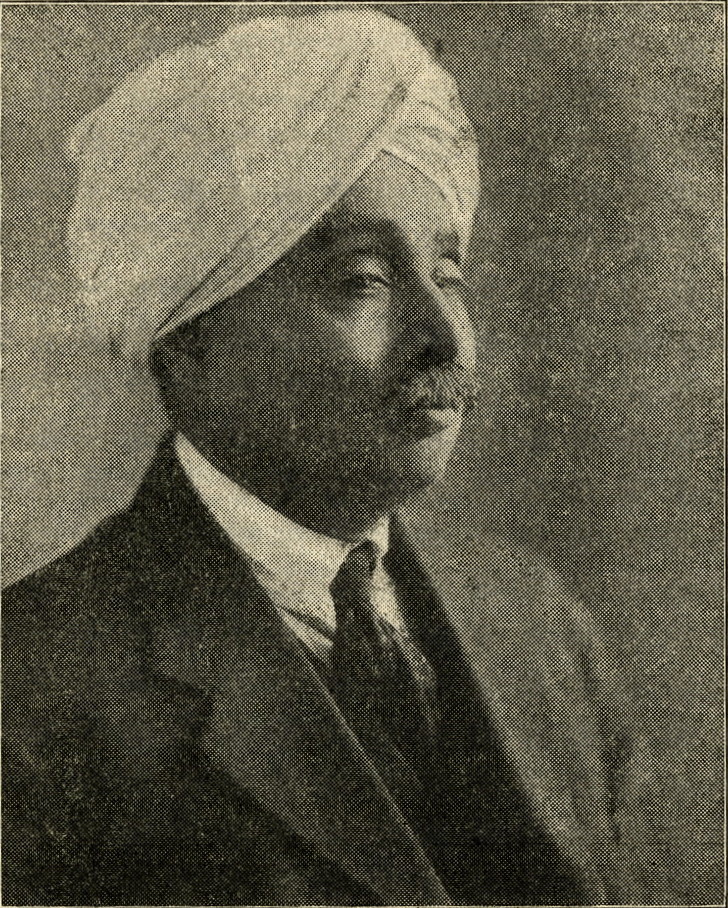
Correct: B, Lala Lajpat Rai. The claim comes from his book Young India: An Interpretation and a History of the Nationalist Movement from Within, published in New York by B. W. Huebsch in 1916, in the chapter on India from 1857 to 1905. The section headings alone give the argument away: 'Indian National Congress an English Product', 'Hume, a Lover of Liberty', 'Congress to Save British Empire from Danger', 'Congress Overawed'. On printed page 122 Lajpat Rai writes that 'it is an undisputed historical fact, that the idea of the Indian National Congress was a product of Lord Dufferin's brain; that he suggested it to Mr. Hume, and that the latter undertook to work it out'. On page 124 he says of Dufferin that 'what he evidently aimed at was a sort of an innocuous association which should serve more as a "safety valve" than as a genuine Nationalist organisation for national purposes', and on page 125 he quotes A. O. Hume's own reply to Sir Auckland Colvin, Lieutenant-Governor of the North-Western Provinces, conceding that 'a safety valve for the escape of great and growing forces generated by British connection, was urgently needed, and no more efficacious safety valve than the Congress movement could possibly be devised'. His conclusion, quoted by Bipan Chandra, is blunt: the Congress 'was started more with the object of saving the British Empire from danger than with that of winning political liberty for India. The interests of the British Empire were primary and those of India only secondary'; and 'this is sufficient to condemn it in the eyes of the advanced Nationalists'. That last line is the point of the exercise. Lajpat Rai was not writing antiquarian history: he was an Extremist using the story of the Congress's birth as a weapon against the Moderates who still ran it. One caveat about form, not about the answer: the words inside the stem's quotation marks are a paraphrase, not a sentence anyone actually wrote; the sentences above are what Lajpat Rai really said. This paper carries no official key, but both independent derivations reached B with full confidence, and the primary text settles it.
Why the others are wrong
- (a)C. Rajagopalachari: Wrong by a full generation. Rajaji was born in 1878 and was a child of seven when the Congress was founded in December 1885; he enters national politics only with Gandhi after 1919, and his landmarks are the Vedaranyam salt march on the Tanjore coast in April 1930, the C. R. Formula of 1944, the office of last Governor-General of India from 1948 to 1950 and the founding of the Swatantra Party in 1959. He wrote nothing on the origins of the Congress and never used the safety-valve charge; he was in any case a constructive Gandhian, not a critic of the Moderates.
- (c)Bipin Chandra Pal: The most tempting wrong answer, because the reasoning that gets you there is half right. Pal was an Extremist, one of the Lal-Bal-Pal trio, and Extremists did attack the Moderates as timid and mendicant; a candidate who remembers only that the safety-valve charge was an Extremist weapon will pick him. But the argument in print is Lajpat Rai's: Lal, not Pal. A second confusion compounds it: the historian who documents the attribution is Bipan Chandra, whose name is one letter and one century away from Bipin Chandra Pal's, and a hurried reader can convert the authority into the author.
- (d)None of them: Available only if you believe no listed leader made the claim, and one demonstrably did in a book that survives in full. The catch-all also tempts the well-read candidate for the wrong reason: later scholarship has largely dismantled the safety-valve theory, so a student who knows it is now treated as a myth may reason that no serious leader endorsed it. The stem asks who said it, not whether it was true, and it was a nationalist leader saying it, in 1916, precisely because it was politically useful to say.
Concept
The safety-valve theory holds that the Indian National Congress was not born of Indian initiative at all but was engineered by the British, that A. O. Hume, a retired ICS officer, founded it in 1885 with Viceroy Lord Dufferin's encouragement so that Indian discontent could escape through speeches and resolutions rather than through revolt. Its documentary base is thin and traceable. It entered print in Sir William Wedderburn's 1913 biography of Hume, which reported seven volumes of secret intelligence Hume claimed to have read at Simla in the summer of 1878, said to reveal 'seething discontent' and a conspiracy among the lower classes. Lajpat Rai picked the story up in 1916 and turned it into an indictment of the Moderates. It then acquired a long afterlife across the political spectrum: R. Palme Dutt's India Today made it a staple of left-wing opinion, treating the Congress's birth as an 'original sin'; M. S. Golwalkar used it in his 1939 pamphlet We to argue the Congress had been anti-national from the start; and the liberal C. F. Andrews, with Girija Mukherji, accepted it approvingly in The Rise and Growth of the Congress in India (1938) because it had spared India 'useless bloodshed'. Bipan Chandra's Chapter on the foundation of the Congress dismantles it: the mysterious volumes turn out to be theosophical material rather than government intelligence, and Dufferin had cooled towards Hume by mid-1885, calling him in 1886 'cleverish, a little cracked, excessively vain, and absolutely indifferent to truth'. Gokhale's counter-argument is the one to remember: no Indian could have launched an all-India body in 1885 without it being suppressed, so if Hume hoped to use the Congress as a safety valve, the Congress leaders hoped to use Hume as a lightning conductor.
Two moves settle this question quickly. First, ask what kind of statement it is. The safety-valve charge is not a description offered by a historian; it is a polemical weapon, and the people who wielded it were Extremists attacking Moderates from 1905 onward, or left-wing and right-wing critics attacking the Congress from outside later on. That immediately removes Rajagopalachari, a Gandhian of the next generation who had no quarrel with the Congress's origins. Second, among the Extremists, ask who wrote a book about the Congress's origins, and only Lajpat Rai did, in Young India in 1916. Tilak's and Pal's attacks on the Moderates were about method, tempo and swadeshi, not about the genesis of the organisation. One further discrimination matters and is regularly missed: the Young India in which Lajpat Rai wrote this is his own 1916 book published in New York, not Gandhi's weekly. That weekly was an English magazine begun at Bombay in 1915 by Indulal Yagnik with Jamnadas Dwarkadas and Shankarlal Banker, which Gandhi took over in 1919 and edited until 1931: he did not found it. BPSC itself has been caught by this tangle: it deleted a question on the 71st CCE paper about who started 'The Young India'. Finally, note the honest limit on the standard formulation. That Lajpat Rai made the argument is proved by his own text; that he was the first Indian leader to do so is a historiographical judgement, not a documented one.
Key facts
- The source is Lala Lajpat Rai, Young India: An Interpretation and a History of the Nationalist Movement from Within (New York, B. W. Huebsch, 1916), with a foreword by J. T. Sunderland: a book, not Gandhi's weekly of the same name
- Young India, p. 122: 'the idea of the Indian National Congress was a product of Lord Dufferin's brain; that he suggested it to Mr. Hume, and that the latter undertook to work it out'
- Young India, p. 125, quoting Hume's reply to Sir Auckland Colvin: 'a safety valve for the escape of great and growing forces generated by British connection, was urgently needed, and no more efficacious safety valve than the Congress movement could possibly be devised'
- Lajpat Rai's verdict: the Congress 'was started more with the object of saving the British Empire from danger than with that of winning political liberty for India': used expressly to condemn it 'in the eyes of the advanced Nationalists'
- The theory's documentary origin is Sir William Wedderburn's 1913 biography of A. O. Hume, reporting seven volumes of reports Hume said he read at Simla in the summer of 1878; A. O. Hume died in 1912 and Lajpat Rai cites Wedderburn at pp. 59 and 63
- Its later carriers were politically opposite: R. Palme Dutt's India Today on the left, M. S. Golwalkar's pamphlet We (1939) on the right, and C. F. Andrews with Girija Mukherji, The Rise and Growth of the Congress in India (1938), approvingly
- Lajpat Rai himself records a fact against his own case at p. 130: Hume's 1883 manifesto to the graduates of Calcutta University is, he concedes, 'a little inconsistent with the theory that the Congress was founded out of fear of a political outbreak and only in the nature of a safety valve'
Study next
Common traps
- Assuming Young India means Gandhi's weekly; the safety-valve passage is in Lajpat Rai's own 1916 book published in New York, three years before Gandhi took over the Bombay paper
- Sliding from 'an Extremist said it' to 'Bipin Chandra Pal or Tilak said it': the argument in print is Lajpat Rai's, and confusing the historian Bipan Chandra with Bipin Chandra Pal makes the slip worse
- Treating the safety-valve theory as established fact; it is a claim about Hume's motives that later research has largely discredited, but the question is about who advanced it, not whether it is true
BPSC asks this as a straight attribution: put the sentence in quotation marks, offer three leaders and a catch-all, and see whether you can attach the claim to the man who published it; the 71st CCE paper asked the same thing again in 2025 in the cleaner form 'which Indian leader for the first time used the safety-valve theory to attack the Moderates'. UPSC prefers the surrounding history: it asks who critiqued Moderate politics in a named series of articles, or identifies Lajpat Rai obliquely through his biographies of Mazzini, Garibaldi, Shivaji and Shri Krishna and his years in America, and it tests the foundation of the Congress through Hume, Bonnerjee and the 1885 session rather than through the myth.
Related PYQs
Who among the following gave a systematic critique of the moderate politics of the Indian National Congress in a series of articles entitled New Lamps for Old?
- (a) Aurobindo Ghosh
- (b) R. C. Dutt
- (c) Syed Ahmad Khan
- (d) Viraraghavachari
Answer(a) Aurobindo Ghosh
Exactly the same idea from the other end of the Extremist bench: attach a named written attack on Moderate Congress politics to the man who wrote it. Aurobindo's New Lamps for Old in Indu Prakash (1893–94) and Lajpat Rai's Young India (1916) are the two set-piece critiques, and examiners of both exams draw from that pair.
He wrote biographies of Mazzini, Garibaldi, Shivaji and Shrikrishna; stayed in America for some time; and was also elected to the Central Assembly. He was
- (a) Aurobindo Ghosh
- (b) Bipin Chandra Pal
- (c) Lala Lajpat Rai
- (d) Motilal Nehru
Answer(c) Lala Lajpat Rai
The same man identified by what he wrote, and with Bipin Chandra Pal offered as the decoy exactly as BPSC does here. The American years in that stem are the same years that produced Young India: Lajpat Rai wrote and published it in New York in 1916.
Which Indian leader for the first time used the 'safety-valve theory' to attack the Moderates in the Congress?
- (a) Bipin Chandra Pal
- (b) Lala Lajpat Rai
- (c) Bal Gangadhar Tilak
- (d) Dadabhai Naoroji
Answer(b) Lala Lajpat Rai
BPSC asked the identical fact again two years later, and again floated Bipin Chandra Pal as the decoy: the clearest possible signal that this attribution is a permanent fixture of the Commission's history paper and should be learnt with its source, the 1916 book, attached.
Practice
- practice, not a real PYQ
In which of his works did Lala Lajpat Rai set out the 'safety valve' account of the founding of the Indian National Congress?
- (a)Young India (1916)
- (b)The Story of My Deportation (1908)
- (c)Unhappy India (1928)
- (d)The Problem of National Education in India (1920)
Answer(a) Young India (1916): his own book, published in New York by B. W. Huebsch, and not to be confused with the weekly Gandhi edited from 1919. - practice, not a real PYQ
Lala Lajpat Rai's account of the Congress's origin drew on the biography of A. O. Hume written by
- (a)William Digby
- (b)Sir William Wedderburn
- (c)Sir Henry Cotton
- (d)Annie Besant
Answer(b) Sir William Wedderburn: his 1913 life of Hume first published the memorandum about the volumes of secret reports on which the safety-valve story rests; Lajpat Rai cites it at pages 59 and 63.