
Which of the following were the reasons for the failure of the Revolt of 1857? 1. The military superiority of the British 2. The rebels did not have a unified programme and ideology 3. There was a lack of support from all the sections of society Select the correct answer using the codes given below.
- (a)Only 1 and 2
- (b)Only 2 and 3
- (c)All of the above
- (d)None of the above
Answer
Why
Correct: C, All of the above. Each of the three is independently true, and they are not rival explanations; they operate at three different levels: material, ideological and social. (1) Military superiority. The rebels fought largely with swords, pikes, matchlocks and captured guns; the Company had the Enfield P-53 rifle, a disciplined artillery arm and, decisively, two things Lord Dalhousie had left behind: the railway, opened in April 1853, and the electric telegraph, whose Calcutta line was working from 1854. The telegraph carried the news of Meerut out within hours, which is why John Lawrence could disarm the suspect regiments in Punjab before the rising spread there. Reinforcements followed: the Crimean War had ended with the Treaty of Paris in March 1856, freeing regiments, and troops sailing for Lord Elgin's China expedition were diverted to Calcutta. (2) No unified programme or ideology. The rebels proclaimed Bahadur Shah Zafar Emperor at Delhi on 11 May 1857, Nana Sahib as Peshwa at Kanpur, Birjis Qadr as Nawab in Awadh and Khan Bahadur Khan at Bareilly: four different restorations of four different pre-British orders, with no shared idea of what would replace Company rule and no joint command. (3) No support from all sections. The great Bengal zamindars created by the Permanent Settlement of 1793, the merchants and moneylenders, and the Western-educated intelligentsia stayed out; Sindhia of Gwalior, Holkar of Indore, the Nizam of Hyderabad, the Raja of Jodhpur, the Sikh chiefs of Patiala, Nabha and Jind, and Jung Bahadur's Nepal actively helped the British. Read the third statement carefully: it says support was missing from all the sections of society, i.e. that the coalition was never universal, not that nobody supported the Revolt. On that reading it is plainly correct, and (c) is the answer.
Why the others are wrong
- (a)Only 1 and 2: Accepts the military and ideological explanations but drops the social one, usually because the candidate has misread statement 3 as claiming that no section of society supported the Revolt, which would indeed be false, since sepoys, taluqdars of Awadh, peasants and artisans joined in large numbers. The statement says something weaker and true: support was absent from all the sections, i.e. it was never society-wide. Bengal's Permanent Settlement zamindars, the moneylenders and the new English-educated class stood aside throughout.
- (b)Only 2 and 3: Drops the military reason, which is the least deniable of the three. Even where the rebels had numbers they had no artillery train, no common commissariat and no means of moving troops at speed, while the British could shift regiments by rail and coordinate by telegraph, and by late 1857 had fresh European battalions released by the end of the Crimean War and diverted from the China expedition. Delhi fell on 20 September 1857 and the last major centre, Gwalior, on 20 June 1858.
- (d)None of the above: This would require every one of the three standard explanations to be wrong, which no account of 1857 supports, not S. N. Sen's official centenary volume Eighteen Fifty-Seven (1957), not R. C. Majumdar's The Sepoy Mutiny and the Revolt of 1857 of the same year, and not the nationalist historiography that followed. Candidates sometimes reach for 'None of the above' on a three-statement item because it feels like the setter's hidden trick; here the hidden trick is simply that all three are true at once.
Concept
The Revolt of 1857 began as a mutiny of the Bengal Army at Meerut on 10 May 1857 over the greased cartridge of the new Enfield rifle, and within a day became something larger when the sepoys reached Delhi and proclaimed the last Mughal, Bahadur Shah Zafar, their Emperor. It drew in dispossessed rulers, the taluqdars of newly annexed Awadh, peasants crushed by revenue demand, and artisans undercut by Manchester cloth, and it burned across the Ganga plain and central India for more than a year. It was also geographically bounded: Punjab, Bengal proper and most of the Madras and Bombay presidencies stayed quiet. Delhi was retaken on 20 September 1857, Gwalior (the last great centre) on 20 June 1858, and Lord Canning declared peace on 8 July 1859. Its consequences outlasted it: the Government of India Act, 1858 abolished the East India Company and the Board of Control, transferred Indian government to the Crown under a Secretary of State for India in Council, and made the Governor-General also Viceroy; Queen Victoria's Proclamation, read out by Canning at Allahabad on 1 November 1858, promised no further annexation and religious non-interference. The army was rebuilt on a deliberately divided basis, with artillery kept almost wholly in European hands.
The reasoning here is mechanical if you resist a specific temptation. On a three-statement item, candidates assume the setter must have planted at least one false statement, so they hunt for the weakest-looking one and drop it, and statement 3 looks like the weak one, because everyone knows the Revolt had enormous popular participation. That is where the item is actually decided. Read statement 3 word for word: it says there was a lack of support from all the sections of society. That is a claim about the breadth of the coalition, not its size, and it is correct: the merchants and bankers, the Bengal zamindars of the Permanent Settlement, and the Western-educated professionals who saw British rule as a modernising force all stayed out, while several of the biggest Indian princes fought on the British side. The single discriminating insight is that the three statements sit at three different levels (arms and logistics, political vision, and the social base) so they do not compete with one another and nothing forces you to choose between them. Once you see that, 'All of the above' is not a lazy option but the historically accurate one, and options (a) and (b) are simply each missing one leg of a three-legged explanation. The instructive exception proves the rule: the one landed class that did rise en masse was the taluqdars of Awadh, and they did so because the summary settlement that followed the annexation of 1856 had stripped them of their estates: where a landed group had been dispossessed it fought, and where it had been created and protected by British land law, as in Permanent Settlement Bengal, it did not.
Key facts
- Chronology: mutiny at Meerut 10 May 1857; Delhi seized and Bahadur Shah Zafar proclaimed Emperor 11 May; Delhi retaken by the British 20 September 1857; Gwalior, the last major centre, fell 20 June 1858; Lord Canning (Governor-General from 1856 and the first Viceroy) declared peace on 8 July 1859
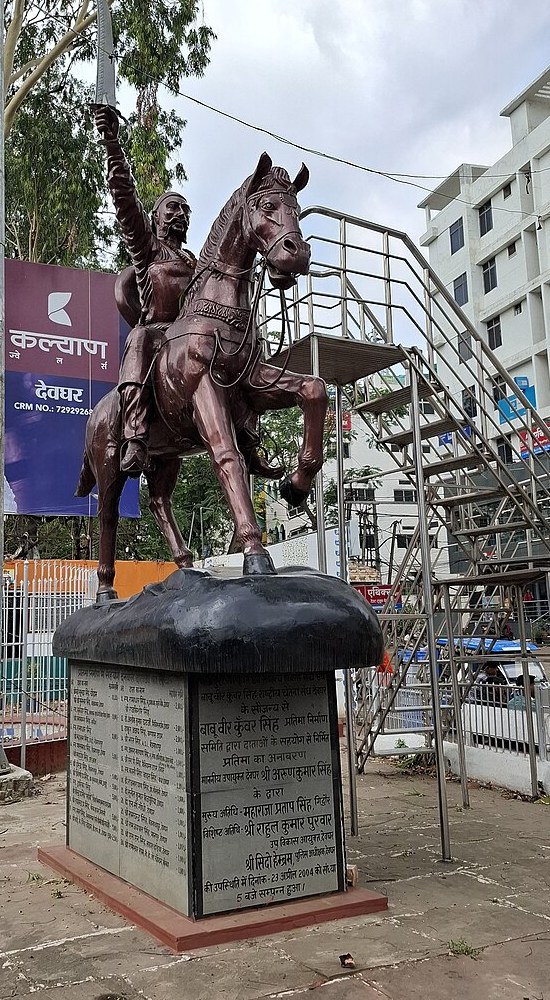
- Bihar's theatre: the Danapur sepoys mutinied on 25 July 1857; Kunwar Singh of Jagdishpur in Shahabad district (now Bhojpur), born 13 November 1777 and by then about eighty, took command, occupied Arrah on 27 July, was defeated by Major Vincent Eyre on 3 August 1857, campaigned on to Lucknow in December 1857 and Azamgarh in March 1858, beat Captain Le Grand near Jagdishpur on 23 April 1858 and died three days later on 26 April 1858
- Who stayed out or helped the British: Sindhia of Gwalior, Holkar of Indore, the Nizam of Hyderabad, the Raja of Jodhpur, the Sikh chiefs of Patiala, Nabha and Jind, and Jung Bahadur Rana's Nepal, whose Gurkha troops assisted in the recapture of Lucknow; the Bengal zamindars created by the Permanent Settlement of 1793 and the Western-educated professional class also kept clear
- Technology and reinforcement: India's first railway line opened in April 1853 and the telegraph was working from 1854, both left by Lord Dalhousie; the Crimean War ended with the Treaty of Paris in March 1856, releasing regiments, and troops bound for Lord Elgin's China expedition were diverted to Calcutta in 1857
- Aftermath: the Government of India Act, 1858 wound up the East India Company and created the office of Secretary of State for India in Council; Queen Victoria's Proclamation was read at Allahabad on 1 November 1858, disavowing further annexation and promising non-interference in religion; the army was reorganised with artillery concentrated in European hands and recruitment redistributed away from the old Bengal Army districts
Study next
Common traps
- Reading 'lack of support from all the sections of society' as 'nobody supported the Revolt'; the statement means the support was not universal, which is correct
- Assuming an 'All of the above' option must be a trap: on cause-and-consequence items where the statements sit at different levels of explanation, it is very often the answer
- Treating the Revolt as pan-Indian; Punjab, Bengal proper, Sind and most of the Madras and Bombay presidencies were untouched, which is itself part of reason 3
BPSC asks 1857 in two shapes: a reasons-and-consequences statement set like this one, where the correct response is usually the inclusive option, and a Bihar-specific factual question on Kunwar Singh, Jagdishpur, Danapur or Arrah, so a Bihar aspirant must know the local theatre in date-level detail, not just the national outline. UPSC has historically preferred single-fact recall on the same topic: which territory was untouched by the Revolt, which place Kunwar Singh belonged to, who was Governor-General in 1857, who was betrayed and executed. The overlap is the content; the difference is that BPSC tests the argument and UPSC tests the datum.
Related PYQs
The educated middle class in India
- (a) opposed the revolt of 1857
- (b) supported the revolt of 1857
- (c) remained neutral to the revolt of 1857
- (d) fought against native rulers
Answer(c) remained neutral to the revolt of 1857
Exactly the third reason in this question, isolated and asked on its own: the Western-educated class stood aside in 1857, which is one half of why the rising never became society-wide.
Which one of the following territories was not affected by the Revolt of 1857?
- (a) Jhansi
- (b) Chittor
- (c) Jagdishpur
- (d) Lucknow
Answer(b) Chittor
The geographical face of the same limitation: the Revolt had definite boundaries, and knowing which regions it never reached is knowing why the social and territorial base was too narrow to overturn Company rule.
Practice
- practice, not a real PYQ
Which one of the following statements about the Revolt of 1857 is correct?
- (a)The Revolt spread to every province of British India except Punjab
- (b)The Western-educated middle class in India generally kept aloof from the Revolt
- (c)The Indian princely states as a body supported the rebels
- (d)The Revolt was suppressed within three months of its outbreak
Answer(b) The Western-educated middle class in India generally kept aloof from the Revolt: it saw British rule as an agent of modernisation and read the rising as a feudal-military reaction. Most of the Madras and Bombay presidencies and Bengal proper were also untouched, and major princes such as Sindhia, Holkar and the Nizam sided with the British, so (a) and (c) are wrong; Delhi alone held out until 20 September 1857 and Gwalior until June 1858, so (d) is wrong. - practice, not a real PYQ
Kunwar Singh, who led the Revolt of 1857 in Bihar, was associated with which of the following places?
- (a)Jagdishpur in Shahabad district
- (b)Bettiah in Champaran district
- (c)Sasaram in Rohtas district
- (d)Barh in Patna district
Answer(a) Jagdishpur in Shahabad district: the present Bhojpur district. He took command of the mutinous Danapur sepoys in July 1857, occupied Arrah, and returned to win a last engagement near Jagdishpur on 23 April 1858, dying on 26 April 1858.