
Laterite soil in India is rich in which of the following? 1. Calcium 2. Nitrogen 3. Phosphate 4. Potash Select the answer using the code given below:
- (a)1 only
- (b)1 and 2
- (c)3 and 4
- (d)4 only
Answer
Why
Correct — D, potash (item 4). Laterite forms where heavy tropical rain leaches the soil intensely, washing away soluble bases and concentrating iron and aluminium oxides, which give it its red colour. Of the four nutrients offered, the one the exam treats as present in an appreciable amount is potash, whereas laterite is markedly poor in nitrogen (little organic matter), in phosphate and in calcium and lime (both stripped out by leaching). That leaves potash alone, so the answer is 4 only. Note that laterite is, on the whole, a leached and low-fertility soil, so this pick is best read as the least-absent of the four rather than a sign of real richness.
Why the others are wrong
- (a)1 only — Calcium (lime) is one of the first bases removed during the intense leaching that forms laterite, so the soil is poor in calcium, not rich in it.
- (b)1 and 2 — Both calcium and nitrogen are deficient in laterite — the low humus content keeps nitrogen low and leaching keeps calcium low — so neither belongs in the answer.
- (c)3 and 4 — Potash is right, but phosphate is low in laterite; this option wrongly adds phosphate, so it over-counts.
Concept
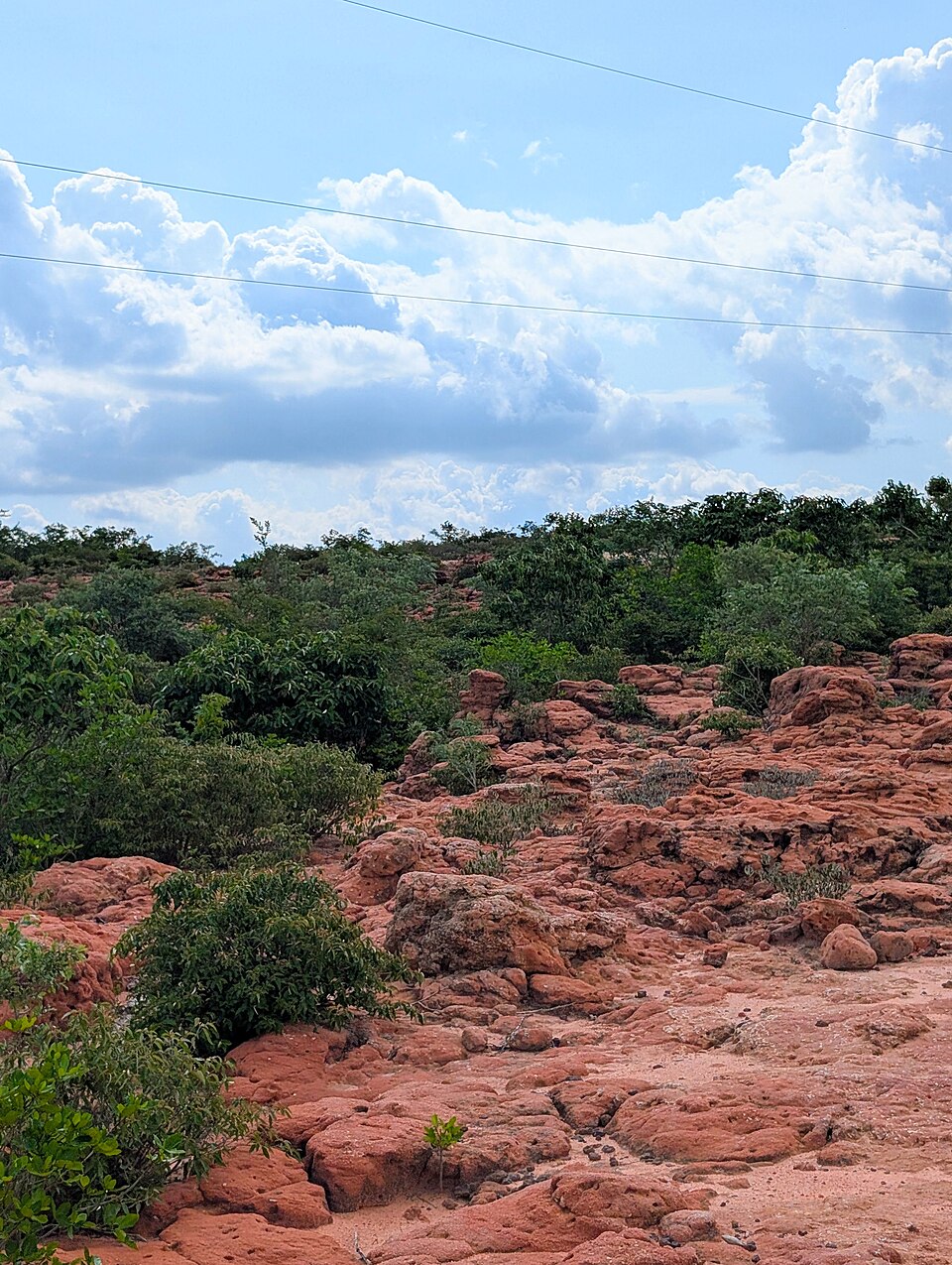
Laterite soil develops in hot, wet tropical regions where alternating rain and drying cause intense leaching. Soluble minerals and bases are washed downwards, leaving a soil rich in insoluble iron and aluminium oxides that harden into a red, brick-like crust. Because leaching removes most plant nutrients, laterite is generally low in fertility and needs manuring and fertiliser to be productive.
The item tests which nutrient survives the leaching well enough to be counted. In Indian textbook and exam usage, potash is the one taken to remain in appreciable amount, while nitrogen, phosphate, calcium and organic matter are all depleted. The honest picture is that laterite is a poor soil overall, so the safest reasoning is to eliminate the nutrients that leaching clearly strips out and settle on potash.
Key facts
- Laterite forms by intense leaching under high temperature and heavy rainfall in the tropics.
- It is rich in iron and aluminium oxides, which give the characteristic red colour, but low in organic matter.
- It is poor in nitrogen, phosphate, calcium and lime; among the major nutrients, potash is treated as the one present in appreciable amount.
- With manuring and irrigation it supports tree crops such as cashew and tapioca in peninsular India.
Study next
Common traps
- Treating laterite as a fertile soil — it is heavily leached and poor in most nutrients.
- Adding phosphate or calcium to the answer, both of which are deficient in laterite.
Asked which nutrient is found in appreciable amount in laterite, or to identify laterite from its leaching, red colour and typical crops.
Related PYQs
Which of the following statements regarding laterite soils of India are correct? 1. They are generally red in colour. 2. They are rich in nitrogen and potash. 3. They are well-developed in Rajasthan and UP. 4. Tapioca and cashew nuts grow well on these soils. Select the correct answer using the codes given below.
- (a) 1, 2 and 3
- (b) 2, 3 and 4
- (c) 1 and 4
- (d) 2 and 3 only
Answer(c) 1 and 4 — laterite is red and suits tapioca and cashew; the key rejects 'rich in nitrogen and potash'.
Same soil, but note the framings differ — UPSC's key here treats laterite as NOT rich in nitrogen and potash, showing why this NDA item is graded soft; both agree, though, that laterite is red and grows cashew and tapioca.
Which one of the following is found in appreciable amount in Laterite soil in India?
- (a) Calcium
- (b) Phosphate
- (c) Potash
- (d) Nitrogen
Answer(c) Potash
The direct parallel from the previous year's NDA GAT — the same convention that potash is the nutrient retained in laterite, which is why this 2025 item is keyed to potash (4 only).
Practice
- practice — not a real PYQ
Laterite soils of India are best suited to which one of the following pairs of crops?
- (a)Wheat and gram
- (b)Cashew and tapioca
- (c)Cotton and sugarcane
- (d)Rice and jute
Answer(b) Cashew and tapioca — tree and tuber crops that grow well on the leached laterite soils of peninsular India. - practice — not a real PYQ
The characteristic red colour of laterite soil is due mainly to which one of the following?
- (a)Iron oxide
- (b)Calcium carbonate
- (c)Humus
- (d)Silica
Answer(a) Iron oxide — the concentration of iron oxides left behind by leaching gives laterite its red colour.