
Consider the following statements: 1. The Sharavati river creates Jog Falls. 2. The Brahmani river is formed by the confluence of the Kosi and Sankh rivers. 3. The Tamraparni is a river of Tirunelveli district of Tamil Nadu. How many of the above statements is/are correct?
- (a)1
- (b)2
- (c)3
- (d)None
Answer
Why
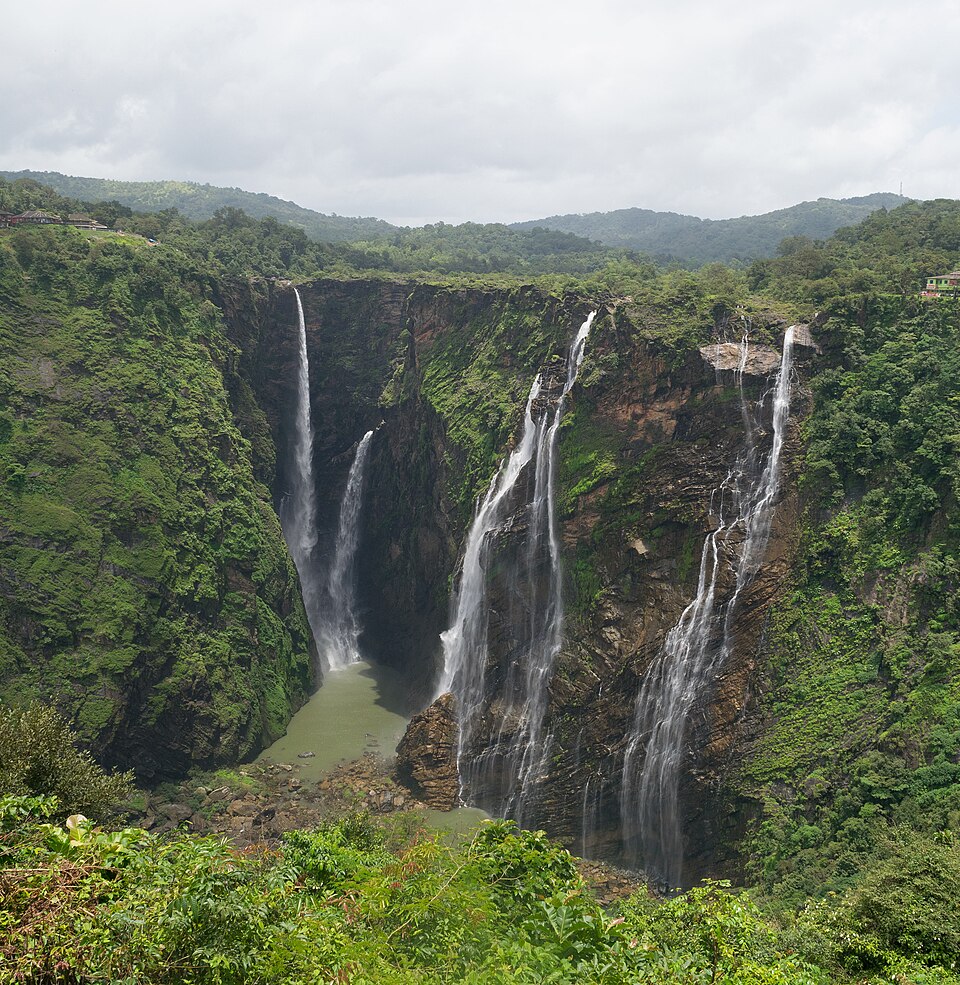
Correct — B, 2. Exactly two of the three statements survive. Statement 1 is correct — Jog Falls, in Shivamogga district of Karnataka, is created by the Sharavati river dropping about 253 metres. Statement 3 is correct — the Tamraparni, or Thamirabarani, rises in the Pothigai hills of the Western Ghats and flows through Tirunelveli and Thoothukudi districts of Tamil Nadu into the Gulf of Mannar, so it is very much a river of Tirunelveli. Statement 2 is the planted error. The Brahmani is formed where the Koel and the Sankh meet, at Vedvyas near Rourkela in Odisha, and not by the Kosi. The Kosi is a Himalayan tributary of the Ganga in Bihar, long known as the sorrow of Bihar for its shifting course, and it has no connection with the Brahmani at all. Two correct out of three gives option (b).
Why the others are wrong
- (a)1 — This undercounts. It is what a student arrives at after correctly rejecting the Brahmani statement but then also doubting one of the two southern rivers, usually the Tamraparni, whose spelling varies between books.
- (c)3 — This accepts all three, and the Brahmani statement cannot be accepted. Its headwaters are the Koel and the Sankh; the Kosi is a Ganga tributary in a different part of the country altogether.
- (d)None — Both the Jog Falls pairing and the Tamraparni's location are standard and correct, so rejecting everything is the least defensible option here.
Concept
West-flowing rivers of the Western Ghats are short, swift and rich in waterfall and hydel sites because they drop steeply from the escarpment to the Arabian Sea; the Sharavati and its Jog Falls are the classic example, with the Linganamakki reservoir upstream regulating the flow. The Brahmani belongs to a different family — one of Odisha's east-flowing rivers, formed by the union of two Chhotanagpur-plateau streams, the Koel and the Sankh, and reaching the Bay of Bengal through a shared delta with the Mahanadi. The Tamraparni is a small but historically important east-flowing river of the far south, whose valley is one of the older irrigated tracts of Tamil Nadu.
Items of this design usually plant one wrong name inside an otherwise correct sentence, and the name chosen is one that looks plausible in the context. Kosi and Koel differ by two letters and both sound like plateau streams, which is exactly why Kosi was inserted. The defence is to hold the confluence points, not just the river names — Koel and Sankh meet at Vedvyas near Rourkela, a place worth remembering because the Rourkela Steel Plant draws its water from those same two rivers. The other statements are safe once you attach each river to a landmark: the Sharavati to Jog Falls, the Tamraparni to Tirunelveli. Counting-format questions also demand care, since the answer is a number and there is no partial credit for spotting the error if you then miscount the rest.
Key facts
- Jog Falls, on the Sharavati river in Shivamogga district, Karnataka, has a total drop of about 253 metres.
- The Brahmani is formed by the confluence of the Koel and the Sankh at Vedvyas near Rourkela in Odisha, and drains into the Bay of Bengal.
- The Kosi is a Himalayan tributary of the Ganga in Bihar and has no link with the Brahmani.
- The Tamraparni rises in the Pothigai hills of the Western Ghats and flows through Tirunelveli and Thoothukudi districts into the Gulf of Mannar.
- The Rourkela Steel Plant draws its water from the Koel and the Sankh, the two headstreams of the Brahmani.
Study next
Common traps
- Confusing the Koel with the Kosi in the Brahmani's headwaters — the single error this question is built around.
- Miscounting in a how-many-statements format after correctly identifying the wrong statement.
- Being unsettled by alternative spellings such as Thamirabarani, Shivasamudram or Sharavathi.
As a count-the-correct-statements item on river facts, or as a match-the-pairs item linking waterfalls and rivers.
Related PYQs
Which of the following pairs are correctly matched? Waterfalls — River: 1. Kapildhara Falls : Godavari 2. Jog Falls : Sharavati 3. Sivasamudram Falls : Cauvery. Select the correct answer using the code given below:
- (a) 1 and 2 only
- (b) 2 and 3 only
- (c) 1 and 3 only
- (d) 1, 2 and 3
Answer(b) 2 and 3 only
Contains the very pairing that statement 1 of this NDA item tests — Jog Falls on the Sharavati — inside a waterfall-to-river matching set with one deliberately wrong pair, exactly the same design idea.
Which one of the following rivers is not a tributary of river Brahmaputra?
- (a) River Manas
- (b) River Kameng
- (c) River Mahananda
- (d) River Subansiri
Answer(c) River Mahananda
The same drainage-association skill, and the same trick of slipping one river from an entirely different basin into an otherwise consistent list.
Practice
- practice — not a real PYQ
The Brahmani river of Odisha is formed by the confluence of which two rivers?
- (a)The Kosi and the Sankh
- (b)The Koel and the Sankh
- (c)The Baitarani and the Sankh
- (d)The Koel and the Subarnarekha
Answer(b) The Koel and the Sankh — they meet at Vedvyas near Rourkela, and the Rourkela Steel Plant draws its water from them. - practice — not a real PYQ
Shivanasamudram Falls is located on which one of the following rivers?
- (a)Sharavati
- (b)Kaveri
- (c)Krishna
- (d)Godavari
Answer(b) Kaveri — Jog Falls belongs to the Sharavati, while Shivanasamudram is on the Kaveri in Karnataka.