
Which one of the following plants has unisexual flowers?
- (a)Papaya
- (b)Hibiscus
- (c)Mustard
- (d)Sunflower
Answer
Why
Correct — A, Papaya. A unisexual flower bears only stamens (male) or only carpels (female), not both. Papaya is dioecious — it grows as separate male and female plants — so its flowers are unisexual. Hibiscus and mustard, by contrast, have bisexual (perfect) flowers carrying both stamens and pistil, and a sunflower head is a cluster of florets whose disc florets are bisexual. Papaya is the classic example of unisexual flowers.
Why the others are wrong
- (b)Hibiscus — The hibiscus flower is bisexual — a single flower has both the stamens and the pistil — so it is not unisexual.
- (c)Mustard — Mustard flowers are bisexual, bearing both male and female parts in the same flower.
- (d)Sunflower — A sunflower head is a cluster of florets whose disc florets are bisexual; it is not the textbook unisexual-flower example.
Concept
Flowers are unisexual when they carry only male or only female reproductive parts, and bisexual (perfect) when they carry both. Plants with separate male and female flowers on different individuals are dioecious (e.g., papaya); those with both on the same plant are monoecious (e.g., maize, cucumber). Unisexuality prevents self-pollination and promotes cross-pollination.
Most familiar crop flowers — hibiscus, mustard, pea — are bisexual, so the question turns on recalling a dioecious example. Papaya (like the date palm) grows as distinct male and female plants, making its flowers unisexual.
Key facts
- Unisexual flower: only male (staminate) or only female (pistillate) parts; papaya is a classic example.
- Bisexual (perfect) flower: both stamens and pistil, e.g., hibiscus, mustard, pea.
- Dioecious = male and female flowers on separate plants (papaya); monoecious = both on one plant (maize, cucumber).
- Unisexuality favours cross-pollination by preventing self-pollination.
Study next
Common traps
- Assuming every flower is bisexual.
- Confusing dioecious (papaya) with monoecious (maize, cucumber).
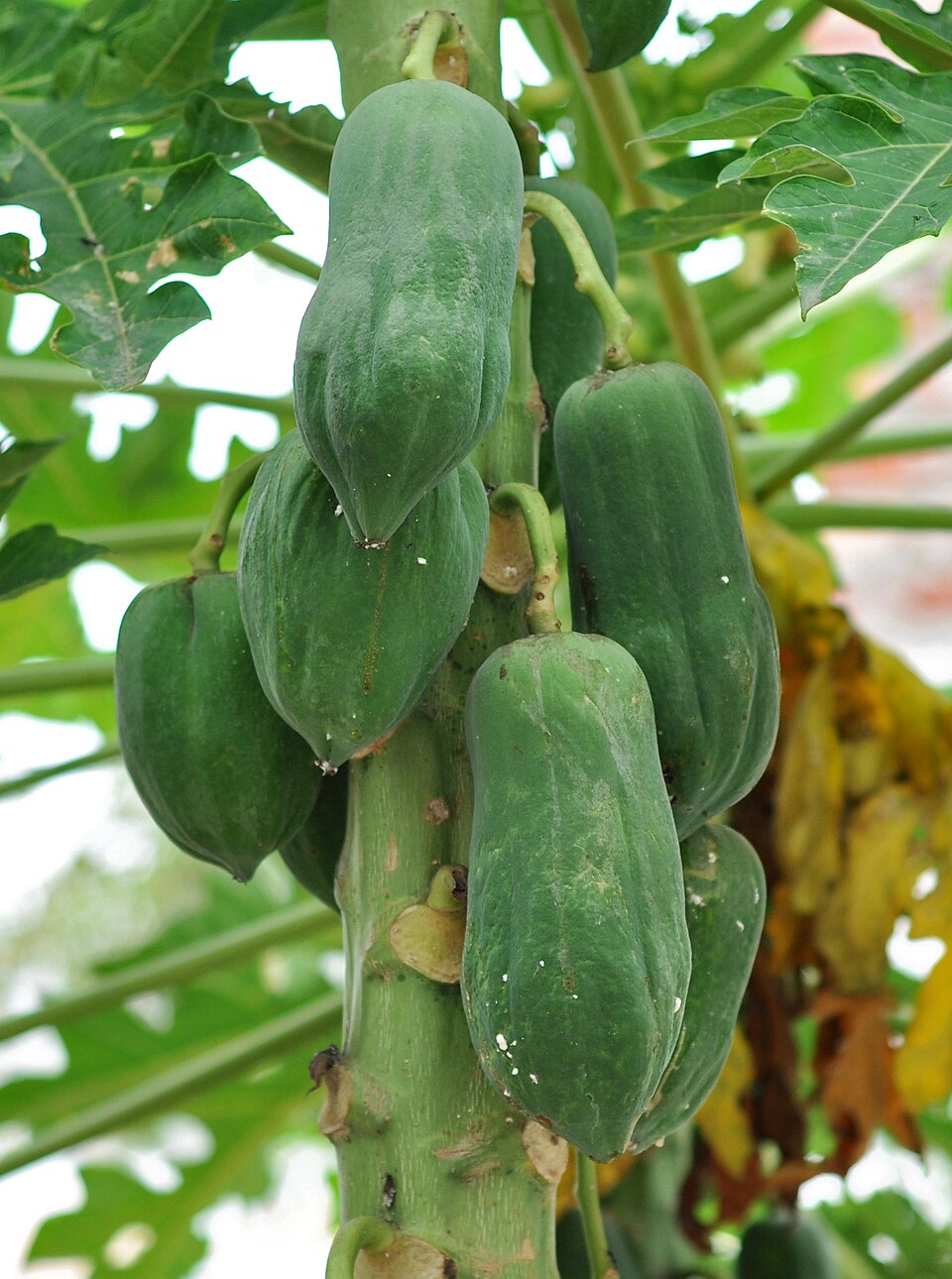
Pick the plant with unisexual flowers — papaya (dioecious) against common bisexual-flowered crops.
Related PYQs
In a typical flower, germinating pollen grains pass through several parts of the gynoecium before they reach the ovule. A list of the parts of gynoecium is given below in different combinations. Choose the combination that represents the correct sequence of pollen tube pathway/journey:
- (a) Style, Stigma, Ovary
- (b) Stigma, Style, Ovary
- (c) Pistil, Stigma, Ovary
- (d) Ovary, Pistil, Style
Answer(b) Stigma, Style, Ovary
Same area — flower structure and sexual reproduction in plants. That item traces the pollen tube's path through the female parts (stigma → style → ovary), while this one distinguishes unisexual (papaya) from bisexual flowers.
Practice
- practice — not a real PYQ
A plant that bears male and female flowers on separate individual plants is called
- (a)monoecious
- (b)dioecious
- (c)bisexual
- (d)hermaphrodite
Answer(b) dioecious — e.g., papaya. - practice — not a real PYQ
Which of the following bears bisexual flowers?
- (a)papaya
- (b)maize
- (c)mustard
- (d)cucumber
Answer(c) mustard — its flower has both stamens and pistil; the others bear unisexual flowers.