
Which one of the following is the mechanism of action of oral contraceptive pills?
- (a)They kill the egg.
- (b)They kill the sperm.
- (c)They kill the zygote.
- (d)They inhibit the release of egg.
Answer
Why
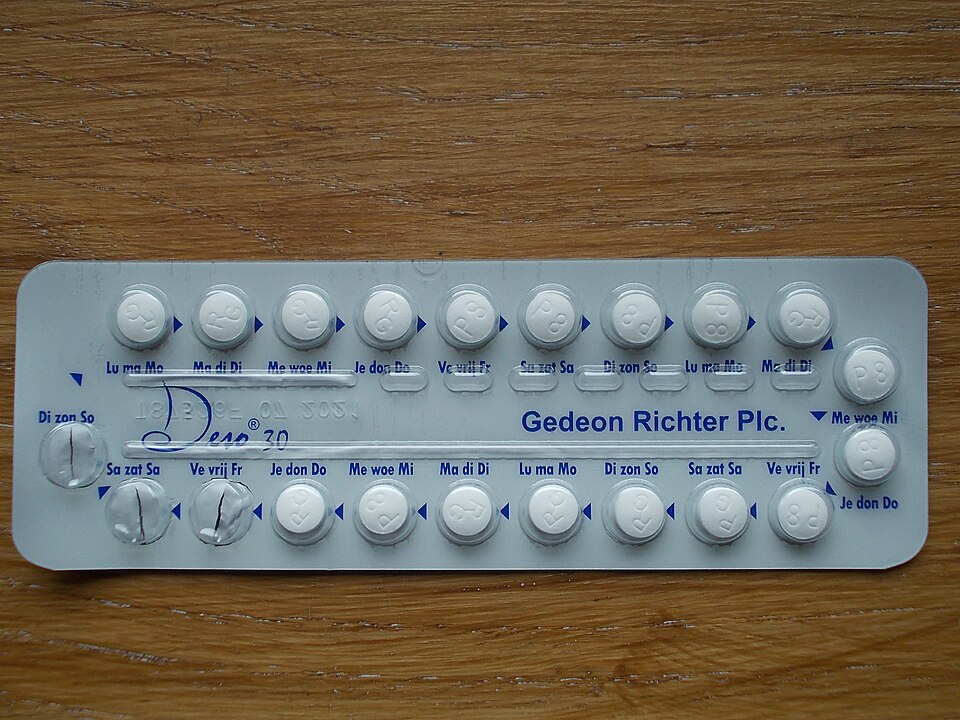
Correct — D, 'They inhibit the release of egg.' Combined oral contraceptive pills contain synthetic estrogen and progesterone (progestin). By holding these hormone levels steady, they suppress the pituitary hormones (FSH and LH) that trigger ovulation, so no egg is released from the ovary — and with no egg there can be no fertilisation. They work by preventing ovulation, not by killing the egg, sperm or zygote.
Why the others are wrong
- (a)They kill the egg. — Oral pills do not destroy the ovum; they act earlier, stopping the egg from being released at all.
- (b)They kill the sperm. — Killing sperm is the action of spermicides, not of hormonal oral contraceptive pills.
- (c)They kill the zygote. — The pill prevents fertilisation from happening in the first place by blocking ovulation; it is not an agent that destroys a formed zygote.
Concept
Ovulation is controlled by the hormonal axis: the anterior pituitary releases FSH and LH, and a mid-cycle LH surge triggers release of the egg. Combined oral contraceptive pills add steady estrogen and progestin, which suppress FSH and LH by negative feedback so that the LH surge — and therefore ovulation — does not occur.
The distractors all describe 'killing' a cell, but the pill acts through hormones, not destruction. Recognising it as a hormonal method that prevents ovulation separates it from spermicides (kill sperm) and barrier methods (block sperm).
Key facts
- Combined oral pills contain estrogen and progestin; they inhibit ovulation by negative feedback on FSH and LH.
- Ovulation is normally triggered by a mid-cycle LH surge from the anterior pituitary.
- No ovulation means no egg to fertilise — hence contraception.
- Contraceptive methods include barrier (condom), hormonal (pill), intrauterine (IUD) and surgical (sterilisation).
Study next
Common traps
- Thinking the pill 'kills' the egg or sperm — its real action is preventing ovulation.
- Confusing oral contraceptive pills with spermicides or emergency contraception.
A mechanism-of-action item — the pill's job is to inhibit ovulation, not to destroy gametes or a zygote.
Related PYQs
Match the hormones in List I with items in List II and select the correct answer using the codes given below the Lists. List I — I. Adrenaline II. Estrogen III. Insulin IV. Pheromones; List II — A) Anger, fear, danger B) Attracting partners through sense of smell C) Females D) Glucose.
- (a) I-C, II-A, III-D, IV-B
- (b) I-A, II-C, III-B, IV-D
- (c) I-A, II-C, III-D, IV-B
- (d) I-C, II-A, III-B, IV-D
Answer(c) I-A, II-C, III-D, IV-B
Endocrine link — hormones and their roles. Estrogen (the primary female sex hormone) is exactly the hormone the contraceptive pill supplies to suppress ovulation, so knowing hormone functions underpins the pill's mechanism.
The menstrual cycle in females is controlled by hormones that are secreted by
- (a) Ovary and lacrimal gland
- (b) Ovary and sebaceous gland
- (c) Ovary and pituitary gland
- (d) Prostate and pituitary gland
Answer(c) Ovary and pituitary gland
Same axis — the ovary and pituitary hormones that run the menstrual cycle are precisely the ones the pill manipulates to inhibit ovulation.
Practice
- practice — not a real PYQ
Ovulation in the human female is directly triggered by a surge of which hormone?
- (a)insulin
- (b)luteinising hormone (LH)
- (c)thyroxine
- (d)adrenaline
Answer(b) luteinising hormone (LH) from the pituitary. - practice — not a real PYQ
Which method of contraception works mainly by preventing ovulation?
- (a)condom
- (b)copper-T (IUD)
- (c)oral contraceptive pill
- (d)spermicide
Answer(c) oral contraceptive pill.