
Which one of the following statements about fertilizers is not correct?
- (a)Urea is a phosphorus-containing fertilizer.
- (b)Application of fertilizer to the soil increases fertility of the soil.
- (c)Urea can be prepared by action of ammonia and carbon dioxide under high pressure and at high temperature.
- (d)Urea contains more nitrogen than other fertilizers.
Answer
Why
Correct — A, 'Urea is a phosphorus-containing fertilizer.' This is the incorrect statement — urea, CO(NH₂)₂, is a nitrogenous fertilizer with no phosphorus. It supplies nitrogen (about 46%, the highest of the common solid nitrogen fertilizers). Statements (b), (c) and (d) are all true.
Why the others are wrong
- (b)Application of fertilizer to the soil increases fertility of the soil. — This is a correct statement — fertilizers add plant nutrients (N, P, K), raising soil fertility, so it is not the answer.
- (c)Urea can be prepared by action of ammonia and carbon dioxide under high pressure and at high temperature. — This is correct — urea is industrially made from ammonia and carbon dioxide (the Bosch–Meiser process), so it is a true statement.
- (d)Urea contains more nitrogen than other fertilizers. — This is correct — urea has about 46% nitrogen, more than most other common solid fertilizers, so it is a true statement.
Concept
Urea, CO(NH₂)₂, is a nitrogenous (N) fertilizer, not a phosphatic one — it contains no phosphorus. It carries roughly 46% nitrogen by mass, the highest of the common solid nitrogen fertilizers, and is manufactured by combining ammonia and carbon dioxide under high pressure and temperature.
The false statement swaps the nutrient — calling urea 'phosphorus-containing' when it is a nitrogen source. Phosphorus fertilizers are instead things like superphosphate and DAP.
Key facts
- Urea, CO(NH₂)₂, contains about 46% nitrogen and no phosphorus.
- It is made from ammonia and carbon dioxide (the Bosch–Meiser process) at high pressure and temperature.
- Urea has the highest nitrogen content of the common solid nitrogen fertilizers.
- Phosphorus is supplied by fertilizers such as superphosphate and DAP, not by urea.
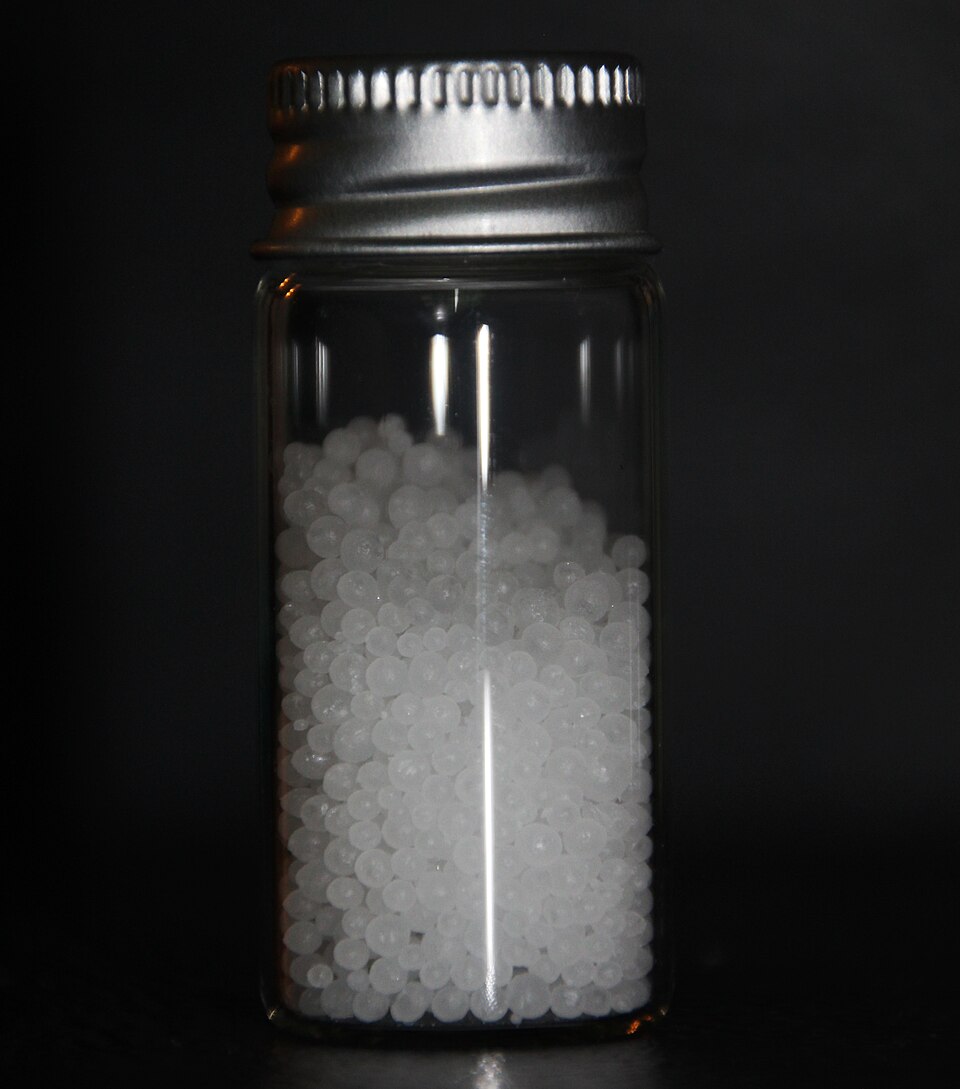
Study next
Common traps
- Assuming a single common fertilizer supplies every nutrient — urea supplies only nitrogen.
- Confusing urea (nitrogen) with phosphatic fertilizers like superphosphate or DAP.
Pick the incorrect statement about fertilizers — here the false claim that urea contains phosphorus.
Related PYQs
Which one of the following is a mixed fertilizer?
- (a) CAM
- (b) Urea
- (c) Ammonium Sulphate
- (d) NPK
Answer(d) NPK — a mixed fertilizer supplying nitrogen, phosphorus and potassium together.
Reinforces the same nutrient-classification point — NPK is a mixed fertilizer, while urea (a distractor there) is a straight nitrogen fertilizer, exactly as this question tests.
Which one among the following fertilizers is a source of nitrogen?
- (a) Superphosphate
- (b) Potassium sulfate
- (c) Bone meal
- (d) Urea
Answer(d) Urea
The direct converse — that item confirms urea is the nitrogen source, which is exactly why calling it 'phosphorus-containing' here is the incorrect statement.
Practice
- practice — not a real PYQ
Urea is a source of which plant nutrient?
- (a)Phosphorus
- (b)Potassium
- (c)Nitrogen
- (d)Calcium
Answer(c) Nitrogen — urea, CO(NH₂)₂, is a nitrogenous fertilizer with about 46% nitrogen. - practice — not a real PYQ
Which one of the following fertilizers is a source of phosphorus?
- (a)Urea
- (b)Superphosphate
- (c)Muriate of potash
- (d)Ammonium sulphate
Answer(b) Superphosphate — a phosphatic fertilizer; urea and ammonium sulphate supply nitrogen, muriate of potash supplies potassium.