
Which one among the following fertilizers is a source of nitrogen?
- (a)Superphosphate
- (b)Potassium sulfate
- (c)Bone meal
- (d)Urea
Answer
Why
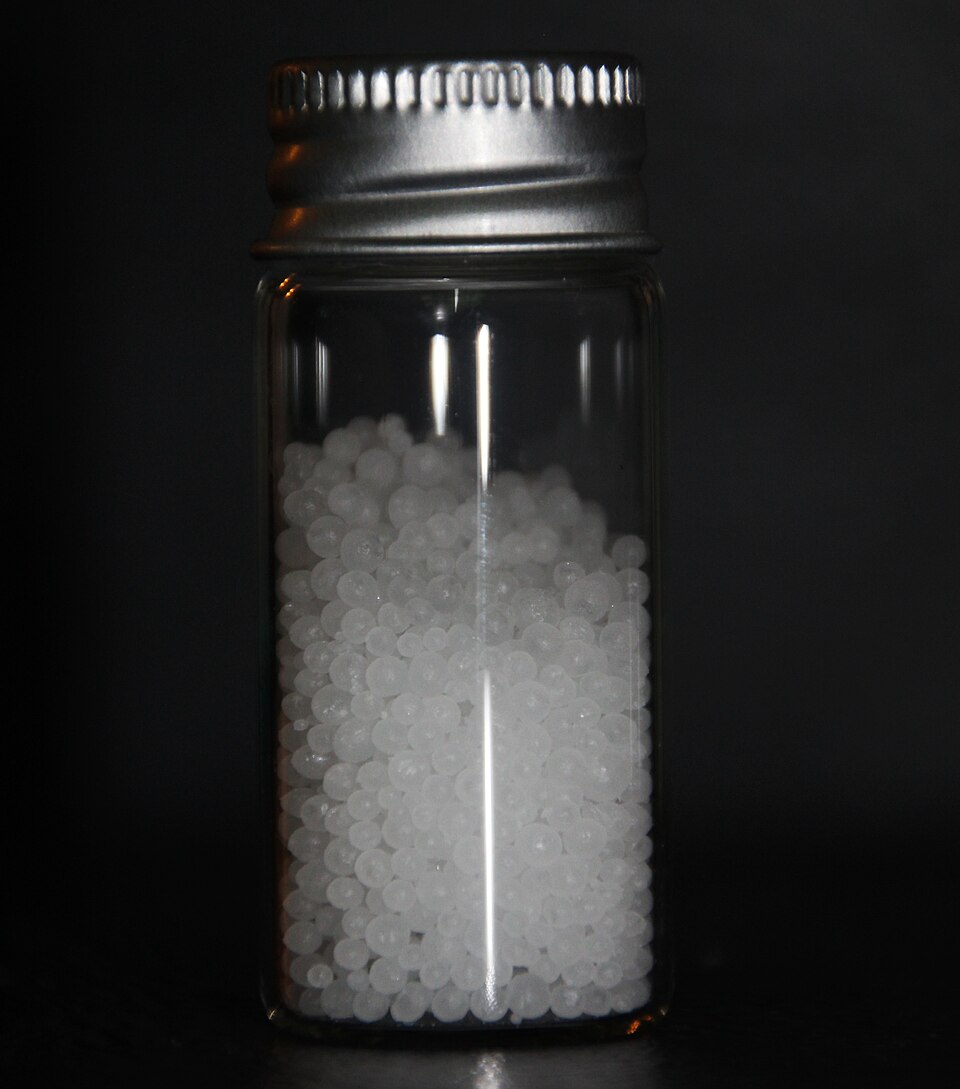
Correct — D, Urea. Urea, CO(NH2)2, is the most widely used nitrogenous fertiliser, containing about 46% nitrogen by mass — the highest nitrogen content of any common solid fertiliser. Applied to soil it releases nitrogen (as ammonium/nitrate) that plants use to build proteins and chlorophyll.
Why the others are wrong
- (a)Superphosphate — Single/triple superphosphate supplies phosphorus (as P2O5), not nitrogen.
- (b)Potassium sulfate — Potassium sulfate (sulphate of potash) supplies potassium and sulphur; it carries no nitrogen.
- (c)Bone meal — Bone meal, made from ground animal bones, is chiefly a phosphorus and calcium fertiliser; it carries only a little nitrogen, so it is classed as a phosphate source rather than a nitrogen fertiliser.
Concept
Fertilisers are grouped by the primary nutrient they supply — nitrogen (N), phosphorus (P) or potassium (K). Nitrogenous fertilisers such as urea and ammonium sulphate provide nitrogen, which plants need for leafy vegetative growth and for making chlorophyll and proteins.
Ask which nutrient each name delivers: superphosphate gives phosphorus, potassium sulfate gives potassium, bone meal gives phosphorus (and calcium), and urea gives nitrogen. Only urea is a nitrogen source.
Key facts
- Urea, CO(NH2)2, contains about 46% nitrogen — the richest common solid nitrogenous fertiliser.
- The three primary plant nutrients are nitrogen (N), phosphorus (P) and potassium (K).
- Superphosphate supplies phosphorus; muriate/sulphate of potash supplies potassium.
- Nitrogen promotes leaf and stem (vegetative) growth and is a key part of chlorophyll and proteins.
Study next
Common traps
- Assuming any fertiliser supplies nitrogen — superphosphate and potash carry none.
- Treating bone meal as a nitrogen source; it is chiefly a phosphate fertiliser.
Exams give a list of fertilisers and ask which supplies a named nutrient — match the fertiliser to its primary N/P/K element.
Related PYQs
Which one of the following is a mixed fertilizer?
- (a) CAM
- (b) Urea
- (c) Ammonium Sulphate
- (d) NPK
Answer(d) NPK
UPSC has tested fertiliser classification: NPK is a 'mixed' fertiliser supplying all three primary nutrients, while urea and ammonium sulphate — as the answer reasoning notes — supply only nitrogen. It reinforces that urea is a purely nitrogenous fertiliser.
Practice
- practice — not a real PYQ
Which fertiliser has the highest nitrogen content by mass?
- (a)Ammonium sulphate
- (b)Urea
- (c)Calcium ammonium nitrate
- (d)Sodium nitrate
Answer(b) Urea — about 46% nitrogen, the richest common solid nitrogenous fertiliser. - practice — not a real PYQ
Diammonium phosphate (DAP) primarily supplies which nutrients?
- (a)Nitrogen and phosphorus
- (b)Potassium and sulphur
- (c)Only nitrogen
- (d)Only potassium
Answer(a) Nitrogen and phosphorus — DAP is a complex fertiliser supplying both N and P.