
Which one of the following is caused by a bacterial pathogen?
- (a)AIDS
- (b)Dengue fever
- (c)COVID-19
- (d)Typhoid fever
Answer
Why
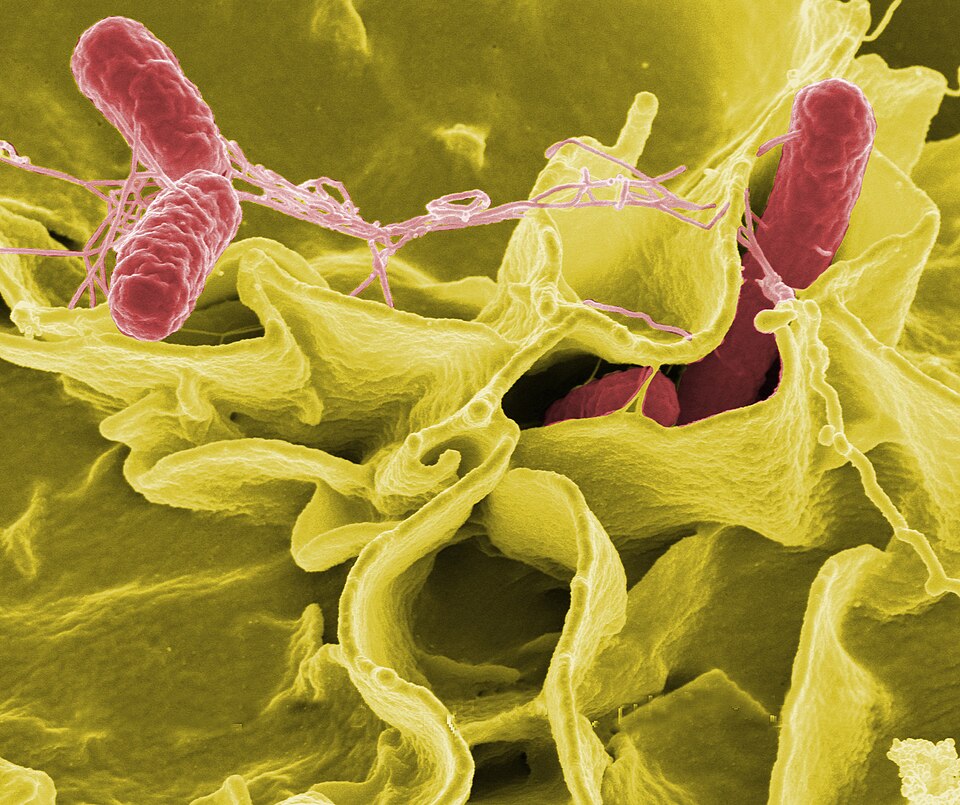
Correct — D, Typhoid fever. Typhoid is caused by the bacterium Salmonella enterica serovar Typhi (Salmonella Typhi), spread through food and water contaminated with the faeces of an infected person. The other three are all viral diseases, which is why typhoid responds to antibiotics while the others do not.
Why the others are wrong
- (a)AIDS — AIDS is caused by a virus — the Human Immunodeficiency Virus (HIV), a retrovirus — not a bacterium.
- (b)Dengue fever — Dengue is a viral disease caused by the dengue virus and transmitted by the Aedes aegypti mosquito, not by any bacterium.
- (c)COVID-19 — COVID-19 is caused by the coronavirus SARS-CoV-2, a virus, so it is not the bacterial disease asked for.
Concept
Human infectious diseases are classified by the type of pathogen that causes them — bacteria, viruses, protozoa or fungi. Typhoid is bacterial (Salmonella Typhi); AIDS, dengue and COVID-19 are all viral. Antibiotics act on bacteria, so they treat typhoid but are useless against these viral diseases.
The trap is that all four are serious 'fevers/infections', so the type of germ is easy to blur. Sorting them by pathogen — one bacterium among three viruses — is the whole task.
Key facts
- Typhoid is caused by the bacterium Salmonella Typhi and spreads by the faeco-oral route through contaminated food and water.
- AIDS is caused by HIV, dengue by the dengue virus (via Aedes mosquito), and COVID-19 by SARS-CoV-2 — all viruses.
- Antibiotics kill or inhibit bacteria (so they treat typhoid) but do not work against viruses.
- Typhoid is preventable by vaccination and by safe drinking water and sanitation.
Study next
Common traps
- Assuming every disease ending in '-fever' is viral — typhoid fever is bacterial.
- Confusing typhoid (bacterial, Salmonella) with typhus (a different disease caused by Rickettsia).
Asked as 'which disease is caused by a bacterium', with common viral diseases as distractors.
Related PYQs
Match List I (Disease: I. Malaria, II. Poliomyelitis, III. Tuberculosis, IV. Ringworm) with List II (Organism: A. Fungi, B. Bacteria, C. Virus, D. Protozoan) and select the correct code.
- (a) I-D, II-C, III-B, IV-A
- (b) I-D, II-C, III-A, IV-B
- (c) I-C, II-D, III-A, IV-B
- (d) I-C, II-D, III-B, IV-A
Answer(a) I-D, II-C, III-B, IV-A — malaria (protozoan), polio (virus), TB (bacterium), ringworm (fungus).
Same skill — classifying which class of pathogen causes each disease; TB there is the bacterium, just as typhoid is here.
Which one of the following is a bacterium that causes disease in the human body?
- (a) Varicella zoster
- (b) Trypanosoma gambiense
- (c) Salmonella typhi
- (d) Plasmodium falciparum
Answer(c) Salmonella typhi
The mirror question — its answer, Salmonella typhi, is exactly the bacterium that causes the typhoid fever asked about here.
Practice
- practice — not a real PYQ
Which one of the following is a viral disease?
- (a)Typhoid
- (b)Cholera
- (c)AIDS
- (d)Tuberculosis
Answer(c) AIDS — caused by the HIV virus; typhoid, cholera and tuberculosis are bacterial. - practice — not a real PYQ
Typhoid fever in humans is caused by
- (a)a virus
- (b)the bacterium Salmonella Typhi
- (c)a protozoan
- (d)a fungus
Answer(b) the bacterium Salmonella Typhi — spread through contaminated food and water.