
In India, rigid and stable elevated lands, denuded rocks and series of scarps are the features of which of the following?
- (a)Northern mountains
- (b)Peninsular plateau
- (c)Northern plains
- (d)Coastal plains
Answer
Why
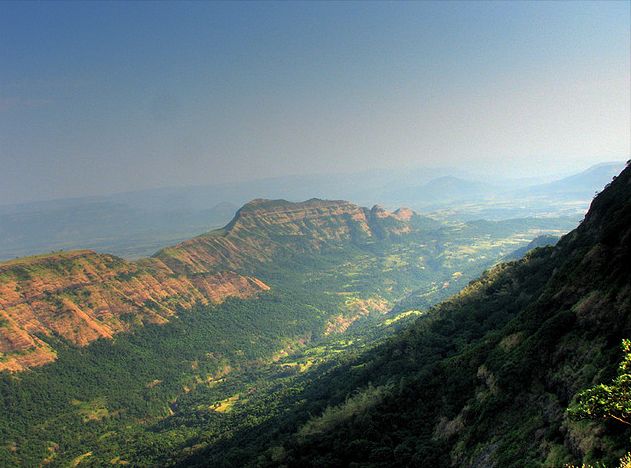
Correct — B, Peninsular plateau. Rigid and stable elevated land, denuded (worn-down) rocks and a series of scarps are hallmarks of India's Peninsular plateau. It is one of the oldest and most stable parts of the Earth's crust, made largely of ancient hard igneous and metamorphic rocks, long eroded into a low, block-like tableland with step-like scarps such as those of the Deccan Traps.
Why the others are wrong
- (a)Northern mountains — The Himalayas are young fold mountains that are still rising and tectonically unstable — the opposite of a rigid, denuded, stable block.
- (c)Northern plains — The Indo-Gangetic plains are flat, low-lying depositional lands of recent alluvium, not elevated, denuded rock with scarps.
- (d)Coastal plains — The coastal plains are narrow, low, flat depositional strips beside the sea, without the elevated rigid-rock character described.
Concept
India's physiography has four broad divisions: the young folded Himalayas, the flat depositional Northern (Indo-Gangetic) plains, the ancient rigid Peninsular plateau, and the narrow coastal plains. The Peninsular plateau is part of the old Gondwana landmass — geologically stable, built of hard crystalline rock and much eroded.
The key words 'rigid, stable, denuded, scarps' point to old, worn, hard-rock highlands. Only the Peninsular plateau fits; the Himalayas are young and unstable, and the plains are flat and depositional.
Key facts
- The Peninsular plateau is one of the oldest and most stable landmasses on Earth, part of Gondwana.
- It is composed mainly of ancient igneous and metamorphic (crystalline) rocks.
- Its Deccan Trap region shows characteristic step-like scarps formed by basalt lava flows.
- By contrast, the Himalayas are young fold mountains that are still rising.
Study next
Common traps
- Confusing 'elevated land' with the Himalayas — but the Himalayas are young and unstable, not rigid and denuded.
- Overlooking that the plains and coasts are depositional, not eroded hard rock.
Describes landform traits (rigid, denuded, scarps) and asks the region — match to the Peninsular plateau.
Related PYQs
Which one of the following is the northernmost river basin of the Deccan Plateau?
- (a) Chambal
- (b) Mahi
- (c) Narmada
- (d) Tapti
Answer(d) Tapti
Same region — the Deccan / Peninsular plateau. That item tests its drainage; this one tests its defining landform character (rigid, denuded, scarped).
Practice
- practice — not a real PYQ
Which physiographic division of India is geologically the oldest and most stable?
- (a)Himalayas
- (b)Northern plains
- (c)Peninsular plateau
- (d)Coastal plains
Answer(c) Peninsular plateau — part of the ancient Gondwana landmass. - practice — not a real PYQ
The step-like scarps of the Deccan Traps were formed mainly by
- (a)folding of sedimentary rock
- (b)basaltic lava flows
- (c)glacial deposition
- (d)river alluvium
Answer(b) basaltic lava flows — successive flows built the stepped terrain.