
Snow, sleet and hail are the forms of
- (a)precipitation
- (b)condensation
- (c)transpiration
- (d)evaporation
Answer
Why
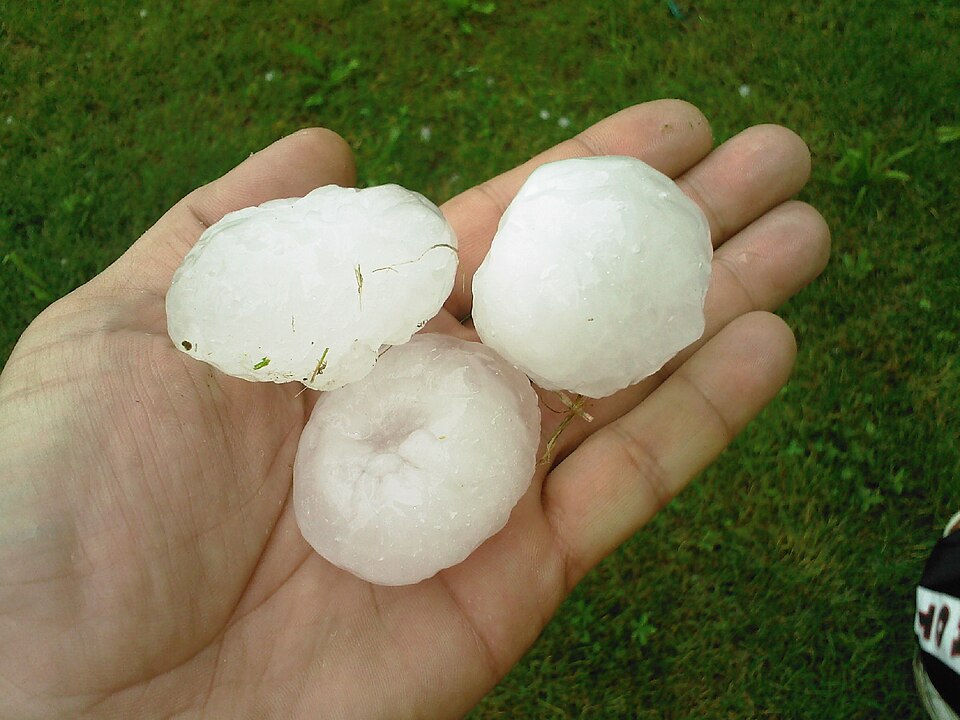
Correct — A, precipitation. Snow, sleet and hail are all solid forms of precipitation — water that has condensed in the atmosphere and then fallen to the ground under gravity. They differ only in how the water freezes: snow forms as ice crystals, sleet as frozen or refrozen raindrops, and hail as layered ice built up in strong thunderstorm updraughts.
Why the others are wrong
- (b)condensation — Condensation is the change of water vapour to liquid (as in dew or fog); it is a stage before precipitation, not the falling itself.
- (c)transpiration — Transpiration is the release of water vapour from plants — an input to the atmosphere, not falling water.
- (d)evaporation — Evaporation turns liquid water into vapour; it acts in the opposite direction to precipitation.
Concept
In the water cycle, water evaporates, condenses into clouds, and then falls back as precipitation. Precipitation takes liquid forms (rain, drizzle) and solid forms (snow, sleet, hail), depending on the temperature of the air the drops fall through.
The distractors are all water-cycle terms. Only precipitation refers to water falling to the surface; condensation, transpiration and evaporation are other stages that add or change vapour.
Key facts
- Precipitation is any form of water — liquid or solid — that falls from clouds to the ground.
- Snow forms as ice crystals; sleet is frozen or refrozen raindrops; hail is layered ice from thunderstorm updraughts.
- Condensation (vapour to liquid) produces clouds, dew and fog, and precedes precipitation.
- Evaporation and transpiration move water into the atmosphere as vapour.
Study next
Common traps
- Confusing condensation (which makes clouds and dew) with precipitation (falling water).
- Thinking hail and sleet are the same — hail forms in updraughts, sleet is refrozen rain.
Groups solid water forms and asks their category — all are precipitation.
Related PYQs
Which of the following statements with reference to Sleet is/are correct? 1. Sleet is frozen raindrops and refrozen melted snow-water. 2. It occurs when a layer of air with the temperature below freezing point overlies a warm layer near the ground surface.
- (a) 1 only
- (b) 2 only
- (c) Both 1 and 2
- (d) Neither 1 nor 2
Answer(a) 1 only
Same concept — sleet as a form of precipitation. That item probes how sleet forms; this one classifies snow, sleet and hail together as precipitation.
Practice
- practice — not a real PYQ
Which one of the following is NOT a form of precipitation?
- (a)Snow
- (b)Hail
- (c)Dew
- (d)Sleet
Answer(c) Dew — dew is a form of condensation, not falling precipitation. - practice — not a real PYQ
Hailstones are typically formed in which type of cloud?
- (a)Cirrus
- (b)Cumulonimbus
- (c)Stratus
- (d)Altostratus
Answer(b) Cumulonimbus — the tall thunderstorm cloud with strong updraughts.