
Which of the following statements with reference to Sleet is/are correct? 1. Sleet is frozen raindrops and refrozen melted snow-water. 2. It occurs when a layer of air with the temperature below freezing point overlies a warm layer near the ground surface.
- (a)1 only
- (b)2 only
- (c)Both 1 and 2
- (d)Neither 1 nor 2
Answer
Why
Correct — A, 1 only. Statement 1 is the correct definition: sleet is frozen raindrops and the refrozen water of melted snow, that is, small pellets of ice. Statement 2 has the temperature layering the wrong way round — sleet forms when a warm (above-freezing) layer aloft, which melts falling snow, overlies a cold (below-freezing) layer near the ground that refreezes the drops. As printed, with a below-freezing layer over a warm layer, Statement 2 is incorrect, so only Statement 1 stands.
Why the others are wrong
- (b)2 only — Statement 2 reverses the real conditions for sleet, so it is not correct; and Statement 1, the true definition, is left out — wrong on both counts.
- (c)Both 1 and 2 — Statement 2 is incorrect because it inverts the warm-over-cold layering needed for sleet, so both cannot be correct.
- (d)Neither 1 nor 2 — Statement 1 is the accepted definition of sleet, so the answer cannot be 'neither'.
Concept
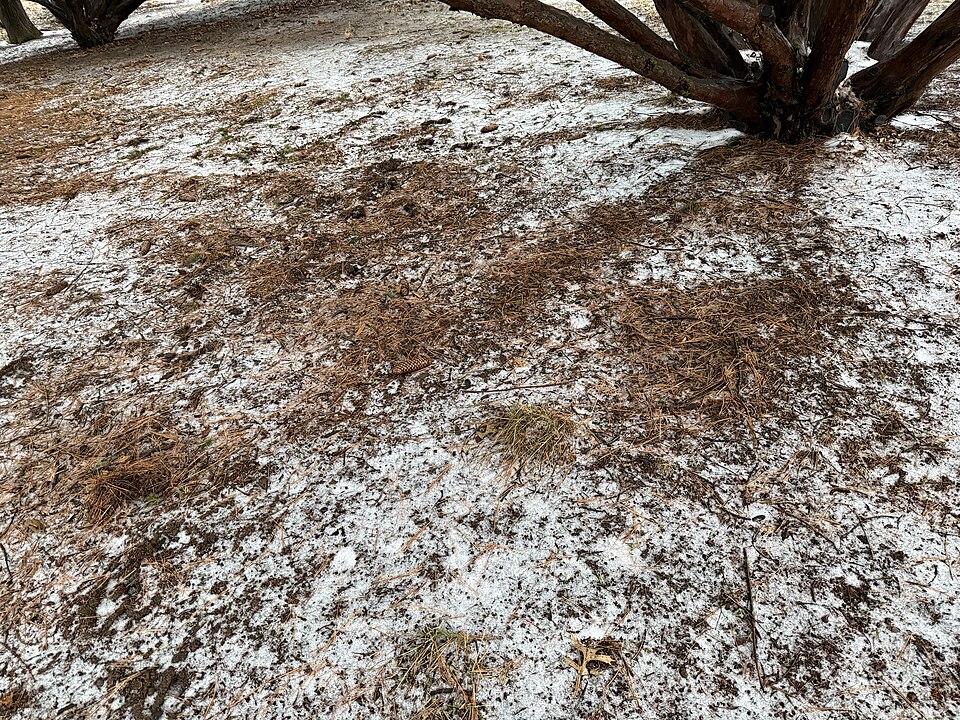
Sleet is a form of solid precipitation made of small, translucent ice pellets. It forms when snow falling from a cloud melts on passing through a warm layer of air and the resulting raindrops then refreeze in a sub-freezing layer nearer the ground, reaching the surface as frozen pellets.
The trap is the vertical order of the air layers. For sleet the warm layer must lie above the cold layer, so snow melts first and refreezes last. The statement flips this to a cold layer over a warm layer, which describes the wrong sequence and cannot produce sleet — that reversal is what makes Statement 2 false.
Key facts
- Sleet consists of frozen raindrops and the refrozen water of melted snow — small ice pellets.
- It needs a warm (above-freezing) layer aloft over a cold (below-freezing) layer near the surface.
- Snow melts in the warm layer and refreezes in the cold layer before reaching the ground.
- Sleet differs from hail, which forms in tall cumulonimbus clouds by repeated up-and-down cycles.
Study next
Common traps
- Sleet needs warm air above and cold air below — reversing the layers is the classic error.
- Do not confuse sleet (refrozen raindrops) with hail (built up in thunderstorm clouds).
Sleet is tested by pairing its correct definition with a statement that quietly inverts the warm-over-cold air layering.
Related PYQs
No directly related past PYQ was found.
Practice
- practice — not a real PYQ
Sleet is best described as
- (a)large ice balls from thunderstorm clouds
- (b)frozen raindrops or refrozen melted snow
- (c)supercooled water droplets
- (d)ice crystals forming directly on the ground
Answer(b) frozen raindrops or refrozen melted snow — sleet is small ice pellets formed when raindrops refreeze near the ground. - practice — not a real PYQ
Which form of precipitation is built up by repeated upward and downward movement inside tall cumulonimbus clouds?
- (a)Sleet
- (b)Dew
- (c)Hail
- (d)Frost
Answer(c) Hail — hailstones grow in layers as they are carried up and down within a thunderstorm cloud.