
The Satyashodhak Samaj (Truth-Seeking Society) was set up by
- (a)Vinoba Bhave
- (b)Jyotiba Phule
- (c)B. R. Ambedkar
- (d)C. Rajagopalachari
Answer
Why
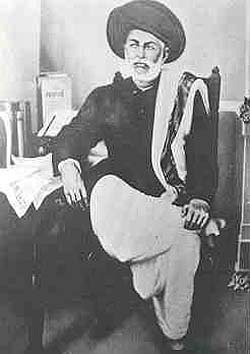
Correct — B, Jyotiba Phule. The Satyashodhak Samaj ('Society of Truth Seekers') was founded in 1873 by Jyotirao (Jyotiba) Phule in Pune. It worked to liberate lower castes and untouchables from social and religious domination by the upper castes, promoting education, widow remarriage and rites without Brahmin priests. Phule and his wife Savitribai are remembered as pioneers of social reform and women's education in western India.
Why the others are wrong
- (a)Vinoba Bhave — Vinoba Bhave was a much later Gandhian known for the Bhoodan (land-gift) movement; he was not connected with the 19th-century Satyashodhak Samaj.
- (c)B. R. Ambedkar — Ambedkar led the 20th-century Dalit movement and admired Phule, but the Satyashodhak Samaj was founded by Phule in 1873, before Ambedkar's time.
- (d)C. Rajagopalachari — Rajagopalachari was a Congress leader and the last Governor-General of India; he had no role in founding the Satyashodhak Samaj.
Concept
The Satyashodhak Samaj was a social-reform organisation founded by Jyotiba Phule in 1873 to challenge caste hierarchy and priestly dominance and to spread education among the lower castes and women. It is a landmark of the 19th-century anti-caste reform tradition in Maharashtra.
The four names are reformers and leaders from different periods. The 1873 date and the anti-caste, education-focused mission of the society point to Phule, who is often called Mahatma Phule.
Key facts
- The Satyashodhak Samaj was founded by Jyotiba Phule in 1873 at Pune.
- It opposed caste discrimination and priestly (Brahminical) domination.
- Phule and his wife Savitribai pioneered education for girls and lower castes.
- Phule's major work 'Gulamgiri' (1873) attacked the caste system.
Study next
Common traps
- Attributing the society to Ambedkar because both fought caste oppression (Phule preceded him).
- Mixing up different reform bodies and their founders across the 19th and 20th centuries.
As a 'who founded' recall matching reform organisations (Satyashodhak Samaj, Prarthana Samaj, Arya Samaj) to their founders.
Related PYQs
Who among the following was the founder of the ‘Self-Respect Movement’?
- (a) ‘Periyar’ E. V. Ramaswamy Naicker
- (b) Dr. B. R. Ambedkar
- (c) Bhaskarrao Jadhav
- (d) Dinkarrao Javalkar
Answer(a) ‘Periyar’ E. V. Ramaswamy Naicker
Same theme — anti-caste social-reform organisations. The Self-Respect Movement (Periyar) belongs to the same reform tradition as Phule's Satyashodhak Samaj tested here.
Who among the following founded the 'Self-Respect Movement'?
- (a) Jyotiba Phule
- (b) Swami Vivekananda
- (c) E. V. Ramaswami Naicker
- (d) Dr. B. R. Ambedkar
Answer(c) E. V. Ramaswami Naicker
A later NDA item on anti-caste social reform — it even lists Jyotiba Phule as an option, tying the Satyashodhak Samaj tradition to the Self-Respect Movement.
Practice
- practice — not a real PYQ
The famous work 'Gulamgiri' (Slavery), attacking the caste system, was written by
- (a)B. R. Ambedkar
- (b)Jyotiba Phule
- (c)Raja Ram Mohan Roy
- (d)Dayananda Saraswati
Answer(b) Jyotiba Phule — the founder of the Satyashodhak Samaj. - practice — not a real PYQ
Savitribai Phule is best remembered as a pioneer of
- (a)women's education in India
- (b)the trade union movement
- (c)the revolutionary armed struggle
- (d)classical music
Answer(a) women's education in India.