
Which one from among the following planets is largest in size?
- (a)Earth
- (b)Venus
- (c)Mars
- (d)Mercury
Answer
Why
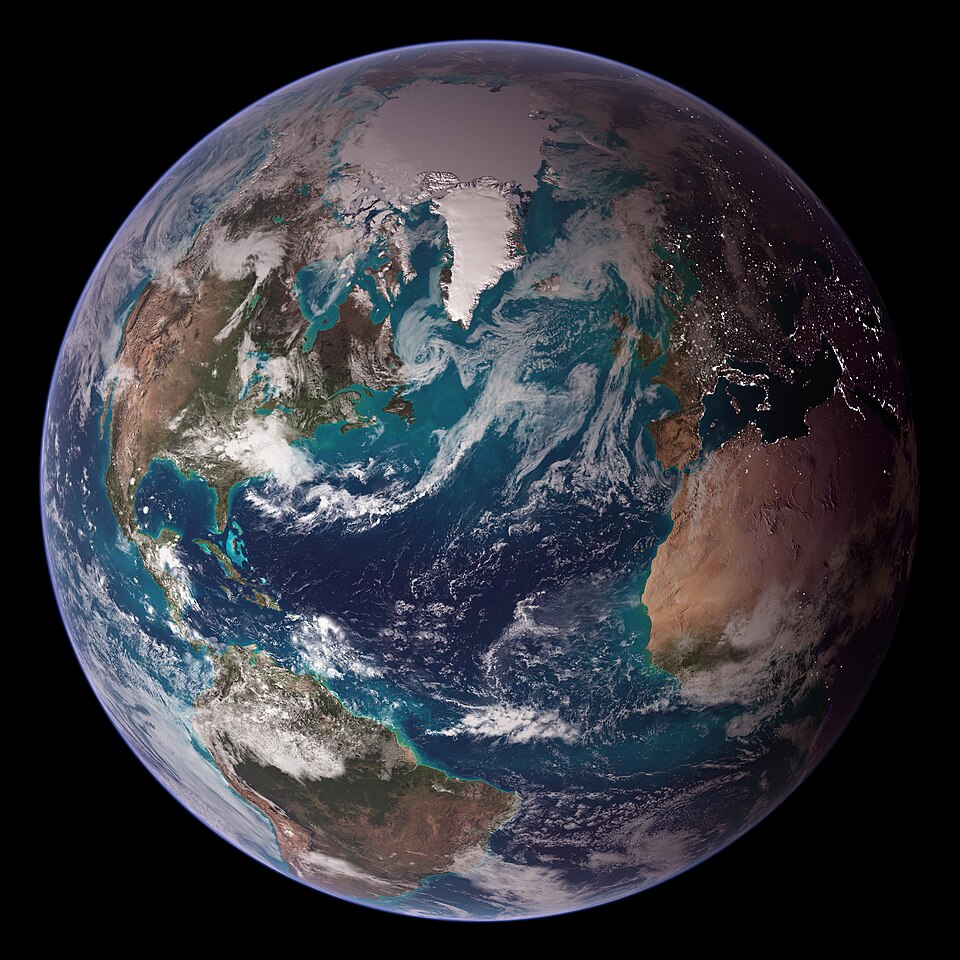
Correct — A, Earth. Of the four planets offered, Earth is the largest, with an equatorial diameter of about 12,742 km. Venus is a near-twin but slightly smaller at about 12,104 km, Mars is only about 6,779 km across, and Mercury is about 4,879 km. So among the given choices the biggest is Earth. Jupiter is the largest planet in the Solar System, but it is not one of the options here.
Why the others are wrong
- (b)Venus — Venus is often called Earth's twin, but its diameter of about 12,104 km is a little smaller than Earth's, so it is not the largest of the four.
- (c)Mars — Mars is roughly half Earth's diameter at about 6,779 km, so it is far smaller than Earth.
- (d)Mercury — Mercury is the smallest planet in the Solar System at about 4,879 km across, so it cannot be the largest here.
Concept
The eight planets differ greatly in size. Among the four rocky inner planets — Mercury, Venus, Earth and Mars — Earth is the largest. The giant planets Jupiter and Saturn dwarf them all but are not part of this question.
The trap is that all four options are terrestrial planets of a similar small scale, so you have to recall their relative order rather than reason it out. Ranked by diameter, Earth comes out on top of the given set.
Key facts
- The diameters run roughly Earth about 12,742 km, Venus about 12,104 km, Mars about 6,779 km and Mercury about 4,879 km.
- Mercury is the smallest planet in the Solar System and Jupiter is the largest.
- The four inner planets — Mercury, Venus, Earth and Mars — are rocky terrestrial planets.
- Venus is nearly the same size as Earth, which is why it is called Earth's twin.
Study next
Common traps
- Assuming Venus, Earth's twin, is equal to or larger than Earth.
- Confusing size (diameter) with mass or with density — Earth is the densest planet but not the most massive.
Asked as a straight 'which is largest' comparison restricted to inner planets — rank them by diameter and pick Earth.
Related PYQs
Among the following which planet takes maximum time for one revolution around the Sun?
- (a) Earth
- (b) Jupiter
- (c) Mars
- (d) Venus
Answer(b) Jupiter
Same idea — comparing planets on a single physical property. That UPSC item ranks planets by orbital period (Jupiter takes longest); this NDA item ranks them by size (Earth is largest of the four offered).
Which one of the following planets has the highest density?
- (a) Mercury
- (b) Venus
- (c) Jupiter
- (d) Earth
Answer(d) Earth
Same family — comparing planets by a physical property. That NDA item asks for the densest planet (Earth); this one asks for the largest of four inner planets (also Earth), a useful reminder that size and density are different measures.
Practice
- practice — not a real PYQ
Which one of the following is the smallest planet in the Solar System?
- (a)Mercury
- (b)Mars
- (c)Earth
- (d)Venus
Answer(a) Mercury — it is the smallest of the eight planets. - practice — not a real PYQ
Which planet is often called Earth's twin because of its similar size?
- (a)Mars
- (b)Venus
- (c)Mercury
- (d)Jupiter
Answer(b) Venus — its diameter is close to that of Earth.