
The device used to produce electric current is known as
- (a)motor
- (b)generator
- (c)ammeter
- (d)galvanometer
Answer
Why
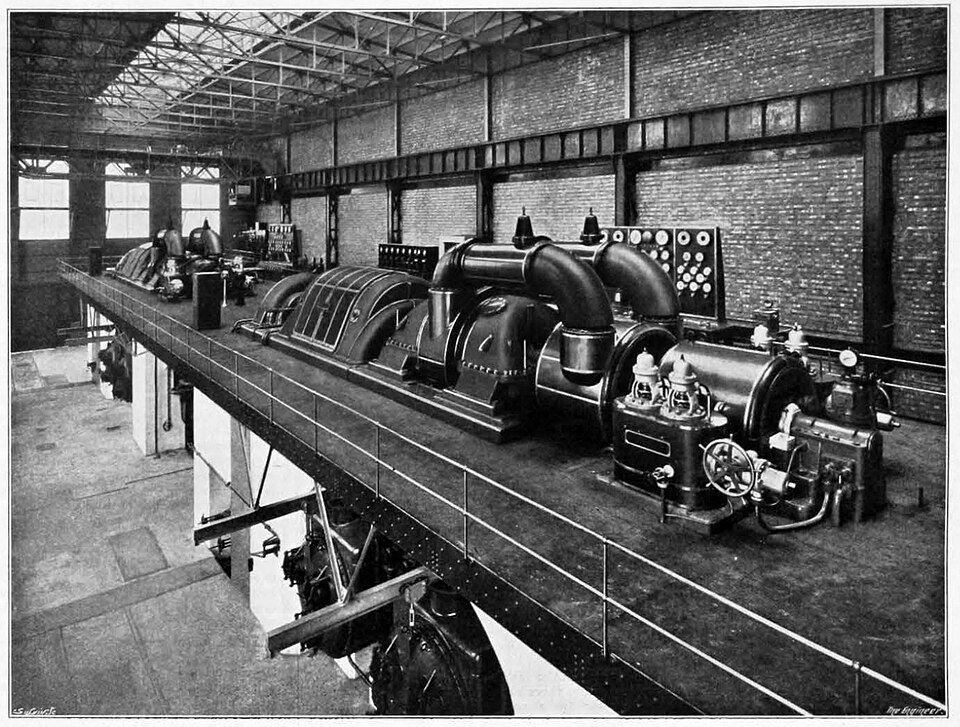
Correct — B, generator. A generator converts mechanical energy into electrical energy: when a coil is rotated in a magnetic field, the changing magnetic flux through it induces (produces) an electric current by electromagnetic induction. That is exactly the job named in the question — to produce electric current — so the generator is the correct device.
Why the others are wrong
- (a)motor — An electric motor does the opposite job — it takes electric current and produces motion (converts electrical energy into mechanical energy), so it consumes current rather than producing it.
- (c)ammeter — An ammeter only measures the size of a current already flowing in a circuit; it does not generate any current of its own.
- (d)galvanometer — A galvanometer is a sensitive instrument that detects the presence and direction of a small current; like the ammeter it reads current, it does not produce it.
Concept
A generator (or dynamo) works on Faraday's law of electromagnetic induction. When a conductor or coil moves through a magnetic field, or the magnetic field through it changes, an electromotive force is induced and a current flows if the circuit is closed. A motor is built almost identically but runs the energy conversion the other way — current in, motion out.
The four options split into producers versus users of current. Only the generator makes current; the motor uses current to make motion, while the ammeter and galvanometer are meters that merely read current. Match the stated function, 'produce electric current', to the generator.
Key facts
- A generator converts mechanical energy into electrical energy using electromagnetic induction (Faraday's law).
- An electric motor is the reverse device — it converts electrical energy into mechanical energy.
- An ammeter measures the magnitude of current and is connected in series in a circuit.
- A galvanometer detects and shows the direction of very small currents.
Study next
Common traps
- Confusing a generator with a motor because they look alike — generator produces current, motor produces motion.
- Picking a meter (ammeter or galvanometer) because it is 'associated with current', when the question asks which device produces current.
Asked as which device performs a stated electrical function — sort producers (generator) from users (motor) and meters (ammeter, galvanometer).
Related PYQs
The instrument used for detecting the presence of electric current in a circuit is
- (a) Refractometer
- (b) Galvanometer
- (c) Viscometer
- (d) Diffractometer
Answer(b) Galvanometer
Same device-identification pattern for electric current — that 2020 NDA item asks which instrument detects a current (galvanometer); this one asks which device produces a current (generator), separating meters, producers and users of current.
Practice
- practice — not a real PYQ
An electric motor is a device that converts
- (a)electrical energy into mechanical energy
- (b)mechanical energy into electrical energy
- (c)heat energy into electrical energy
- (d)chemical energy into electrical energy
Answer(a) electrical energy into mechanical energy — the reverse of a generator. - practice — not a real PYQ
The working of an electric generator is based on the principle of
- (a)heating effect of current
- (b)electromagnetic induction
- (c)chemical effect of current
- (d)magnetic effect of a magnet only
Answer(b) electromagnetic induction — a changing magnetic flux induces a current (Faraday's law).