
Reaction of quick lime (CaO) with water to produce slaked lime (Ca(OH)₂) is an example of
- (a)Displacement reaction.
- (b)Endothermic reaction.
- (c)Decomposition reaction.
- (d)Exothermic reaction.
Answer
Why
Correct — D, Exothermic reaction. Quick lime (CaO) reacts with water to form slaked lime, Ca(OH)₂, giving out a large amount of heat — the mixture hisses and becomes hot. A reaction that releases heat to its surroundings is exothermic. (It is also a combination reaction, since two substances join to form one, but among the four options the property being tested is that it is exothermic.)
Why the others are wrong
- (a)Displacement reaction. — In a displacement reaction one element pushes another out of a compound; here CaO and water simply combine, with no element being displaced, so it is not displacement.
- (b)Endothermic reaction. — An endothermic reaction absorbs heat from the surroundings; the slaking of lime clearly gives out heat, so it is the opposite of endothermic.
- (c)Decomposition reaction. — Decomposition breaks a single compound into two or more products; here two substances combine into one product, so it is a combination reaction, not decomposition.
Concept
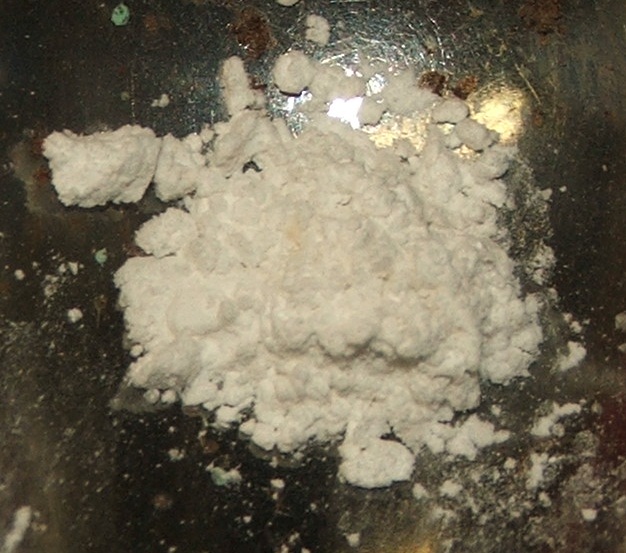
When quick lime (calcium oxide) is added to water it forms slaked lime (calcium hydroxide) and releases a lot of heat. Because heat flows out to the surroundings, the change is exothermic. By counting reactants and products — two substances forming one — it is also classed as a combination reaction.
Two features of this reaction map onto two answer choices: 'releases heat' rules in exothermic and rules out endothermic, while 'two combine into one' makes it combination rather than decomposition. The option the key wants is the energetics — exothermic.
Key facts
- CaO (quick lime) + H₂O → Ca(OH)₂ (slaked lime) + heat — a vigorous exothermic reaction.
- Exothermic reactions release heat; endothermic reactions absorb heat.
- The reaction is also a combination reaction — two reactants forming a single product.
- Slaked lime is used for whitewashing walls and for neutralising acidic soils.
Study next
Common traps
- Calling the reaction a decomposition when it is actually a combination.
- Missing that 'gives out heat' directly means it is exothermic.
Asked as the type or energetics of the quick lime + water reaction, or by classifying given reactions as exothermic or endothermic.
Related PYQs
Consider the following statements: 1. Baking soda is used in fire extinguishers. 2. Quicklime is used in the manufacture of glass. 3. Gypsum is used in the manufacture of Plaster of Paris. Which of the statements given above is/are correct?
- (a) 1 and 2
- (b) 2 and 3
- (c) 1 only
- (d) 1, 2 and 3
Answer(d) 1, 2 and 3 — all three statements are correct, including the use of quicklime in glass-making.
Related — quick lime (calcium oxide) chemistry and uses, the same reagent that reacts exothermically with water in this question.
Match List I with List II and select the answer using the code given below the Lists: List I (Reaction) A. CaO (s) + H₂O (l) → Ca(OH)₂ (aq) B. CaCO₃ (s) → CaO (s) + CO₂ (g) C. Pb (s) + CuCl₂ (aq) → PbCl₂ (aq) + Cu (s) D. Na₂SO₄ (aq) + BaCl₂ (aq) → BaSO₄ (s) + 2NaCl (aq) List II (Type) 1. Single displacement 2. Double displacement 3. Combination 4. Decomposition Code:
- (a) A-2, B-1, C-4, D-3
- (b) A-2, B-4, C-1, D-3
- (c) A-3, B-4, C-1, D-2
- (d) A-3, B-1, C-4, D-2
Answer(c) A-3, B-4, C-1, D-2
Same reaction — CaO + H₂O → Ca(OH)₂ appears here classified as a combination reaction, the very reaction this question asks about.
Which one of the following is an endothermic reaction?
- (a) CH₄ (g) + 2O₂ (g) → CO₂ (g) + 2O₂ (g)
- (b) C₆H₁₂O₆ (aq) + 6O₂ (g) → 6CO₂ (g) + 6H₂O (l)
- (c) N₂ (g) + 3H₂ (g) → 2NH₃ (g)
- (d) 2Pb(NO₃)₂ (s) → 2PbO (s) + 4NO₂ (g) + O₂ (g)
Answer(d) 2Pb(NO₃)₂ (s) → 2PbO (s) + 4NO₂ (g) + O₂ (g)
Same skill — classifying a reaction as exothermic or endothermic, the exact judgement made for the slaking of lime here.
Practice
- practice — not a real PYQ
The reaction CaO + H₂O → Ca(OH)₂ is a combination reaction that is also
- (a)endothermic
- (b)exothermic
- (c)a displacement reaction
- (d)a decomposition reaction
Answer(b) exothermic — it releases a large amount of heat. - practice — not a real PYQ
Which one of the following is an endothermic process?
- (a)slaking of quick lime
- (b)burning of natural gas
- (c)decomposition of calcium carbonate on heating
- (d)respiration
Answer(c) decomposition of calcium carbonate on heating — it needs a continuous supply of heat.