
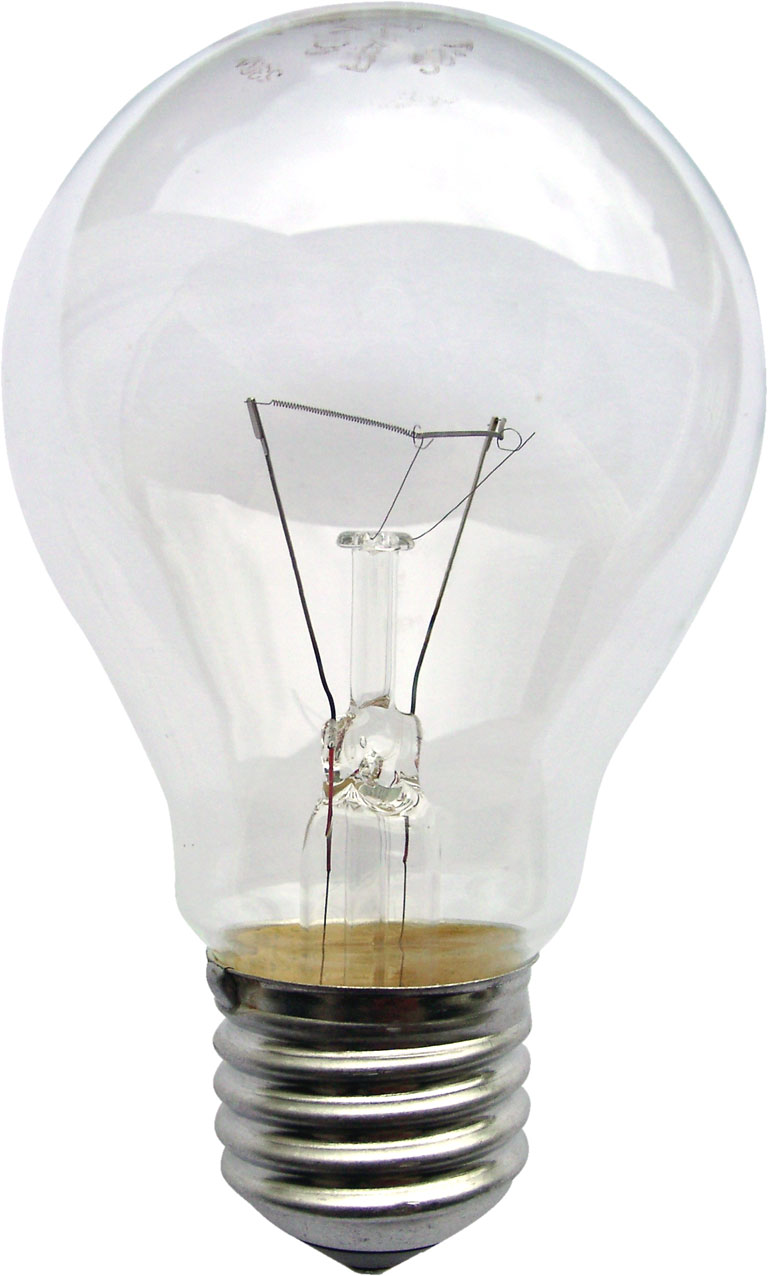
A current of 1·0 A is drawn by a filament of an electric bulb for 10 minutes. The amount of electric charge that flows through the circuit is
- (a)0·1 C
- (b)10 C
- (c)600 C
- (d)800 C
Answer
Why
Correct — C, 600 C. Electric charge equals the current multiplied by the time for which it flows: Q = I × t. Here I = 1·0 A and t = 10 minutes = 10 × 60 = 600 seconds, so Q = 1·0 × 600 = 600 coulombs. The one step that decides the answer is converting minutes into seconds before multiplying.
Why the others are wrong
- (a)0·1 C — This is far too small for a full 10 minutes of 1 A flow; it comes from dividing rather than multiplying, whereas charge grows with time, so a steady 1 A over 600 s must give hundreds of coulombs.
- (b)10 C — This forgets to convert minutes to seconds — it multiplies 1·0 A by 10 (minutes) instead of by 600 s, making the answer 60 times too small.
- (d)800 C — This does not follow from Q = I × t with the given values; 800 C at 1 A would need 800 s (about 13⅓ minutes), not 10 minutes.
Concept
Electric current is the rate of flow of electric charge, so the current I, the total charge Q and the time t are linked by I = Q/t, which rearranges to Q = I × t. The coulomb (C) is the SI unit of charge and the ampere (A) is one coulomb per second.
The sum is one line once the units are right. The tempting error is to leave the time in minutes, giving 10 C (option b); the exam rewards the habit of converting every time interval to seconds before using an SI formula.
Key facts
- Q = I × t — charge (coulomb) equals current (ampere) times time (second).
- One ampere is a flow of one coulomb per second (1 A = 1 C/s).
- 10 minutes = 600 seconds; always convert time to seconds in SI current–charge problems.
- The charge on a single electron is about 1·6 × 10⁻¹⁹ C, so 600 C represents an enormous number of electrons.
Study next
Common traps
- Leaving time in minutes instead of converting to seconds — the classic 10 C error.
- Confusing charge (measured in coulombs) with current (measured in amperes).
Usually a one-step numerical — given the current and the time, find the charge with Q = I × t, or work the relation backwards.
Related PYQs
Which one of the following is NOT a basic property of electric charge?
- (a) Charges can be added
- (b) Charge is conserved
- (c) Charge on a body is always an integral multiple of an electron or a proton charge
- (d) Charges can be created and destroyed in an isolated system
Answer(d) Charges can be created and destroyed in an isolated system
Same quantity — electric charge in coulombs, whose steady rate of flow is the current used here in Q = I × t.
An incandescent electric bulb converts 20 % of its power consumption into light, and the remaining power is dissipated as heat. The bulb’s filament has a resistance of 200 Ω and 2 A current flows through it. If the bulb remains ON for 10 h and the rate of electricity charge is ₹5 per unit, then which among the following is the correct amount for the money spent on producing light?
- (a) ₹ 5
- (b) ₹ 6
- (c) ₹ 7
- (d) ₹ 8
Answer(d) ₹ 8
Related — a bulb-filament problem built on current and time, the same variables that give the charge Q = I × t here.
Practice
- practice — not a real PYQ
A steady current of 2 A flows through a wire for 5 minutes. The charge that passes through it is
- (a)10 C
- (b)600 C
- (c)0·4 C
- (d)150 C
Answer(b) 600 C — Q = I × t = 2 × (5 × 60) = 600 C. - practice — not a real PYQ
One ampere of electric current is equivalent to a flow of
- (a)1 coulomb per second
- (b)1 coulomb per minute
- (c)1 joule per second
- (d)1 volt per second
Answer(a) 1 coulomb per second — this is the definition of the ampere.