
Which one of the following clouds is a rain-bearing cloud?
- (a)Cumulus cloud
- (b)Stratus cloud
- (c)Nimbus cloud
- (d)Cirrus cloud
Answer
Why
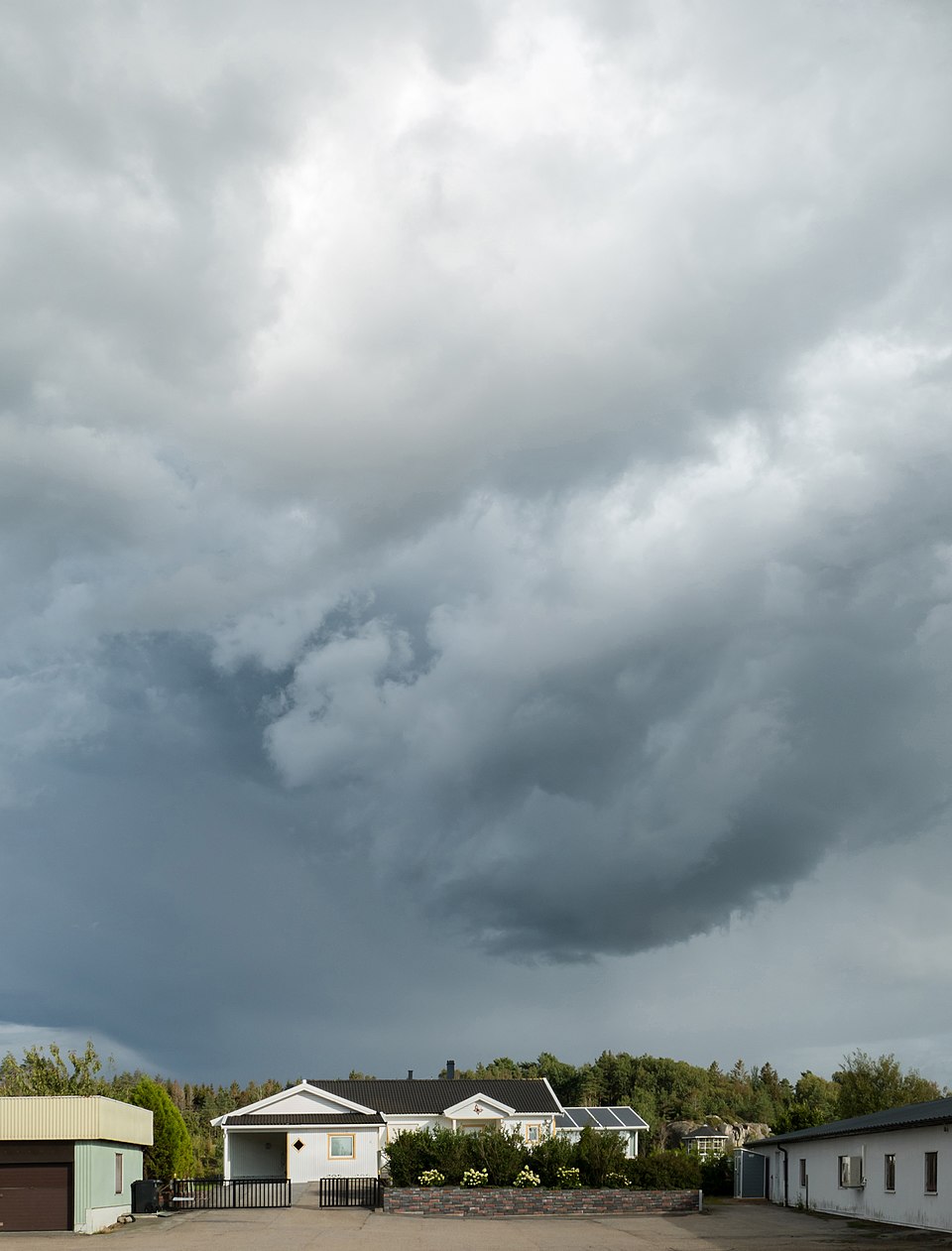
Correct — C, Nimbus cloud. The Latin word 'nimbus' means rain, and nimbus clouds (such as nimbostratus and cumulonimbus) are thick, dark, moisture-laden clouds that bring steady or heavy rainfall. Among the four listed, the nimbus is the classic rain-bearing cloud.
Why the others are wrong
- (a)Cumulus cloud — Cumulus are the puffy, cauliflower-shaped fair-weather clouds; they bring rain only when they build vertically into a cumulonimbus (a nimbus-type cloud), so plain cumulus is not the rain cloud.
- (b)Stratus cloud — Stratus is low, grey, layered cloud that may give drizzle or mist, but it is not the heavy rain-bearing cloud; the nimbus/nimbostratus is.
- (d)Cirrus cloud — Cirrus are thin, wispy, high-altitude clouds made of ice crystals; they signal fair or changing weather and carry no rain.
Concept
Clouds are classified by their form and by their altitude. The four basic forms are cirrus (high, wispy), cumulus (heaped, puffy), stratus (layered sheets) and nimbus (rain clouds). 'Nimbo-' or '-nimbus' in a cloud's name signals that it produces precipitation, as in nimbostratus and cumulonimbus.
The question tests which name denotes a rain cloud. Cirrus and cumulus and stratus describe shape/height; only 'nimbus' directly means rain. Recognising the '-nimbus/nimbo-' rain marker gives the answer immediately.
Key facts
- 'Nimbus' means rain; nimbus clouds are the rain-bearing type.
- Nimbostratus (layered) and cumulonimbus (towering thunderstorm) are the main rain/thunder clouds.
- Cirrus are high, thin ice-crystal clouds; cumulus are puffy fair-weather clouds; stratus are low layered clouds.
- Clouds are grouped by altitude into high, middle and low families.
Study next
Common traps
- Picking cumulus (fair-weather) as the rain cloud — it must grow into cumulonimbus to rain.
- Assuming cirrus (high, wispy) clouds bring rain; they carry only ice crystals.
Asked as 'which cloud brings rain / is a high cloud', or by matching cloud names to form, altitude and weather.
Related PYQs
During a thunderstorm, the thunder in the skies is produced by the 1. Meeting of cumulonimbus clouds in the sky 2. Lightning that separates the nimbus clouds 3. Violent upward movement of air and water particles
- (a) 1 only
- (b) 2 and 3
- (c) 1 and 3
- (d) None of the above produces the thunder
Answer(d) None of the above produces the thunder
Same concept — rain/thunder clouds (cumulonimbus and nimbus) and how they behave, the cloud-type recognition tested when identifying the nimbus as the rain-bearing cloud.
Which of the following statements regarding clouds is/are correct? 1. Clouds are classified on the basis of altitude and their form. 2. According to altitude they are classified as High, Middle and Low clouds. 3. Stratus, Nimbostratus and Stratocumulus are high clouds. Select the answer using the code given below:
- (a) 1 only
- (b) 1 and 2 only
- (c) 2 and 3 only
- (d) 1, 2 and 3
Answer(b) 1 and 2 only
Same concept — the classification of clouds by form and altitude, the exact framework used to identify the nimbus as a rain-bearing cloud.
Practice
- practice — not a real PYQ
Which of the following clouds is a high-altitude cloud made of ice crystals?
- (a)Cumulus
- (b)Cirrus
- (c)Nimbus
- (d)Stratus
Answer(b) Cirrus — thin, wispy, high clouds composed of ice crystals. - practice — not a real PYQ
The towering cloud associated with thunderstorms and heavy rain is the
- (a)cirrostratus
- (b)cumulonimbus
- (c)altocumulus
- (d)cirrus
Answer(b) cumulonimbus — a nimbus-type cloud that brings thunder and heavy rain.