
The oxygen evolved during photosynthesis comes from splitting of
- (a)water
- (b)carbon dioxide
- (c)oxygen
- (d)light
Answer
Why
Correct: A, water. The light-dependent stage of photosynthesis begins with photolysis: light energy trapped by chlorophyll is used to split water molecules into hydrogen ions, electrons and oxygen. The electrons replace those that chlorophyll has just lost, the hydrogen is carried away to reduce carbon dioxide in the next stage, and the oxygen is left over and released. This was settled experimentally by growing plants in water labelled with the heavy oxygen isotope: the gas given off carried the label, while plants supplied with labelled carbon dioxide did not release labelled oxygen. So every molecule of oxygen a green plant puts into the air came from a water molecule, not from the carbon dioxide it absorbed.
Why the others are wrong
- (b)carbon dioxide: This is the intuitive answer and it is wrong. Carbon dioxide does contain oxygen, and the overall equation seems to allow the swap, but its oxygen atoms are not released: they stay in the molecule as it is reduced to carbohydrate, and the rest leave in the water formed during the process. Isotope labelling settled the point decisively.
- (c)oxygen: Oxygen is the product of photosynthesis, not a raw material. A plant takes in carbon dioxide and water and gives out oxygen; the oxygen it does consume, in respiration, is used up rather than split.
- (d)light: Light is energy, not matter, so there is nothing in it to split into atoms. Its role is to supply the energy that drives the splitting of water and the synthesis of the energy carriers used in the next stage.
Concept
Photosynthesis runs in two stages. In the light-dependent stage, held in the thylakoid membranes of the chloroplast, chlorophyll absorbs light, water is split by photolysis, oxygen is released, and the energy is banked as ATP and NADPH. In the light-independent stage, in the stroma, that ATP and NADPH are spent reducing carbon dioxide into carbohydrate. Writing the overall equation with six water molecules on each side (6CO₂ + 12H₂O giving C₆H₁₂O₆ + 6O₂ + 6H₂O) makes the bookkeeping honest, because it shows that twelve waters must be split to yield six molecules of oxygen.
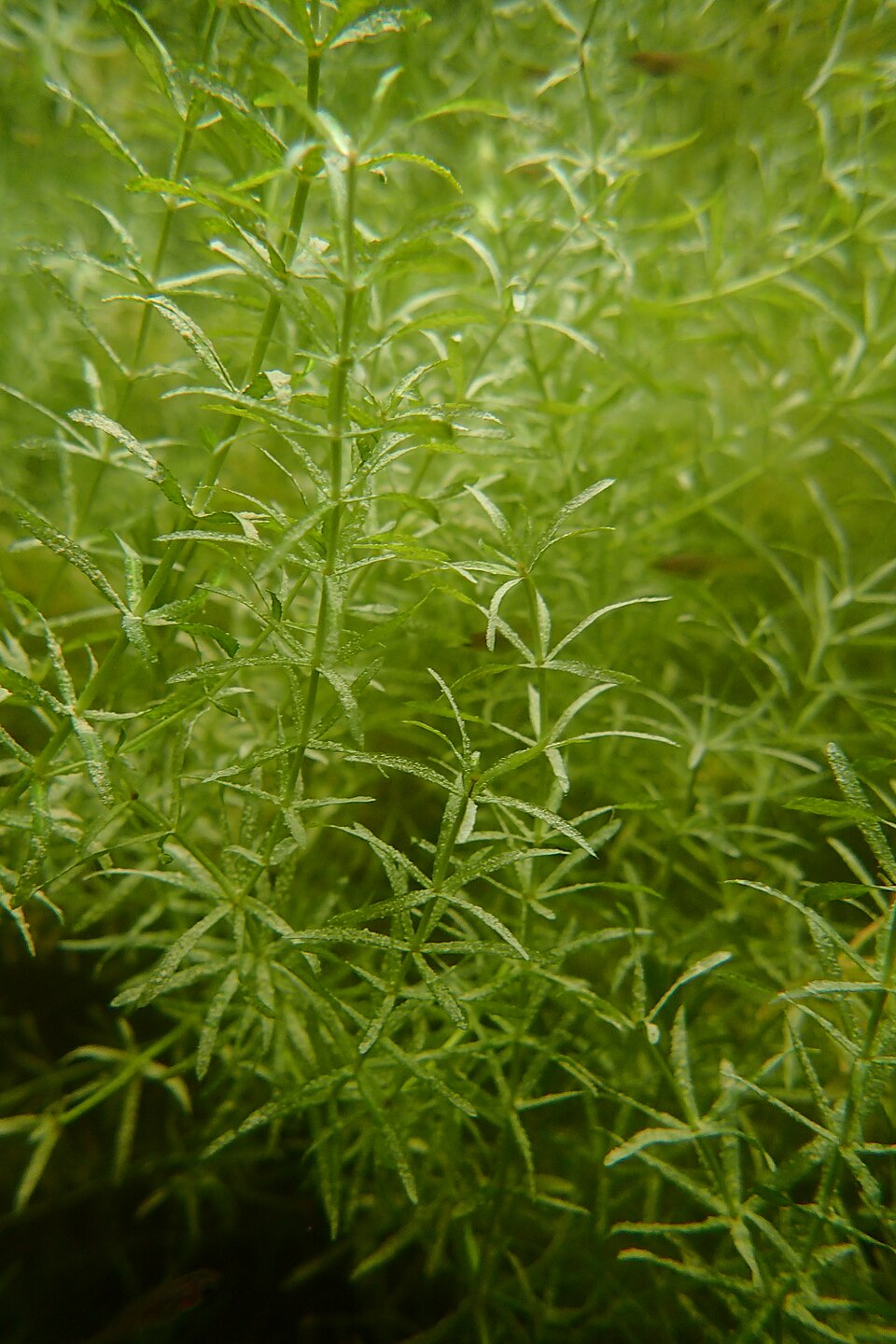
The trap here is a habit of reading equations left to right and matching atoms by eye. Carbon dioxide is the only reactant with 'oxide' in its name, so it looks like the obvious source. The discipline that protects you is to remember that oxygen is evolved in the light reaction, which happens before carbon dioxide is touched at all: a plant in the dark fixes no carbon and releases no oxygen, and a plant deprived of water stops releasing oxygen even in bright light. The school demonstration with a submerged water plant makes the same point visually: the bubbles rise from the plant only while it is lit.
Key facts
- Photolysis is the light-driven splitting of water into hydrogen ions, electrons and oxygen in the thylakoid membrane.
- Isotope-labelling experiments showed that the oxygen released carries the label given to water, not to carbon dioxide.
- The light reaction stores energy as ATP and NADPH; the light-independent reaction spends it to reduce carbon dioxide.
- Twelve molecules of water must be split for six molecules of oxygen, which is why the balanced equation shows water on both sides.
Study next
Common traps
- Assuming the oxygen released comes from carbon dioxide because the name contains 'oxide'.
- Treating light as a substance that can be broken down; it supplies energy, not atoms.
- Forgetting that water appears on both sides of the balanced equation, which is why the simplified school version can mislead.
NDA asks for the source of the evolved oxygen, for what happens in the light reaction, or for which of a set of statements about photosynthesis is correct.
Related PYQs
Which one of the following is the process involved in photosynthesis?
- (a) Potential energy is released to form free energy
- (b) Free energy is converted into potential energy and stored
- (c) Food is oxidized to release carbon dioxide and water
- (d) Oxygen is taken in, and carbon dioxide and water vapour are given out
Answer(b) Free energy is converted into potential energy and stored
The energy side of the same process: light energy is banked as chemical energy, which is precisely what makes the splitting of water possible in the first place.
Which one of the following statements about the process of photosynthesis is correct?
- (a) Chemical energy is converted into light energy.
- (b) Carbon dioxide is oxidised to form carbohydrate.
- (c) Water molecule splits into hydrogen and oxygen.
- (d) Light energy is directly used to split water.
Answer(c) Water molecule splits into hydrogen and oxygen.
Confirms the identical fact three years later, and its option (d) is a useful reminder that the splitting is driven through chlorophyll rather than by raw light acting on water.
Which one of the following is NOT a requirement for photosynthesis ?
- (a) Chlorophyll
- (b) CO₂
- (c) Water
- (d) O₂
Answer(d) O₂
Reinforces why option (c) of this card is impossible: a plant does not take oxygen in to make oxygen.
Practice
- practice, not a real PYQ
Photolysis during photosynthesis refers to the
- (a)splitting of carbon dioxide by light
- (b)splitting of water by light energy trapped by chlorophyll
- (c)breakdown of glucose to release energy
- (d)absorption of light by carotenoids
Answer(b) splitting of water by light energy trapped by chlorophyll: the step that releases oxygen. - practice, not a real PYQ
In which part of the chloroplast does the light-dependent reaction of photosynthesis take place?
- (a)Stroma
- (b)Outer membrane
- (c)Thylakoid membrane
- (d)Intermembrane space
Answer(c) Thylakoid membrane: the pigments and electron carriers of the light reaction are embedded there, while carbon fixation happens in the stroma.