
Which one of the following is not a process of chemical weathering?
- (a)Solution
- (b)Carbonation
- (c)Oxidation
- (d)Exfoliation
Answer
Why
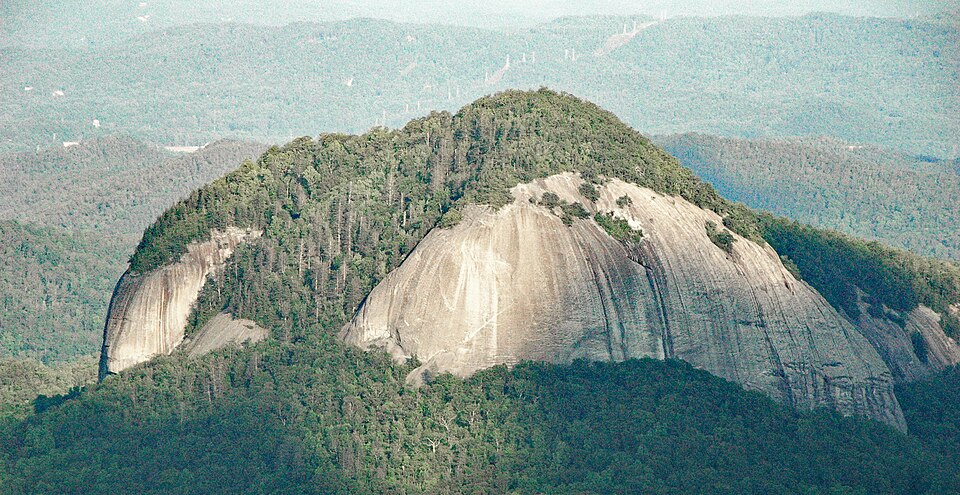
Correct: D, Exfoliation. Exfoliation is a physical, or mechanical, process. It happens through pressure release: rock that formed deep underground is uncovered by erosion, the weight above it is removed, and the outer parts expand. That expansion sets up stresses which open fractures parallel to the rock surface, and sheets of rock then break away along them, which is what gives the process its name. No mineral is chemically altered: the rock simply comes apart into curved shells. The other three options all involve a chemical reaction between the rock's minerals and water, dissolved gases or acids, and every one of them changes the composition of what is left behind.
Why the others are wrong
- (a)Solution: Solution, or dissolution, is chemical. Water dissolves soluble minerals outright and carries them away in ionic form: rock salt and gypsum go this way, and it is the first step in the making of limestone caverns.
- (b)Carbonation: Carbonation is chemical. Rainwater absorbs carbon dioxide to form weak carbonic acid, which attacks calcium carbonate and turns insoluble limestone into soluble calcium bicarbonate: the reaction behind karst scenery.
- (c)Oxidation: Oxidation is chemical. Iron-bearing minerals take up oxygen from air or water and turn into iron oxides, staining the rock red or brown and weakening its structure. It is the geological cousin of rusting.
Concept
Weathering is the breakdown of rock in place, without transport. Physical weathering breaks a rock into smaller pieces of the same material, through frost action, thermal stress, pressure release, salt-crystal growth and the work of roots and burrowing animals. Chemical weathering changes the minerals themselves, through dissolution, hydrolysis, carbonation, oxidation and hydration. The two work together: physical breakdown creates fresh surface area on which chemical attack can proceed faster.
Sort the four options by asking what is left at the end. If the debris is chemically the same substance as the parent rock, the process is physical; if a new mineral or a dissolved ion appears, it is chemical. Solution, carbonation and oxidation each produce something new, while exfoliation leaves granite as granite in the shape of curved slabs. The word itself is a useful clue, since exfoliation means the peeling of leaves or layers. It is worth linking this item to Q102 of the same paper, which asks which option is not an agent of metamorphism: the two questions are testing the same skill of assigning a familiar term to the right process family. In India the granite domes of the southern peninsula are the classic exfoliation landform.
Key facts
- Exfoliation is a physical process driven by pressure release, in which sheets of rock break away along fractures parallel to the surface.
- Chemical weathering processes include dissolution, hydrolysis, carbonation, oxidation and hydration.
- Carbonation works through carbonic acid formed when rainwater absorbs carbon dioxide, and is the process behind limestone caves and karst.
- Chemical weathering is fastest in hot, humid climates, where both heat and abundant water speed the reactions.
Study next
Common traps
- Reading 'solution' as a physical mixing process; in geomorphology it means dissolution, a chemical change.
- Assuming exfoliation must be chemical because it produces smooth, rounded rock surfaces.
- Confusing hydration, a chemical process in which minerals absorb water and swell, with the physical wetting of a rock.
Asked as a negative one-from-four where three terms come from the chemical list and one from the physical list.
Related PYQs
Consider the following statements — Statement-I. Rainfall is one of the reasons for weathering of rocks. Statement-II. Rain water contains carbon dioxide in solution. Statement-III. Rain water contains atmospheric oxygen. Which one of the following is correct in respect of the above statements?
- (a) Both Statement-II and Statement-III are correct and both of them explain Statement-I
- (b) Both Statement-II and Statement-III are correct, but only one of them explains Statement-I
- (c) Only one of the Statements II and III is correct and that explains Statement-I
- (d) Neither Statement-II nor Statement-III is correct
Answer(a) Both Statement-II and Statement-III are correct and both of them explain Statement-I
Names the mechanisms behind two of this question's three chemical options. Dissolved carbon dioxide drives carbonation and dissolved oxygen drives oxidation, and rainwater carries both.
Chemical weathering of rocks is much greater in a place with
- (a) cold and dry climate
- (b) hot and humid climate
- (c) hot and dry climate
- (d) cold and humid climate
Answer(b) hot and humid climate
From the earlier session of the same year, and it supplies the climatic rule that goes with this list: heat and moisture together accelerate solution, carbonation and oxidation alike.
Which one of the following is likely to be the most prevalent form of weathering in hot-tropical desert areas?
- (a) Mechanical
- (b) Chemical
- (c) Biological
- (d) Leaching
Answer(a) Mechanical
The mirror image of the previous item. Where water is scarce the chemical processes stall and mechanical breakdown, the family exfoliation belongs to, takes over.
Practice
- practice, not a real PYQ
The formation of limestone caverns is mainly the work of which weathering process?
- (a)Exfoliation
- (b)Carbonation
- (c)Frost action
- (d)Salt-crystal growth
Answer(b) Carbonation: carbonic acid in rainwater converts insoluble calcium carbonate into soluble calcium bicarbonate, hollowing out the rock over time. - practice, not a real PYQ
Which one of the following is a physical weathering process?
- (a)Hydrolysis
- (b)Oxidation
- (c)Frost wedging
- (d)Hydration
Answer(c) Frost wedging: water freezing in a crack expands and prises the rock apart, with no change in mineral composition; the other three are chemical.