
Which one of the following is the chemical formula of gypsum?
- (a)CaSO₄·2H₂O
- (b)Ca₂SiO₄
- (c)2CaSO₄·H₂O
- (d)CaSO₄
Answer
Why
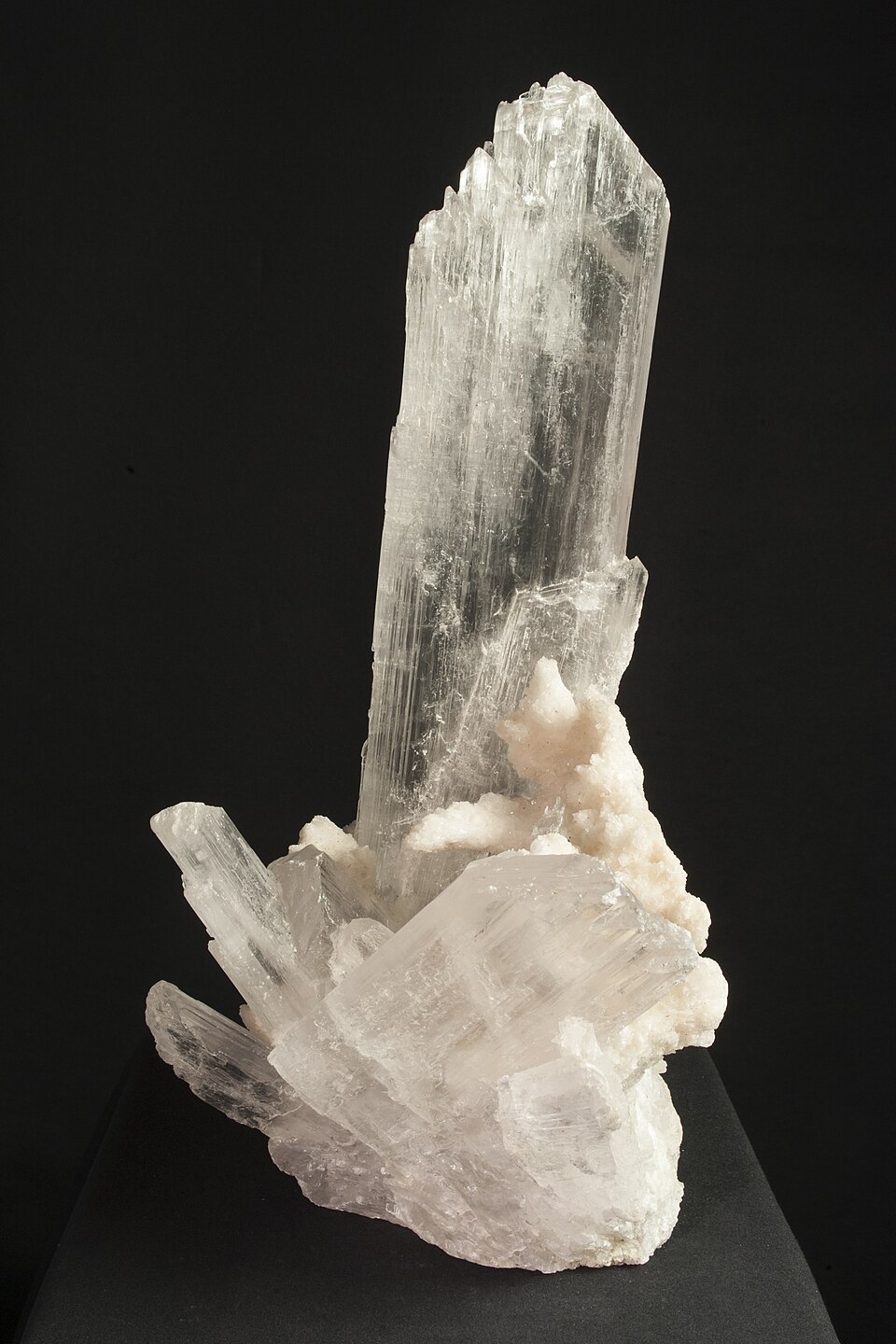
Correct: A, CaSO₄·2H₂O. Gypsum is calcium sulphate dihydrate: one calcium sulphate unit locked together with two molecules of water of crystallisation. Those two water molecules are the whole point of the mineral. Drive them partly off by heating and you are left with the hemihydrate, plaster of Paris, which grabs water back and sets hard; drive them off completely and you get anhydrite. Every other option in the list is one of those neighbours, or a calcium compound from a different family altogether.
Why the others are wrong
- (b)Ca₂SiO₄: This is dicalcium silicate, one of the silicate phases of cement clinker. It contains no sulphate and no water of crystallisation, so it is not gypsum: although the two do meet in a cement plant, where gypsum is ground in with the clinker.
- (c)2CaSO₄·H₂O: This is the way plaster of Paris is often written, the hemihydrate with half a water molecule per formula unit. It is what gypsum becomes on heating, not gypsum itself.
- (d)CaSO₄: Calcium sulphate with no water at all is the mineral anhydrite. It is the fully dehydrated end of the same series and will not set into a hard mass the way plaster of Paris does.
Concept
Calcium sulphate exists in three states that differ only in how much water is bound into the crystal. The dihydrate is gypsum, the hemihydrate is plaster of Paris, and the anhydrous form is anhydrite. Heating moves the compound down that ladder and adding water moves it back up, which is exactly why a plaster cast sets: the hemihydrate recombines with water and recrystallises as interlocking gypsum needles.
This is a formula-recall question, but it can be reasoned out. Two options are calcium sulphates with different water contents and one has no water; only one of the three can be the dihydrate, and gypsum is the mineral that is dug out of the ground with its water already in place. The silicate is the throwaway option, planted because gypsum and cement are associated in the mind. Remember the direction of the change: gypsum loses water on heating to give plaster of Paris, so the answer must be the option with the most water, not the least. In India gypsum is overwhelmingly a Rajasthan mineral: the Indian Bureau of Mines credits that state with 81 per cent of the country's gypsum resources.
Key facts
- Gypsum is calcium sulphate dihydrate, CaSO₄·2H₂O, with two molecules of water of crystallisation.
- Heating gypsum gives plaster of Paris, the hemihydrate; NCERT gives the temperature as 373 K, while industrial practice runs at roughly 120 to 180 °C.
- A small amount of gypsum is ground into cement clinker to slow down the rate of setting.
- The Indian Bureau of Mines records that Rajasthan alone accounts for 81 per cent of India's gypsum resources, with Jammu and Kashmir at 14 per cent.
Study next
Common traps
- Picking the hemihydrate because plaster of Paris is the more familiar substance.
- Reading 2CaSO₄·H₂O as 'two waters' when the 2 belongs to the calcium sulphate, giving half a water per unit.
- Assuming the calcium silicate must be right because gypsum is associated with cement: the two are different compounds that meet in the same factory.
Asked as a direct formula recall, with the mineral's own dehydration products planted as the near-miss options.
Related PYQs
Consider the following statements: 1. Banking soda is used in fire extinguishers. 2. Quicklime is used in the manufacture of glass. 3. Gypsum is used in the manufacture of Plaster of Paris. Which of the statements given above is/are correct?
- (a) 1 and 2
- (b) 2 and 3
- (c) 1 only
- (d) 1, 2 and 3
Answer(d) 1, 2 and 3
Confirms the gypsum-to-plaster-of-Paris link from the other end, and places it among the standard calcium compounds an aspirant is expected to keep apart.
Number of molecules of water of crystallization in copper sulphate, sodium carbonate and Gypsum are
- (a) 5, 10 and 2 respectively
- (b) 10, 2 and 5 respectively
- (c) 5, 2 and 10 respectively
- (d) 2, 5 and 10 respectively
Answer(a) 5, 10 and 2 respectively
Asks for the very number that decides this question: gypsum's two waters of crystallisation: alongside the other two hydrates most often confused with it.
Practice
- practice, not a real PYQ
Plaster of Paris is obtained by heating gypsum, and the change involved is
- (a)addition of water of crystallisation
- (b)partial loss of water of crystallisation
- (c)complete oxidation of the sulphate
- (d)conversion of sulphate into silicate
Answer(b) partial loss of water of crystallisation: the dihydrate gives up part of its water to become the hemihydrate, which sets hard again when water is added back. - practice, not a real PYQ
Gypsum is added to cement clinker mainly to
- (a)increase the strength of the cement
- (b)slow down the rate of setting
- (c)give the cement its grey colour
- (d)make the cement waterproof
Answer(b) slow down the rate of setting: without the added gypsum the clinker would set almost immediately and could not be worked.