
Who among the following was believed to be a leader of the Sanyasis and Fakirs conspiring against the British in 1857 ?
- (a)Mangal Pandey
- (b)Bahadur Shah II
- (c)Queen Zeenat Mahal
- (d)Nana Sahib
Answer
Why
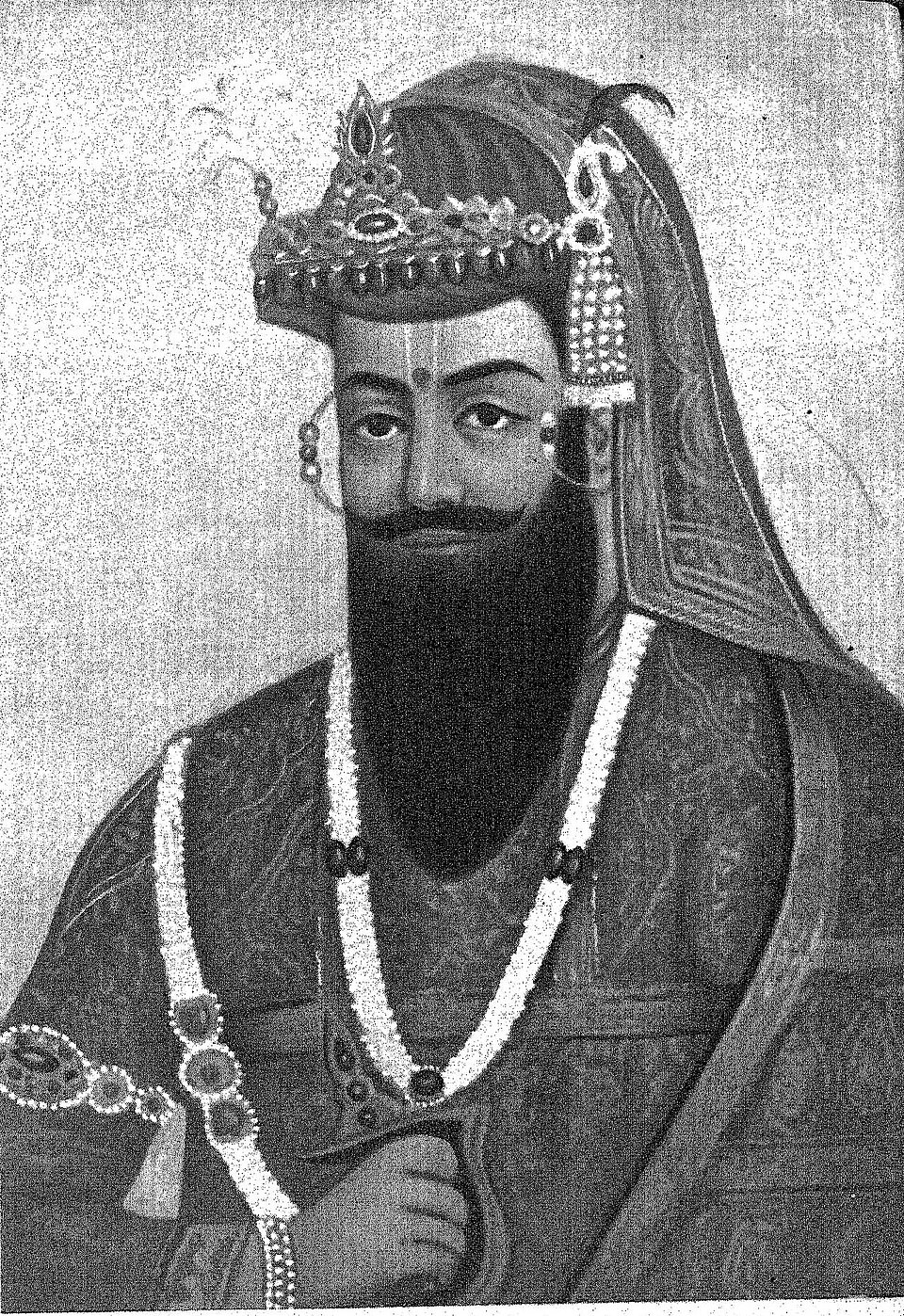
Correct: D, Nana Sahib. Nana Sahib, born Dhondu Pant and settled at Bithur near Kanpur, was the adopted son of the last Peshwa, Baji Rao II. The Company refused to continue his adoptive father's pension of eight lakh rupees on the ground that he was an adopted and not a natural heir, and the mission he sent to London under his agent Azimullah Khan in 1853 failed. In June 1857 he led the rising at Kanpur, and the British came to see him as the hub of a wider design rather than a local rebel. Note the careful wording of the question: it asks who was believed to be such a leader, and the standing of that belief is examined below.
Why the others are wrong
- (a)Mangal Pandey: Mangal Pandey was a sepoy of the 34th Bengal Native Infantry who attacked his officers at Barrackpore on 29 March 1857 and was hanged on 8 April 1857. He acted alone in a single incident, and he was dead more than a month before the outbreak at Meerut on 10 May, so he could not have headed any network.
- (b)Bahadur Shah II: The last Mughal emperor was elderly and reluctant, and became the symbolic head of the revolt only after the Meerut sepoys reached Delhi on 11 May 1857 and proclaimed him. He was accepted as a figurehead by the rebels rather than being the organiser of anything before the rising, and he was tried and exiled to Rangoon in 1858.
- (c)Queen Zeenat Mahal: Zeenat Mahal was the favourite consort of Bahadur Shah II, and her political energy went into securing the succession for her own son. Her dealings during the siege of Delhi were with the British rather than against them, and no account casts her as the leader of a network of wandering religious men.
Concept
In the months before May 1857 British officials in northern India reported strange movements they could not explain. Chapatis were passing from village to village through the watchmen, from Farrukhabad to Gurgaon and from Awadh through Rohilkhand to Delhi, with no one able to say where they had started or what they meant; lotus flowers were said to be circulating among the sepoys; and rumours ran that British rule would end on the centenary of Plassey. Wandering religious men were a natural suspicion, since a sanyasi or a fakir could move between cantonment, bazaar and village without attracting notice.
This card should be read with one honesty flag raised. The pairing of Nana Sahib with a network of sanyasis and fakirs comes from the conspiracy reading that colonial officials and early narrative histories adopted after the event; it is what the examination is testing, and the official key marks Nana Sahib. Modern accounts, including the standard reference articles on Nana Sahib, on the causes of the revolt and on the chapati circulation, do not establish any such chain of command, and the origin of the chapati movement remains unknown. Treat the answer as the received exam position and as a genuine strand of contemporary British belief, not as a settled historical fact. The safe ground is the elimination reasoning above, where each of the other three names fails on plain dates and roles.
Key facts
- Nana Sahib, born Dhondu Pant, was the adopted son of the last Peshwa Baji Rao II and lived at Bithur near Kanpur.
- The Company refused to continue the Peshwa's pension to him because he was an adopted heir, and his 1853 mission to London under Azimullah Khan failed.
- Mangal Pandey's act at Barrackpore was on 29 March 1857 and he was hanged on 8 April 1857, before the Meerut outbreak of 10 May.
- Bahadur Shah II was proclaimed the symbolic head of the revolt at Delhi in May 1857 and was later exiled to Rangoon.
- British officials before the outbreak reported chapatis and lotus flowers being circulated by unknown hands, but the origin of the chapati movement has never been established.
Study next
Common traps
- Treating Mangal Pandey as a leader of the revolt; he was hanged before it began.
- Reading Bahadur Shah II as an organiser rather than a figurehead accepted after the event.
- Taking the colonial conspiracy narrative as established history: the question itself only claims that the leadership was believed, not proved.
NDA regularly asks which leader belonged to which centre of 1857, and also sets statement items on the causes and on the role of rumours.
Related PYQs
Which one of the following places did Kunwar Singh, a prominent leader of the Revolt of 1857, belong to?
- (a) Bihar
- (b) Madhya Pradesh
- (c) Rajasthan
- (d) Uttar Pradesh
Answer(a) Bihar
The same leader-to-centre mapping that this item rewards: Kunwar Singh belongs to Jagdishpur in Bihar just as Nana Sahib belongs to Kanpur.
Which one of the following statements about the Revolt of 1857 is correct?
- (a) It was a Revolt carefully organised and planned by the Rajas, Nawabs and Taluqdars
- (b) Rumours and prophecies did not play any role in its outbreak and spread
- (c) The rebel proclamations in 1857 repeatedly appealed to all sections of the population irrespective of their caste and creed.
- (d) The British succeeded in quickly and easily controlling the rebels
Answer(c) The rebel proclamations in 1857 repeatedly appealed to all sections of the population irrespective of their caste and creed.
A useful corrective to read alongside this item: it rejects the picture of a carefully planned revolt organised from above while affirming that rumours and prophecies did matter.
Name the rebel who fought against the British in the battle of Chinhat in the course of the 1857 Revolt ?
- (a) Ahmadullah Shah
- (b) Shah Mal
- (c) Mangal Pandey
- (d) Kunwar Singh
Answer(a) Ahmadullah Shah
Shows a religious figure genuinely in arms in 1857: Ahmadullah Shah, the Maulvi of Faizabad, fought at Chinhat near Lucknow, and Mangal Pandey appears here too as the same wrong option.
Practice
- practice, not a real PYQ
Nana Sahib led the revolt of 1857 at
- (a)Lucknow
- (b)Kanpur
- (c)Jhansi
- (d)Bareilly
Answer(b) Kanpur: he was settled at Bithur nearby and led the rising there in June 1857. - practice, not a real PYQ
Mangal Pandey's act of defiance in March 1857 took place at
- (a)Meerut
- (b)Barrackpore
- (c)Ambala
- (d)Berhampore
Answer(b) Barrackpore: he was a sepoy of the 34th Bengal Native Infantry stationed there.