
The proposition ‘equal volumes of different gases contain equal numbers of molecules at the same temperature and pressure’ is known as
- (a)Avogadro’s hypothesis
- (b)Gay-Lussac’s hypothesis
- (c)Planck’s hypothesis
- (d)Kirchhoff’s theory
Answer
Why
Correct: A, Avogadro's hypothesis. Amedeo Avogadro put it forward in 1811 to rescue Gay-Lussac's law of combining volumes, which seemed to contradict Dalton's atomic theory. Avogadro's move was to distinguish the atom from the molecule and to propose that equal volumes of any gases, compared at the same temperature and pressure, hold equal numbers of molecules. That single idea explains why two volumes of hydrogen combine with one volume of oxygen to give two volumes of water vapour, and it is the reason a mole of any gas occupies the same volume: about 22·4 litres at standard temperature and pressure. The number of particles in a mole is named after him.
Why the others are wrong
- (b)Gay-Lussac’s hypothesis: Joseph Louis Gay-Lussac's law of combining volumes says that gases react in simple whole-number ratios by volume, and his other law relates a gas's pressure to its temperature at fixed volume. Both concern volumes, which is what makes the option tempting, but neither says anything about the number of molecules: supplying that was precisely Avogadro's contribution.
- (c)Planck’s hypothesis: Max Planck's hypothesis of 1900 is that energy is emitted and absorbed in discrete packets or quanta, with energy equal to Planck's constant times the frequency. It launched quantum theory and has nothing to do with counting molecules in a volume of gas.
- (d)Kirchhoff’s theory: Gustav Kirchhoff is remembered for the circuit laws on currents and voltages, for the law relating a body's emission and absorption of radiation, and for his work with Bunsen on spectral analysis. None of these is a statement about gas volumes and molecule numbers.
Concept
Avogadro's hypothesis links a measurable quantity, volume, to a countable one, the number of particles. From it follow the molar volume of a gas, the modern distinction between atomic and molecular weight, and the practical business of writing balanced equations for reactions between gases. Together with Boyle's law, Charles's law and Gay-Lussac's pressure law it completes the set of relations summed up in the ideal gas equation, PV equal to nRT.
Sort the four names by field before choosing. Avogadro and Gay-Lussac belong to the chemistry of gases, Planck to quantum physics and Kirchhoff to electricity and radiation, so half the list falls away at once. Between the remaining two, the deciding word in the stem is 'numbers of molecules'. Gay-Lussac worked entirely in volumes; the leap to molecule counts is Avogadro's, and it was ignored for nearly fifty years until Cannizzaro revived it at the Karlsruhe Congress of 1860.
Key facts
- Avogadro's hypothesis was proposed in 1811 and states that equal volumes of gases at the same temperature and pressure contain equal numbers of molecules.
- One mole of any gas occupies about 22·4 litres at standard temperature and pressure.
- Avogadro's number is about 6·022 times ten to the twenty-three particles per mole.
- Gay-Lussac's law of combining volumes says reacting gases combine in simple whole-number volume ratios.
- The hypothesis was largely ignored until Cannizzaro used it at the Karlsruhe Congress of 1860 to settle atomic weights.
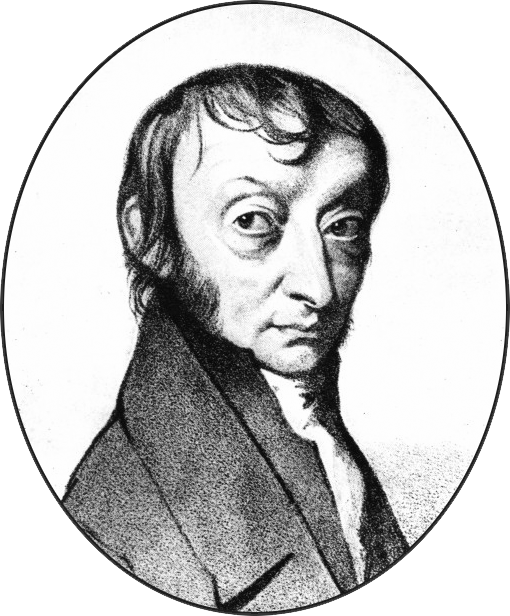
Study next
Common traps
- Confusing Avogadro's hypothesis with Gay-Lussac's law of combining volumes; volumes are Gay-Lussac's, molecule numbers are Avogadro's.
- Assuming the hypothesis holds for liquids and solids; it is a statement about gases.
- Mixing up Avogadro's hypothesis with Avogadro's number: the first is the proposition, the second the constant that followed from it.
NDA has asked this both as a name-the-law item and as a statement-identification item, and the same proposition also turns up disguised as a distractor in questions on the law of conservation of mass.
Related PYQs
Equal volume of all gases, when measured at the same temperature and pressure, contain an equal number of particles. Who proposed the above law?
- (a) Charles
- (b) Boyle
- (c) Avogadro
- (d) Lussac
Answer(c) Avogadro
The same proposition asked in almost the same words six years later, with Boyle and Charles substituted for Planck and Kirchhoff as the decoys.
Which one of the following statements about the law of conservation of mass is correct?
- (a) A given compound always contains exactly same proportion of elements.
- (b) When gases combine in a reaction, they do so in a simple ratio by volume, provided all gases are at room temperature.
- (c) Matter can neither be created nor destroyed.
- (d) Equal volumes of all gases at same temperature and pressure contain equal number of molecules.
Answer(c) Matter can neither be created nor destroyed.
Here Avogadro's proposition appears as option (d), a wrong answer planted among the laws of chemical combination: good practice at telling the four apart.
Practice
- practice, not a real PYQ
At standard temperature and pressure, one mole of any gas occupies a volume of about
- (a)2·24 litres
- (b)11·2 litres
- (c)22·4 litres
- (d)44·8 litres
Answer(c) 22·4 litres: the molar volume that follows directly from Avogadro's hypothesis. - practice, not a real PYQ
The law which states that gases combine in simple whole-number ratios by volume was given by
- (a)Avogadro
- (b)Gay-Lussac
- (c)Dalton
- (d)Boyle
Answer(b) Gay-Lussac: his law of combining volumes, which Avogadro's hypothesis later explained.