
Golden rice is a genetically-modified crop plant where the incorporated gene is meant for biosynthesis of
- (a)Omega-3 fatty acids
- (b)Vitamin A
- (c)Vitamin B
- (d)Vitamin C
Answer
Why
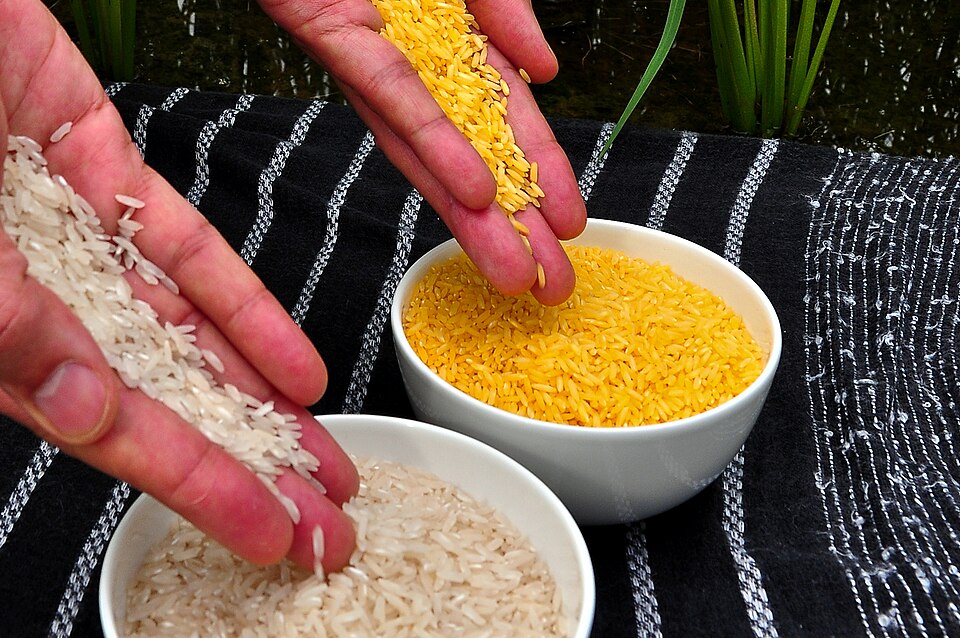
Correct: B, Vitamin A. Golden rice was engineered by Ingo Potrykus and Peter Beyer and first published in 2000. Two genes were added to complete a pathway that ordinary rice grain lacks: psy, for the enzyme phytoene synthase, taken from the daffodil, and crtI, for phytoene desaturase, taken from the soil bacterium Erwinia uredovora. Together they let the endosperm build beta-carotene, which the human body converts into vitamin A, and it is that orange pigment which gives the grain its golden colour and its name. The purpose was to attack vitamin A deficiency, a leading cause of preventable childhood blindness and of death from infection in rice-eating populations. A later version, Golden Rice 2, replaced the daffodil gene with one from maize and raised the carotenoid content sharply.
Why the others are wrong
- (a)Omega-3 fatty acids: Omega-3 enrichment has been attempted in other engineered crops, notably oilseeds such as camelina and canola, but it is not what golden rice does. Nothing about the added genes touches fatty acid synthesis.
- (c)Vitamin B: The B vitamins are a group of water-soluble compounds and are not carotenoids, so they would not colour the grain gold. Rice bran is already reasonably rich in some B vitamins, which is why polishing rice costs so much thiamine.
- (d)Vitamin C: Vitamin C is ascorbic acid, a colourless compound, and it was not the target. Deficiency of vitamin C causes scurvy, a quite different public-health problem from the blindness that golden rice was designed to prevent.
Concept
Biofortification means raising the nutrient content of a staple crop itself, so that people benefit simply by eating what they already eat. It can be done by conventional breeding, as with iron-rich pearl millet or zinc-rich wheat, or by genetic engineering, as with golden rice. Rice is the obvious target because it feeds a very large share of the world and its polished grain is poor in micronutrients.
The name is the mnemonic. Golden rice is golden because it is full of beta-carotene, the same orange pigment that colours a carrot, and beta-carotene is the plant precursor of vitamin A. Neither vitamin B nor vitamin C nor an omega-3 fatty acid would tint the grain at all. It is worth being accurate about one point that examiners like: the grain does not contain vitamin A itself but pro-vitamin A, which the body converts. As of the 2017 exam golden rice had not been released commercially anywhere; regulatory clearances came later, in the Philippines and elsewhere, and it remains one of the most argued-over crops in the debate on genetically modified food.
Key facts
- Golden rice carries psy from daffodil and crtI from the bacterium Erwinia uredovora.
- The added pathway lets the rice endosperm accumulate beta-carotene, the plant precursor of vitamin A.
- It was developed by Ingo Potrykus and Peter Beyer and first published in 2000.
- The target was vitamin A deficiency, a leading cause of preventable childhood blindness.
- Golden Rice 2, from 2005, substituted a maize gene for the daffodil one and produced far more carotenoid.
Study next
Common traps
- Saying the grain contains vitamin A; it contains pro-vitamin A, which the body then converts.
- Attaching golden rice to protein or yield improvement rather than to a micronutrient.
- Assuming a crop that has been engineered and published has also been released to farmers.
NDA asks what a named GM crop was engineered to make, so pair each famous crop with its trait: golden rice with pro-vitamin A, Bt cotton with insect resistance.
Related PYQs
Genetically modified "golden rice" has been engineered to meet human nutritional requirements. Which one of the following statements best qualifies golden rice?
- (a) The grains have been fortified with genes to provide three times higher grain yield per acre than other high yielding varieties
- (b) Its grains contain pro-vitamin A which upon ingestion is converted to vitamin A in the human body
- (c) Its modified genes cause the synthesis of all the nine essential amino acids
- (d) Its modified genes cause the fortification of its grains with vitamin D
Answer(b) Its grains contain pro-vitamin A which upon ingestion is converted to vitamin A in the human body
The same crop asked with more precision: UPSC insists on the words 'pro-vitamin A', which is the distinction a student should carry into any golden rice question.
Intestinal bacteria are main source of which one of the following vitamins?
- (a) Vitamin E
- (b) Vitamin C
- (c) Vitamin B₁₂
- (d) Vitamin A
Answer(c) Vitamin B₁₂
Sets out where each vitamin comes from, and makes plain why vitamin A was worth engineering into a staple crop while some other vitamins are supplied by the body's own microbes.
Practice
- practice, not a real PYQ
The golden colour of golden rice grains is due to the accumulation of
- (a)Beta-carotene
- (b)Chlorophyll
- (c)Anthocyanin
- (d)Melanin
Answer(a) Beta-carotene: the same orange carotenoid found in carrots, and the precursor from which the body makes vitamin A. - practice, not a real PYQ
Bt cotton was genetically modified to confer
- (a)resistance to bollworm insects
- (b)a higher vitamin A content
- (c)tolerance to salt water
- (d)a longer fibre length
Answer(a) resistance to bollworm insects: a gene from Bacillus thuringiensis makes a protein toxic to the larvae.