
Which one of the following travelogues has given an insight on the reign of Muhammad Bin Tughlaq ?
- (a)Ibn Battuta’s Rihla
- (b)Francois Bernier’s Travels in the Mogul Empire
- (c)Niccolao Manucci’s Storia do Mogor
- (d)Tavernier’s Travels in India
Answer
Why
Correct: A, Ibn Battuta’s Rihla. Ibn Battuta was a Moroccan traveller, born in 1304, who reached India in 1333 and served about six years as qadi, or judge, at Delhi under Muhammad bin Tughlaq himself. His account, the Rihla, is therefore a first-hand record of that reign, and it is the source for some of its best-known details: the two branches of the royal post, the mounted service with relays and the foot service that ran faster than the horses, and the sultan's heavy gold coin. The other three travelogues belong to the Mughal period, three centuries later.
Why the others are wrong
- (b)Francois Bernier’s Travels in the Mogul Empire: Bernier was a French physician in India in the seventeenth century, in the years of Shah Jahan's illness and Aurangzeb's accession. His subject is Mughal politics and society, not the Delhi Sultanate.
- (c)Niccolao Manucci’s Storia do Mogor: Manucci was a Venetian who spent decades in seventeenth-century India and wrote at length on Aurangzeb's court. His narrative postdates Muhammad bin Tughlaq by some three hundred years.
- (d)Tavernier’s Travels in India: Jean-Baptiste Tavernier was a French gem merchant of the seventeenth century, best remembered for the first detailed European account of the diamond mines of Golconda. He too belongs to the Mughal era.
Concept
The Delhi Sultanate and the Mughal empire are separated by roughly three centuries, and the foreign accounts of each are quite distinct. For the Sultanate the great outsider's record is Ibn Battuta's Rihla, written by a man who held office under the sultan he describes. For the Mughals the standard European accounts are Bernier, Tavernier, Manucci and, earlier, Sir Thomas Roe at Jahangir's court. Sorting the four options by century is enough to answer this question even without knowing the contents of any of them.
Ibn Battuta's value lies in the ordinary detail that court chronicles skip. On the postal system he describes the mounted couriers riding relays of royal horses and a foot service organised in short stages, with runners carrying a rod of bells so the next man could set off at the sound; he notes that the foot post was quicker than the mounted one, and that news from Sind reached Delhi in five days when the march itself took fifty. He also records that the sultan issued a heavy gold coin, called a dinar in his account: while the famous token-currency experiment was in copper and bronze, a distinction UPSC has tested directly.
Key facts
- Ibn Battuta, born in Morocco in 1304, arrived in India in 1333 and served about six years as qadi under Muhammad bin Tughlaq.
- His travel account is called the Rihla, and it is a first-hand source for the reign.
- The Rihla describes a two-part royal post: a mounted service with relays and a faster foot service organised in short stages.
- Bernier, Tavernier and Manucci were all seventeenth-century European travellers who wrote about Mughal India.
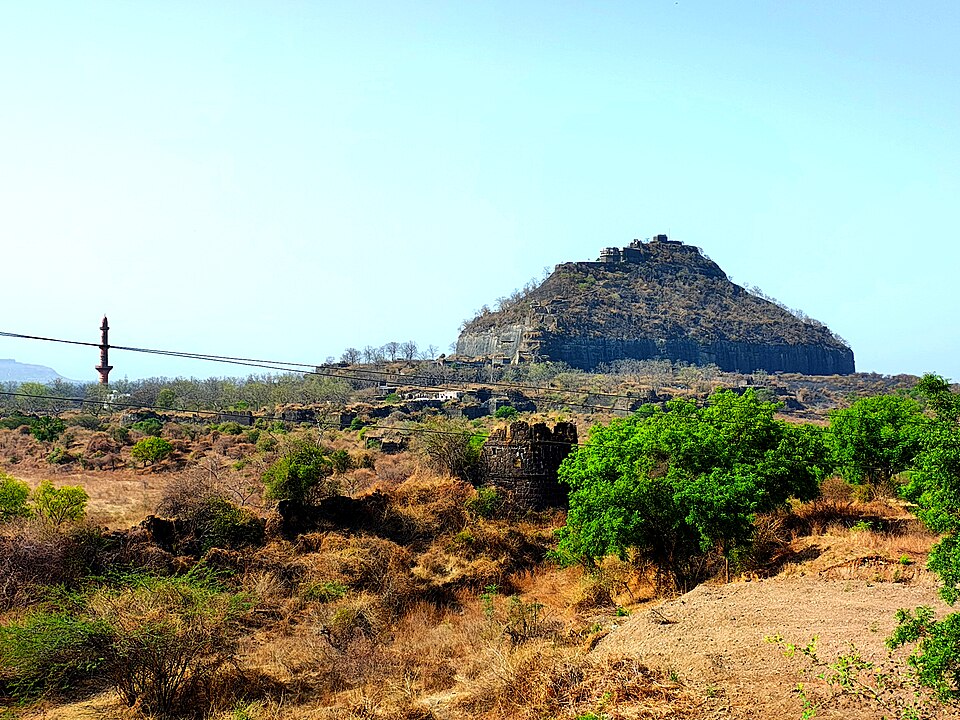
- Muhammad bin Tughlaq is also remembered for shifting the capital to Daulatabad and for the token currency, which was in copper and bronze rather than gold.
Study next
Common traps
- Placing a Mughal-era European traveller in the Sultanate by association with the word travelogue.
- Attributing the token currency to gold; Ibn Battuta's dinar was a gold coin, but the token issue was copper and bronze.
- Mixing up Al-Biruni, who came in the eleventh century with Mahmud of Ghazni, with Ibn Battuta of the fourteenth.
NDA pairs a traveller with a ruler, a country or a book, or asks which account describes a named institution.
Related PYQs
Assertion (A): Muhammad bin Tughlaq issued a new gold coin which was called Dinar by Ibn Batutah. Reason (R): Muhammad bin Tughlaq wanted to issue token currency in gold coins to promote trade with West Asian and North African countries.
- (a) Both A and R are true and R is the correct explanation of A
- (b) Both A and R are true but R is not a correct explanation of A
- (c) A is true but R is false
- (d) A is false but R is true
Answer(c) A is true but R is false
Rests on the same source and the same reign: Ibn Battuta's report of the sultan's gold coin, and separates it from the token currency, which was not gold.
Who among the following has described the medieval Indian postal system as of two kinds—the horse-post called ‘Uluq’ and the foot-post called ‘Dawa’?
- (a) Al-Biruni
- (b) Duarte Barbosa
- (c) Ibn Battuta
- (d) Seydi Ali Reis
Answer(c) Ibn Battuta
Names the same traveller through the most famous passage of the very account this question asks about.
Practice
- practice, not a real PYQ
Ibn Battuta held which office at Delhi during his stay in India ?
- (a)Wazir
- (b)Qadi, or judge
- (c)Ariz-i-mumalik
- (d)Sadr-us-sudur
Answer(b) Qadi, or judge: he served in that post for about six years under Muhammad bin Tughlaq. - practice, not a real PYQ
Francois Bernier, Niccolao Manucci and Jean-Baptiste Tavernier all wrote about
- (a)the Delhi Sultanate
- (b)Mughal India
- (c)the Vijayanagara empire
- (d)the Maurya empire
Answer(b) Mughal India: all three were seventeenth-century European travellers.