
Which one among the following chemicals is used as washing soda ?
- (a)Calcium carbonate
- (b)Calcium bicarbonate
- (c)Sodium carbonate
- (d)Sodium bicarbonate
Answer
Why
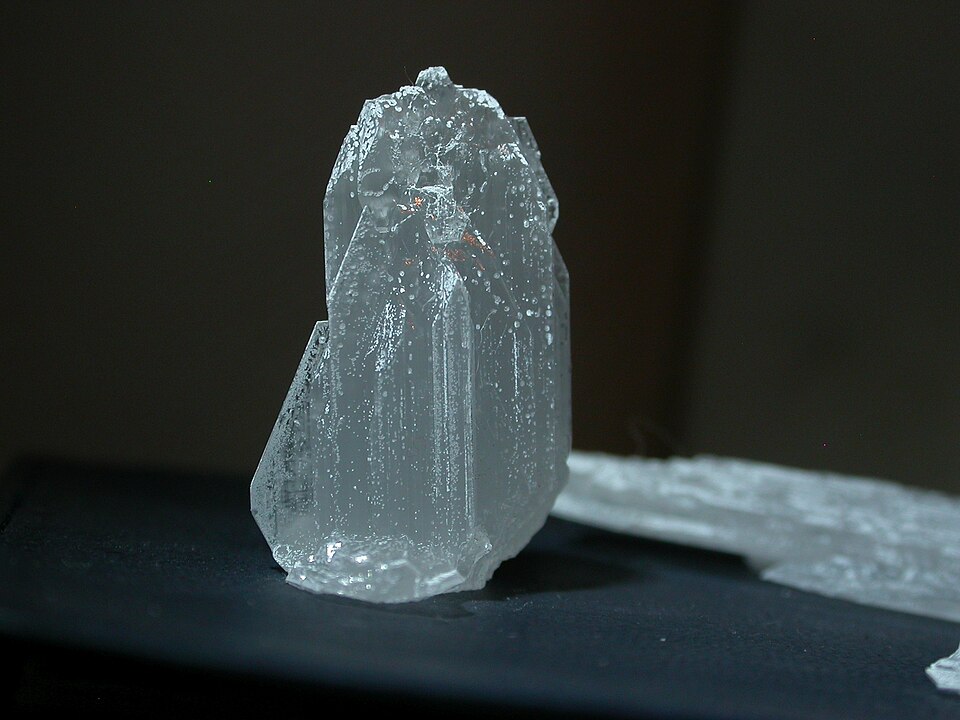
Correct: C, Sodium carbonate. Sodium carbonate is the compound known in trade and in the household as washing soda, soda ash and soda crystals; the crystalline form sold for washing is the decahydrate, Na₂CO₃·10H₂O. It works because it is a fairly strong base (stronger than baking soda though weaker than caustic soda) so it saponifies fats and grease into water-soluble salts, and because its carbonate ion precipitates the calcium and magnesium of hard water as insoluble solids, letting soap lather instead of forming scum.
Why the others are wrong
- (a)Calcium carbonate: Calcium carbonate is limestone, marble and chalk. It is almost insoluble in water, so it cannot act as a washing agent at all, and it is a source of hardness rather than a cure for it.
- (b)Calcium bicarbonate: Calcium bicarbonate exists only in solution and is precisely what makes water temporarily hard. Boiling breaks it down and deposits the scale you see inside a kettle.
- (d)Sodium bicarbonate: Sodium bicarbonate, NaHCO₃, is baking soda, not washing soda. It is the weaker base of the two, it is used as a leavening agent, a mild antacid and a fire-extinguisher charge, and confusing the two sodas is the single commonest slip on this topic.
Concept
Both sodas start from common salt. Sodium carbonate is manufactured by the Solvay or ammonia-soda process, developed by Ernest Solvay in 1861, which consumes only brine and limestone, recycles its ammonia and leaves calcium chloride as the sole waste; by 1900 it was making nine-tenths of the world's supply. Sodium bicarbonate is obtained along the way, and heating it drives off carbon dioxide to give sodium carbonate back. The carbonate crystallises from water with ten molecules of water of crystallisation, which is why the household crystals are the decahydrate.
Keep three household sodas apart by both name and formula. Washing soda is sodium carbonate, Na₂CO₃·10H₂O in crystal form. Baking soda is sodium bicarbonate, NaHCO₃, which decomposes at about 70 degrees Celsius and releases the carbon dioxide that makes a cake rise. Caustic soda is sodium hydroxide, NaOH, a far stronger base used in soap making. One further distinction matters for water treatment: boiling removes only temporary hardness, whereas washing soda removes permanent hardness as well by precipitating the dissolved calcium and magnesium.
Key facts
- Sodium carbonate is known as washing soda, soda ash and soda crystals; the household crystal is the decahydrate Na₂CO₃·10H₂O.
- Sodium bicarbonate, NaHCO₃, is baking soda, a weaker base used in cooking, as an antacid and in fire extinguishers.
- Sodium carbonate is manufactured by the Solvay process from brine and limestone, with calcium chloride as the only waste.
- Washing soda softens hard water by precipitating calcium and magnesium ions as insoluble carbonates, and removes permanent hardness as well as temporary.
- Anhydrous sodium carbonate has a formula mass of 106; the decahydrate carries ten molecules of water of crystallisation.
Study next
Common traps
- Swapping washing soda and baking soda; the carbonate washes, the bicarbonate bakes.
- Assuming boiling can remove permanent hardness: it cannot, but washing soda can.
- Reading calcium carbonate as a cleaning agent when it is virtually insoluble.
NDA asks for the chemical name or formula behind a common name, or which salt carries a stated number of water molecules.
Related PYQs
Consider the following statements : 1. Anhydrous sodium carbonate is commonly known as baking soda 2. Baking soda is used in fire extinguishers 3. Bleaching powder is manufactured in Hasenclever plant Which of the statements given above is/are correct?
- (a) 1, 2 and 3
- (b) 2 and 3
- (c) 3 only
- (d) 1 and 2
Answer(b) 2 and 3
Its first statement is the exact error this question is designed to catch: anhydrous sodium carbonate is washing soda, not baking soda.
Which one of the following is the chemical formula of Washing Soda ?
- (a) NaHCO₃
- (b) Na₂CO₃·10H₂O
- (c) Na₂CO₃·5H₂O
- (d) NaOH
Answer(b) Na₂CO₃·10H₂O
Asks for the formula of the very compound this question asks for by name, including the ten waters of crystallisation.
Practice
- practice, not a real PYQ
The number of molecules of water of crystallisation in washing soda is
- (a)2
- (b)5
- (c)7
- (d)10
Answer(d) 10: washing soda is Na₂CO₃·10H₂O, the decahydrate of sodium carbonate. - practice, not a real PYQ
Baking soda helps a cake to rise because on heating it releases
- (a)oxygen
- (b)carbon dioxide
- (c)hydrogen
- (d)water vapour only
Answer(b) carbon dioxide: sodium bicarbonate begins to decompose at about 70 degrees Celsius and the gas raises the batter.