
Which one of the following statements about a satellite orbiting around the Earth is correct ?
- (a)Satellite is kept in orbit by remote control from ground station.
- (b)Satellite is kept in orbit by retro-rocket and solar energy keeps it moving around the Earth.
- (c)Satellite requires energy from solar panels and solid fuels for orbiting.
- (d)Satellite does not require any energy for orbiting.
Answer
Why
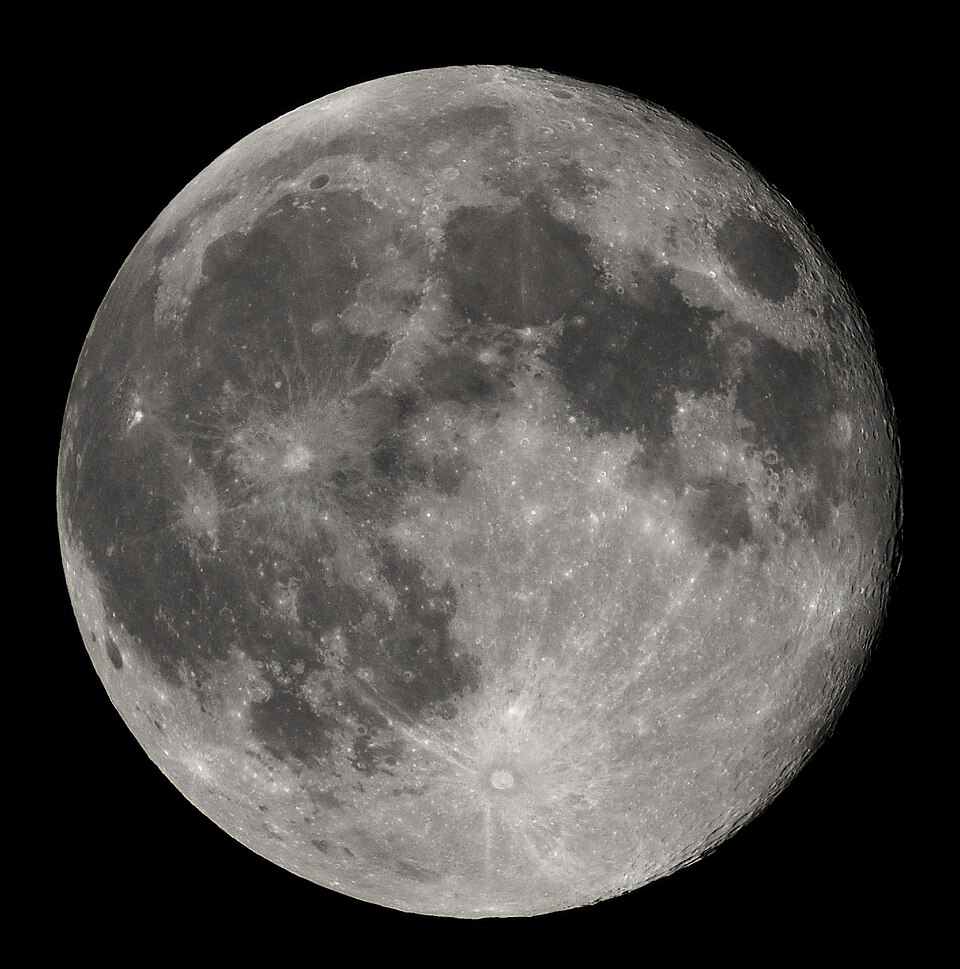
Correct: D, Satellite does not require any energy for orbiting. A satellite in orbit is in continuous free fall. Gravity supplies exactly the centripetal acceleration needed to bend its straight-line motion into a closed curve, and because that force always points towards the centre of the orbit, perpendicular to the velocity, it does no work on the satellite. With no atmosphere to speak of at orbital height there is nothing to dissipate energy either, so the orbital energy stays constant and no engine is needed to maintain it. The Moon has gone round the Earth on the same terms for billions of years without any fuel at all.
Why the others are wrong
- (a)Satellite is kept in orbit by remote control from ground station.: Ground stations track a satellite, send commands to its instruments and occasionally order small station-keeping burns, but no signal from the ground holds it up. Gravity does that, and it would go on doing it if every ground station fell silent.
- (b)Satellite is kept in orbit by retro-rocket and solar energy keeps it moving around the Earth.: A retro-rocket fires against the direction of motion, which slows a spacecraft down for re-entry or for lowering an orbit. Firing it continuously would bring the satellite down, not keep it up.
- (c)Satellite requires energy from solar panels and solid fuels for orbiting.: Solar panels and onboard propellant are real, but they run the instruments, the radios and the attitude-control thrusters, and correct the orbit occasionally. The orbital motion itself consumes nothing.
Concept
Circular motion needs a force directed towards the centre. For a satellite that force is the Earth's gravitational attraction, and setting it equal to the required centripetal force fixes the orbital speed at any given radius: closer orbits need a higher speed, farther orbits a lower one. Because gravity acts at right angles to the velocity in a circular orbit, the work done by it is zero, and neither the speed nor the total energy of the satellite changes as it goes round.
The way to feel this is to remember Newton's cannonball. Fire a shot horizontally from a high mountain and it falls to the ground; fire it faster and it lands farther away; fire it fast enough and the curve of its fall matches the curve of the Earth, so it never lands. That is an orbit. Real satellites do carry propellant, but for other jobs: reorienting the spacecraft, correcting drift, and at end of life lowering the orbit for disposal. In low Earth orbit the thin residual atmosphere causes slow drag, which is why such satellites need occasional reboosting; that is atmospheric drag being fought, not the orbit being powered.
Key facts
- Gravity supplies the centripetal acceleration for an orbit; the satellite is in continuous free fall around the Earth.
- The gravitational force is perpendicular to the velocity in a circular orbit, so it does no work and the orbital energy stays constant.
- Orbital speed depends on the radius of the orbit, not on the mass of the satellite.
- A geostationary satellite orbits above the equator in a circular geosynchronous orbit at about 35,786 kilometres, matching the Earth's rotation period.
- Onboard fuel and solar power run the instruments, the radios and the attitude and station-keeping thrusters, not the orbital motion itself.
Study next
Common traps
- Assuming a satellite must burn fuel constantly because an aircraft does; the aircraft is fighting drag and gravity, the satellite is not.
- Reading solar panels as the source of orbital motion when they only power the payload.
- Thinking astronauts float because gravity is absent at that height; gravity is still strong there, and both they and the station are falling together.
NDA asks why a satellite does not fall down, what keeps it in orbit, or what defines a geostationary orbit.
Related PYQs
An artificial satellite orbiting around the Earth does not fall down. This is so because the attraction of Earth
- (a) does not exist at such distance
- (b) is neutralized by the attraction of the moon
- (c) provides the necessary speed for its steady motion
- (d) provides the necessary acceleration for its motion
Answer(d) provides the necessary acceleration for its motion
States positively what this NDA item states negatively: gravity supplies the centripetal acceleration, which is precisely why no onboard energy is required.
Which one of the following statements with respect to Global Positioning System (GPS) is not correct?
- (a) It is based on network of satellites orbiting above the Earth.
- (b) It is based on the system of triangulation.
- (c) GPS receivers provide location in terms of latitude, longitude and altitude.
- (d) It provides information exclusively for military operations.
Answer(d) It provides information exclusively for military operations.
Sits on the same orbiting constellation and rewards the same habit of testing each claim about satellites against what they actually do.
Practice
- practice, not a real PYQ
An artificial satellite revolving in a circular orbit does not fall to the Earth because
- (a)there is no gravity at that height
- (b)the Earth's gravitational pull supplies the centripetal acceleration for its orbit
- (c)its rockets fire continuously
- (d)the Moon's pull cancels the Earth's pull
Answer(b) the Earth's gravitational pull supplies the centripetal acceleration for its orbit: the satellite is in free fall that never reaches the ground. - practice, not a real PYQ
A geostationary satellite must be placed
- (a)in a circular orbit in the plane of the equator with a period of 24 hours
- (b)in a polar orbit at any convenient height
- (c)in an elliptical orbit inclined at 45 degrees
- (d)directly above the north pole
Answer(a) in a circular orbit in the plane of the equator with a period of 24 hours: only then does it appear fixed over one point on the ground.