
Red blood cells (RBCs) have
- (a)no nucleus, no mitochondria and no endoplasmic reticulum
- (b)nucleus, mitochondria and endoplasmic reticulum
- (c)nucleus, mitochondria but no endoplasmic reticulum
- (d)no mitochondria but endoplasmic reticulum is present
Answer
Why
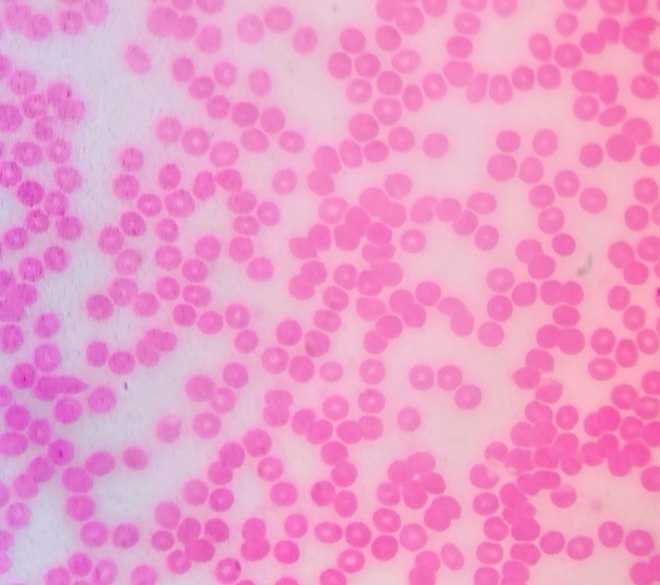
Correct — A, no nucleus, no mitochondria and no endoplasmic reticulum. A mammalian red blood cell throws out its nucleus in the last stage of maturation in the bone marrow and loses its mitochondria, endoplasmic reticulum and Golgi apparatus along with it. What is left is a flexible bag of haemoglobin — the protein fills about a third of the cell's volume — which is exactly what maximises oxygen-carrying capacity. Having no mitochondria also means the cell earns its energy by glycolysis and lactic-acid fermentation, so it consumes none of the oxygen it is ferrying, and having no nucleus means it cannot repair itself, which is why it survives only about 100 to 120 days.
Why the others are wrong
- (b)nucleus, mitochondria and endoplasmic reticulum — This describes an ordinary body cell. A red cell precursor in the marrow does have all three, but the mature circulating cell has expelled the lot — that expulsion is the defining event of red-cell maturation in mammals.
- (c)nucleus, mitochondria but no endoplasmic reticulum — The nucleus is the first thing the cell loses, not the last thing it keeps. A nucleated red cell in a human blood film is abnormal and is itself a reportable finding.
- (d)no mitochondria but endoplasmic reticulum is present — Half right and therefore tempting — mitochondria are indeed absent, but so is the endoplasmic reticulum. Only traces of ribosomal material linger in the youngest circulating cells, the reticulocytes, and even those disappear within a day or two.
Concept
Red blood cells are specialised transport cells. In mammals they mature by discarding the nucleus and the membrane-bound organelles, ending up as biconcave discs whose shape gives a large surface area for gas exchange and enough flexibility to squeeze through capillaries narrower than the cell itself. Birds, reptiles, amphibians and fish keep nucleated red cells, so the statement in this question is a mammalian rule rather than a universal one.
The four options are the four possible combinations, so the item is really testing one idea — that the mature mammalian red cell is stripped bare. Reason it out from function rather than memory: a cell whose whole job is to carry oxygen has no use for organelles that would consume oxygen or take up space that haemoglobin could occupy.
Key facts
- The nucleus is expelled during maturation, together with mitochondria, endoplasmic reticulum and Golgi apparatus.
- Without mitochondria the cell makes ATP by glycolysis and lactic-acid fermentation, using none of the oxygen it carries.
- A human red cell lives about 100 to 120 days and is then broken down, mainly by macrophages in the spleen.
- Haemoglobin accounts for roughly one-third of the cell's volume; red cells of birds, reptiles and fish do retain a nucleus.
Study next
Common traps
- Applying the rule to all animals; only mammals have red cells without nuclei, and even in mammals the marrow precursors are nucleated.
- Remembering that mitochondria are absent but forgetting that the endoplasmic reticulum is gone too, which lands you on option (d).
NDA repeatedly asks which structure is present or absent in a named cell type, so keep a short list of the exceptions — red cells, sieve tube cells, prokaryotes and viruses.
Related PYQs
Excessive release of the pollutant carbon monoxide (CO) into the air may produce a condition in which oxygen supply in the human body decreases. What causes this condition ?
- (a) When inhaled into the human body, CO is converted into CO₂
- (b) The inhaled CO has much higher affinity for haemoglobin as compared to oxygen
- (c) The inhaled CO destroys the chemical structure of haemoglobin
- (d) The inhaled CO adversely affects the respiratory centre in the brain
Answer(b) The inhaled CO has much higher affinity for haemoglobin as compared to oxygen
The other half of the red-cell story. This NDA item asks what the cell has thrown away to make room for haemoglobin; UPSC asks what happens when a rival gas occupies that haemoglobin instead of oxygen.
If human blood is placed in a 2% detergent solution, what will happen to the RBC?
- (a) The RBC will shrink.
- (b) The RBC will swell and become turgid.
- (c) The RBC will swell and burst.
- (d) The RBC will lyse.
Answer(d) The RBC will lyse.
The same cell four years later, tested on its membrane instead of its organelles — a detergent dissolves the lipid membrane and the cell breaks open. Red cells are a standing NDA favourite because so much can be asked about one cell.
Which one of the following structures or components is not always present in living cells ?
- (a) Cell wall
- (b) Plasma membrane
- (c) Cytoplasm
- (d) Genetic material
Answer(a) Cell wall
The same reasoning skill — which structure is dispensable — moved from the red cell to cells in general. Both reward a single memorised list of what a given cell type does not have.
Practice
- practice — not a real PYQ
The absence of mitochondria in a mature mammalian red blood cell means that the cell obtains its energy chiefly by
- (a)aerobic respiration
- (b)glycolysis followed by lactic-acid fermentation
- (c)photosynthesis
- (d)beta-oxidation of fatty acids
Answer(b) glycolysis followed by lactic-acid fermentation — so the cell spends none of the oxygen it is transporting. - practice — not a real PYQ
Which one of the following animals has nucleated red blood cells in its circulating blood?
- (a)Human being
- (b)Cow
- (c)Pigeon
- (d)Goat
Answer(c) Pigeon — birds, reptiles, amphibians and fish keep the nucleus; mammals lose it.