
Which of the following statements about the Chittagong group is NOT correct ?
- (a)Its membership included a large number of youth including Ganesh Ghosh, Lokenath Baul and Anant Singh
- (b)Its leader Surya Sen had been a lawyer in Dhaka before joining the group
- (c)Surya Sen and his group were closely associated with Congress work in Chittagong
- (d)This group had prepared an action plan to occupy the armouries in Chittagong
Answer
Why
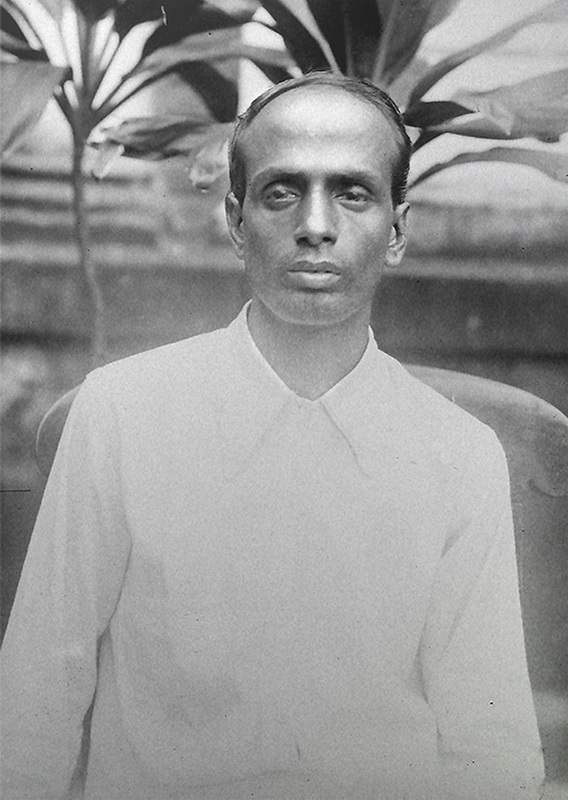
Correct — B, the claim that Surya Sen had been a lawyer in Dhaka. He was a schoolteacher, which is exactly why his men called him Master-da. He came to Chittagong in 1918 and began teaching at the local National School, and he stayed a teacher of mathematics there; no account gives him a legal practice in Dhaka. Every other statement in the list holds, so the one that is NOT correct is (b).
Why the others are wrong
- (a)Its membership included a large number of youth including Ganesh Ghosh, Lokenath Baul and Anant Singh — This is correct, so it cannot be the answer. The Chittagong group drew heavily on students and young men, and Ananta Singh, Ganesh Ghosh and Lokenath Bal are the three names always listed alongside Surya Sen.
- (c)Surya Sen and his group were closely associated with Congress work in Chittagong — This is correct as well. Surya Sen was chosen president of the Chittagong branch of the Indian National Congress in 1918, and the group's members worked openly through Congress and school networks while organising in secret.
- (d)This group had prepared an action plan to occupy the armouries in Chittagong — Also correct. The plan was carried out on 18 April 1930, when the group seized the police and auxiliary force armouries, cut telegraph and rail links and proclaimed a provisional revolutionary government.
Concept
The Chittagong group was a Bengal revolutionary network built by Surya Sen out of schoolboys, students and young clerks in the 1920s. What distinguishes it from earlier secret societies is scale and planning — the April 1930 action was designed to take a town's arms and communications together, not to assassinate an individual official.
The trap in this question is occupational rather than factual detail. Indian revolutionary leaders came from a wide range of professions, and the examiner is testing whether you know that Surya Sen was a schoolmaster — the nickname Master-da is the giveaway and appears in almost every account. When three statements in a NOT-correct item are all things you have read before, work by recognition and let the unfamiliar-sounding one carry the weight.
Key facts
- Surya Sen was a schoolteacher, popularly known as Master-da; he came to Chittagong in 1918 and taught at the local National School.
- He was selected president of the Chittagong branch of the Indian National Congress in 1918.
- His group included Ananta Singh, Ganesh Ghosh and Lokenath Bal.
- The Chittagong armoury raid took place on 18 April 1930.
- Chittagong is in the Bengal of the colonial period and lies in present-day Bangladesh.
Study next
Common traps
- Guessing a profession for a revolutionary leader instead of recalling the nickname that encodes it.
- Assuming revolutionary groups stood apart from the Congress — many members worked in both.
- Confusing Chittagong with the Kakori or Lahore cases, which belong to the north-Indian HSRA.
Both NDA and UPSC set 'who organised this raid' and 'which statement is not correct' items on the Chittagong group; the profession, the date and the three lieutenants are the recurring details.
Related PYQs
Who among the following organised the famous Chittagong armoury raid?
- (a) Laxmi Sehgal
- (b) Surya Sen
- (c) Batukeshwar Datta
- (d) J. M. Sengupta
Answer(b) Surya Sen
The same raid and the same leader, asked directly rather than through a not-correct statement.
Who among the following had organised, in 1904, a secret society of revolutionaries named Abhinav Bharat?
- (a) Khudiram Bose
- (b) Shyamji Krishna Verma
- (c) Har Dayal
- (d) V D Savarkar
Answer(d) V D Savarkar
Another secret revolutionary society matched to the man who built it — the same slice of the syllabus.
Practice
- practice — not a real PYQ
The Chittagong armoury raid of 1930 was led by
- (a)Jatin Das
- (b)Surya Sen
- (c)Rash Behari Bose
- (d)Bagha Jatin
Answer(b) Surya Sen — the schoolteacher called Master-da, who planned and led the raid of 18 April 1930. - practice — not a real PYQ
Ananta Singh, Ganesh Ghosh and Lokenath Bal were associated with
- (a)The Ghadar Party
- (b)The Chittagong group
- (c)The Khilafat Committee
- (d)The Swaraj Party
Answer(b) The Chittagong group — the three are always named among Surya Sen's closest associates.