
Which Congress leader visited Bihar in 1918 in order to strengthen the activities of Home Rule League?
- (a)B.G. Tilak
- (b)Annie Besant
- (c)Mahatma Gandhi
- (d)M.A. Ansari
Answer
Why
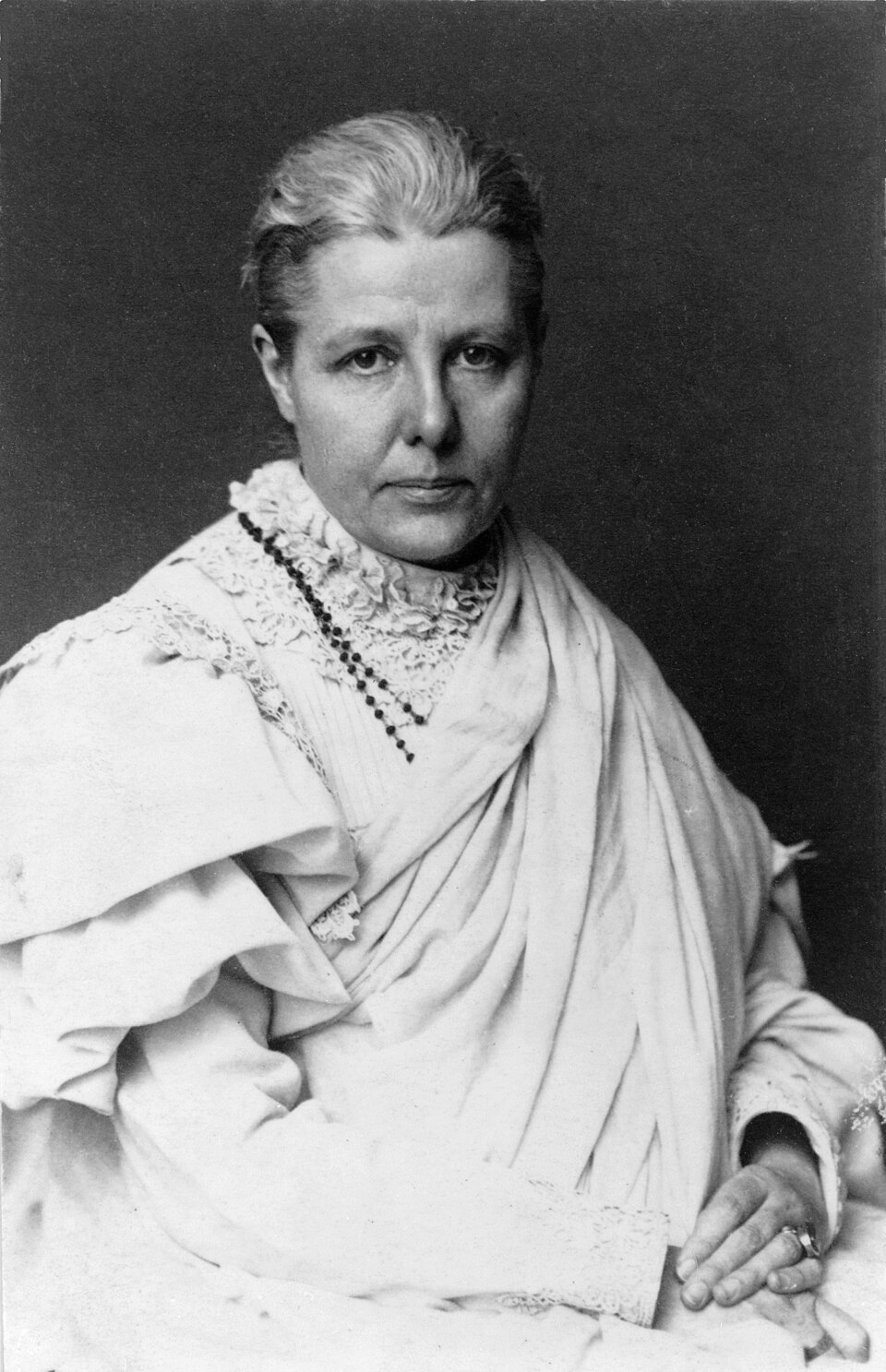
Correct — B, Annie Besant. The Home Rule agitation was never run by one organisation; it ran through two Leagues that had divided the country between them. Bal Gangadhar Tilak founded the Indian Home Rule League at the Bombay provincial conference at Belgaum in April 1916, and Annie Besant founded the All India Home Rule League at Adyar, Madras, in September 1916. To stop the two bodies competing for the same recruits they settled a territorial understanding: Tilak's League worked Maharashtra (excluding Bombay city), Karnataka, the Central Provinces and Berar, and Besant's League took the entire rest of India. Bihar sat squarely inside Besant's half — it is one of the provinces, along with Sindh, Punjab, Gujarat, the United Provinces, the Central Provinces, Orissa and Madras, into which the League carried political work for the first time. So of the four names offered, only Besant had any organisational business touring Bihar on the League's behalf. The Commission's own remark on this question says precisely that: Mrs Annie Besant visited Bihar in 1918 in connection with the Home Rule Movement, and she was a leader of the Congress who had presided over its 1917 session. The date fits her career exactly. The Madras government interned her in June 1917; the countrywide protest that followed was one of the pressures behind Secretary of State Montagu's declaration of 20 August 1917 promising the 'progressive realisation of responsible government in India'; she was released that September, and in December 1917 the Calcutta session elected her President of the Indian National Congress — the first woman to hold that office. A Congress President with a League to rebuild after the August Declaration had taken the wind out of it, touring an eastern province, is exactly the scene this question describes. The tour is documented, and in detail: the Government of Bihar's own History of the Freedom Movement in Bihar records that the Provincial Committee of the Home Rule League elected its office-bearers at Patna on 17 February 1918, with Mazharul Haque and Chandra Bansi Sahai as Presidents, and that Annie Besant reached Patna City at 5 a.m. on 18 April 1918, received by about two hundred people headed by Rai Bahadur Purnendu Narayan Sinha; she came again on 25 July 1918.
Why the others are wrong
- (a)B.G. Tilak — The strongest wrong answer, because Tilak is the other founder of the Home Rule movement and its most famous campaigner — his League grew from 1,400 members in April 1916 to roughly 32,000 by 1917. But its jurisdiction was fixed by agreement at Maharashtra excluding Bombay city, Karnataka, the Central Provinces and Berar; Bihar was never his to organise. Tilak also left India for England to pursue his libel suit against Valentine Chirol, and his absence is one of the two standard reasons given for the agitation going quiet.
- (c)Mahatma Gandhi — Tempting on two counts, and wrong on both. Gandhi genuinely was in Bihar in this period — Champaran, from April 1917 — and he genuinely did end up heading Besant's organisation, becoming president of the All India Home Rule League in 1920 and renaming it the Swarajya Sabha. Neither is 1918. Gandhi kept a deliberate distance from the Leagues while they were active, preferring satyagraha to constitutional agitation, and his 1918 was a Gujarat year: the Ahmedabad mill-workers' dispute and the Kheda satyagraha.
- (d)M.A. Ansari — Dr Mukhtar Ahmed Ansari (1880–1936) really is a Congress leader — he presided over the Congress's Madras session of 1927 — so the option is not absurd, and a candidate who only half-remembers him may take the bait. But in 1918 his chair was the other one: Ansari served as President of the All-India Muslim League in 1918 and again in 1920. He is remembered for helping negotiate the Lucknow Pact of 1916, for leading the Indian medical mission to the Turkish wounded, for the Khilafat delegation to England in March 1920 and for founding Jamia Millia Islamia — not for a Home Rule tour of Bihar.
Concept
The Home Rule movement of 1916–1918 was India's first attempt at a sustained, organised, all-India political campaign between the collapse of the Swadeshi agitation and the arrival of Gandhian mass satyagraha. Its model was explicitly Irish: self-government within the Empire, on the pattern of the Irish Home Rule campaign, demanded by constitutional agitation rather than revolution. The wartime moment made it possible — Besant's own slogan was that England's need was India's opportunity, and the 1909 Morley-Minto reforms had satisfied nobody. Two Leagues carried it. Tilak's Indian Home Rule League (Belgaum, April 1916) drew on his Maharashtra base and on his newspapers Kesari and Mahratta; Besant's All India Home Rule League (Adyar, September 1916) drew on the Theosophical Society's national network of lodges and on her papers New India and Commonweal. The movement's real achievements were organisational rather than legislative: it took political work into small towns and villages that Congress annual sessions had never reached, it drew in Muslim League figures such as Jinnah on the momentum of the 1916 Lucknow Pact, and the outrage over Besant's internment helped force the August Declaration of 1917. It then dissolved into the movement it had prepared the ground for — in 1920 the All India Home Rule League became the Swarajya Sabha under Gandhi.
Two steps get you there, and the second one is the discriminator. First, drop the option that is not in the movement at all: M.A. Ansari's 1918 was spent presiding over the Muslim League, and nothing in his record touches the Home Rule Leagues. That leaves three men and women who all belong to the same decade of nationalist politics. Second — and this is the fact that actually decides the question — remember that the Home Rule movement was TWO Leagues with an agreed map, not one. The moment you can recite that Tilak took Maharashtra excluding Bombay city, Karnataka, the Central Provinces and Berar while Besant took the rest of India, Bihar resolves itself: it is Besant's territory, so a tour to 'strengthen the activities of the Home Rule League' in Bihar can only be hers. Gandhi is the trap the option set is built around, because 'Bihar' plus 'this period' fires the Champaran reflex — but Champaran was 1917 and had nothing to do with the Leagues, and Gandhi's connection to Besant's League is 1920, two years the wrong side of the question. Candidates who learn the two Leagues as one undifferentiated 'Home Rule Movement' have no way to separate Tilak from Besant here and are reduced to guessing between them.
Key facts
- Two Home Rule Leagues, not one: Tilak's Indian Home Rule League was founded at Belgaum in April 1916, Besant's All India Home Rule League at Adyar, Madras, in September 1916; Tilak's had about 1,400 members in April 1916 and roughly 32,000 by 1917.
- The agreed territorial division gave Tilak's League Maharashtra (excluding Bombay city), Karnataka, the Central Provinces and Berar, and gave Besant's League the whole of the rest of India — Bihar included.
- Annie Besant (1 October 1847 – 20 September 1933) was interned by the Madras government in June 1917 and released that September; in December 1917 the Calcutta session made her the first woman President of the Indian National Congress.
- Montagu's August Declaration of 20 August 1917 promised the 'progressive realisation of responsible government in India'; the protest over Besant's internment was among the pressures that produced it, and the Leagues then agreed to suspend their expansion.
- Besant reached India through the Theosophical Society, becoming its president in 1907 with headquarters at Adyar; she helped establish the Central Hindu School at Banaras in 1898 and ran the papers New India and Commonweal. In 1920 her League was renamed the Swarajya Sabha under Gandhi.
Study next
Common traps
- Treating the 'Home Rule Movement' as a single organisation — it was two Leagues with an agreed territorial map, and that map is what decides questions like this one
- Answering 'Gandhi' because the question says Bihar — Champaran (1917) was a peasant satyagraha, not Home Rule work, and Gandhi took charge of Besant's League only in 1920
- Crediting Besant with founding the Theosophical Society — it was founded in New York in 1875 by H. P. Blavatsky and H. S. Olcott; Besant became its president in 1907
BPSC localises national history: it takes an all-India movement and asks what it did in Bihar, in a single flat sentence with four proper nouns, so the province name is the operative word and a candidate who knows only the all-India outline is stuck. UPSC almost never asks who visited where. It tests the same material as statement-verification or sequencing — whether Besant started the Home Rule Movement, whether she founded the Theosophical Society, whether she was once Congress President, or where Tilak's League falls in a chronology against the Komagata Maru incident and Gandhi's return.
Related PYQs
Annie Besant was 1. Responsible for starting the Home Rule Movement 2. The founder of the Theosophical Society 3. Once the President of the Indian National Congress Select the correct statement/statements using the codes given below.
- (a) 1 only
- (b) 2 and 3 only
- (c) 1 and 3 only
- (d) 1, 2 and 3
Answer(c) 1 and 3 only
The same two facts the Commission's remark leans on — Besant started the Home Rule Movement and she was once Congress President — tested directly, with the Theosophical Society founding thrown in as the trap that the BPSC card also warns about.
What is the correct sequence of the following events? I. Tilak’s Home Rule League II. Kamagatamaru Incident III. Mahatma Gandhi’s arrival in India Select the correct answer using the codes given below:
- (a) I, II, III
- (b) III, II, I
- (c) II, I, III
- (d) II, III, I
Answer(d) II, III, I
Tests the other half of the same fact — that the Home Rule Leagues were founded in 1916, after the Komagata Maru affair of 1914 and Gandhi's return in 1915 — and it names Tilak's League specifically, which is the distinction between the two Leagues that decides the BPSC question.
Practice
- practice — not a real PYQ
Annie Besant founded the All India Home Rule League in September 1916 at
- (a)Belgaum
- (b)Adyar, Madras
- (c)Poona
- (d)Calcutta
Answer(b) Adyar, Madras — Adyar was the international headquarters of the Theosophical Society, of which Besant had been president since 1907. Belgaum is where Tilak founded the Indian Home Rule League in April 1916. - practice — not a real PYQ
Under the understanding reached between the two Home Rule Leagues, Bal Gangadhar Tilak's Indian Home Rule League confined its work to
- (a)Maharashtra (excluding Bombay city), Karnataka, the Central Provinces and Berar
- (b)Bihar, Orissa and Bengal
- (c)Madras, Sindh and Punjab
- (d)the whole of British India
Answer(a) Maharashtra (excluding Bombay city), Karnataka, the Central Provinces and Berar — Besant's All India Home Rule League worked the rest of India, which is why Bihar fell to her and not to Tilak.