
Which one of the following subjects fall within the jurisdiction of both High Court and Supreme Court?
- (a)Dispute between Centre and State
- (b)Dispute among States
- (c)Protection of fundamental rights
- (d)Protection from the violation of the constitution
Answer
Why
Correct — C, Protection of fundamental rights. This is the one subject in the option set that the Constitution hands to both courts in nearly identical words, and that textual duplication is the proof. Article 32(1) guarantees the right to move the Supreme Court by appropriate proceedings for the enforcement of the rights conferred by Part III, and Article 32(2) gives the Supreme Court power to issue directions, orders or writs, including writs in the nature of habeas corpus, mandamus, prohibition, quo warranto and certiorari, 'for the enforcement of any of the rights conferred by this Part'. Article 226(1) then opens with the words 'Notwithstanding anything in article 32' and gives every High Court, throughout the territories over which it has jurisdiction, power to issue to any person or authority — including in appropriate cases any Government — the same five writs, 'for the enforcement of any of the rights conferred by Part III and for any other purpose'. Same remedy, same five writs, same purpose clause, two different courts. The Commission's own disposal of objections stated it in a single line: fundamental rights will be protected by both courts. The two remedies are not identical twins, and the differences are themselves examinable. Article 226 is wider in subject matter, because those closing words 'and for any other purpose' let a High Court enforce ordinary legal and constitutional rights and not only Part III rights, whereas Article 32 is confined to fundamental rights. Article 32 is stronger in status, because it sits inside Part III and is therefore itself a fundamental right — Dr B. R. Ambedkar called it the very soul of the Constitution and the very heart of it — while Article 226 is a constitutional power vested in the High Court rather than a right vested in the citizen, and relief under it is discretionary. Article 32 is wider in reach, since the Supreme Court's writ runs throughout India, while a High Court's runs within its own territories, extended by Article 226(2) to authorities outside them only where the cause of action arises wholly or in part inside. And in L. Chandra Kumar v. Union of India (1997) the Supreme Court held that the power of judicial review vested in the High Courts under Articles 226 and 227 and in the Supreme Court under Article 32 is an integral and essential feature of the Constitution, forming part of its basic structure — a holding that puts both halves of this shared jurisdiction beyond the reach of even a constitutional amendment.
Why the others are wrong
- (a)Dispute between Centre and State — Killed by an express exclusivity clause, not by inference. Article 131 says the Supreme Court shall, 'to the exclusion of any other court', have original jurisdiction in any dispute between the Government of India and one or more States, and in any dispute between the Union and one or more States on one side and other States on the other. No High Court can touch it. This is the Supreme Court's original jurisdiction in the strict sense — the case begins and ends there, with no appeal and no lower court below it.
- (b)Dispute among States — The same clause, the third limb. Article 131(c) covers disputes between two or more States, again 'to the exclusion of any other court', and again only where the dispute involves a question of law or fact on which the existence or extent of a legal right depends. There is a further carve-out worth knowing: under Article 262(2) Parliament may bar every court — the Supreme Court included — from an inter-State river water dispute, and it did so through the Inter-State River Water Disputes Act, 1956, which is why such disputes go to tribunals.
- (d)Protection from the violation of the constitution — The one option that needs an honest answer rather than a dismissal. Judicial review of constitutional violations is in fact exercised by High Courts too — Article 226's 'and for any other purpose', read with Article 13, lets a High Court strike down a law that offends the Constitution. But no provision confers on either court a head of jurisdiction called 'protection from the violation of the Constitution'; the phrase describes a function, not a jurisdiction, and where the paper treats it as distinctively the Supreme Court's it is on solid ground, because Article 141 makes only the Supreme Court's declared law binding on all courts within India, while a High Court's ruling binds only within its own territory. Option (c) is the better answer because it is the only subject the Constitution itself names for both courts, and the key marks (c).
Concept
Indian courts hold three kinds of jurisdiction, and almost every question in this family is really asking you to tell them apart. Original jurisdiction means a case starts in that court. The Supreme Court's original jurisdiction has two very different strands: the federal strand under Article 131, which is exclusive to it and covers Union-State and inter-State legal disputes, and the writ strand under Article 32, which it shares with the High Courts. Appellate jurisdiction means a case arrives on appeal — Articles 132, 133 and 134 for constitutional, civil and criminal appeals from a High Court, plus the discretionary special leave to appeal under Article 136, which reaches any judgment of any court or tribunal in India except a court martial. Advisory jurisdiction, under Article 143, belongs to the Supreme Court alone: the President may refer a question of law or fact of public importance for its opinion, and the Court's opinion is not binding. The High Courts have their own supervisory power under Article 227, superintendence over all courts and tribunals within their territories, which the Supreme Court does not exercise over High Courts. Set against that map, the writ jurisdiction is the unusual one, because it is the single place where the Constitution deliberately duplicates a remedy — a citizen whose fundamental right is violated may go to the High Court under Article 226 or straight to the Supreme Court under Article 32, and in practice the Supreme Court often asks a petitioner to exhaust the High Court remedy first even though Article 32 imposes no such requirement. That duplication is not accidental. It puts a constitutional remedy within the same State as the citizen, which is exactly the design point BPSC is testing. For Bihar, that court is the Patna High Court, established in 1916 and one of the oldest in India, whose Article 226 jurisdiction covered Bihar and Jharkhand together until the Jharkhand High Court was created on the State's bifurcation in 2000.
Reason through this in two steps and the answer arrives without recall of the Article numbers. Step one: look for exclusivity language. Two of the four options — a Centre-State dispute and a dispute among States — are federal disputes, and federal disputes by their nature cannot be heard by the court of one of the parties' own States. The Constitution says so in as many words in Article 131 with the phrase 'to the exclusion of any other court', which is the strongest exclusivity formula in the document. Anything that is expressly exclusive to one court cannot be the answer to a question asking which subject is SHARED, so (a) and (b) fall together. Step two: between the two survivors, ask which one the Constitution confers on both courts BY NAME. Article 32(2) and Article 226(1) both use the phrase 'for the enforcement of any of the rights conferred by Part III' and both list the identical five writs — that is a named, duplicated head of jurisdiction. There is no matching pair of provisions creating a jurisdiction called 'protection from the violation of the Constitution'; judicial review is a function that both courts perform, largely through those same writ powers, but it is not conferred as a separate subject. So the single discriminating fact is the verbatim duplication of the Part III enforcement clause across Articles 32 and 226. The trap in this question is (d), and it is a good one, because a candidate who knows that High Courts do strike down unconstitutional laws will read (d) as equally true. The corrective is to notice that (d) restates the general judicial-review function while (c) names a specific remedy the Constitution grants twice — and the Commission defended the key on exactly that ground when it disposed of objections.
Key facts
- Article 32(1) guarantees the right to move the Supreme Court for enforcement of Part III rights, and 32(2) empowers it to issue directions, orders or writs — habeas corpus, mandamus, prohibition, quo warranto and certiorari — for that enforcement; 32(4) says the right shall not be suspended except as otherwise provided by the Constitution, the exception being Article 359, under which Articles 20 and 21 remain non-suspendable after the 44th Amendment, 1978.
- Article 226(1) begins 'Notwithstanding anything in article 32' and gives every High Court the same five writs 'for the enforcement of any of the rights conferred by Part III and for any other purpose' — those last five words make Article 226 wider in subject matter than Article 32, which is confined to fundamental rights.
- Article 131 gives the Supreme Court original jurisdiction 'to the exclusion of any other court' in disputes between the Government of India and one or more States, between the Union with some States on one side and other States on the other, and between two or more States, wherever the existence or extent of a legal right is in question.
- Article 262(2) lets Parliament bar every court, including the Supreme Court, from adjudicating inter-State river water disputes, and Parliament did so through the Inter-State River Water Disputes Act, 1956 — which is why such disputes are heard by tribunals rather than by any court.
- L. Chandra Kumar v. Union of India (1997): the Supreme Court held that the power of judicial review vested in the High Courts under Articles 226 and 227 and in the Supreme Court under Article 32 is an integral and essential feature of the Constitution and part of its basic structure.
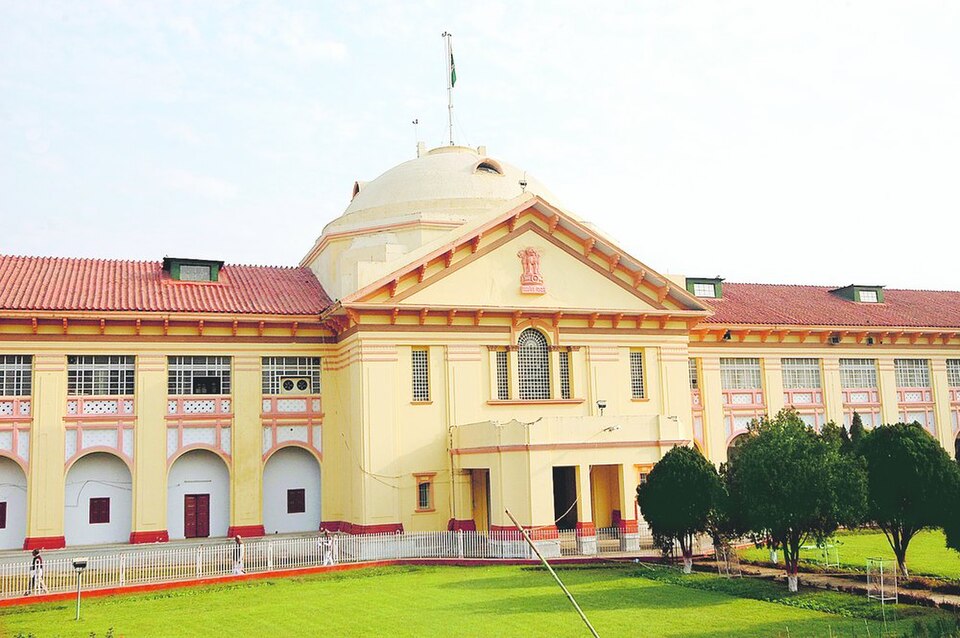
- Bihar's Article 226 court is the Patna High Court, established in 1916 and among the oldest High Courts in India; it exercised writ jurisdiction over Bihar and Jharkhand together until the Jharkhand High Court was constituted on the bifurcation of the State in 2000.
Study next
Common traps
- Treating every Supreme Court power as automatically shared — Article 131 is expressly exclusive, and Article 143 advisory jurisdiction belongs to the Supreme Court alone
- Believing High Courts cannot declare a Central law unconstitutional — they can; Article 226 read with Article 13 is a full judicial-review power, and only the SC's declared law binds all courts under Article 141
- Calling Article 226 a fundamental right — Article 32 is one because it sits in Part III, but Article 226 is a constitutional power of the court, and relief under it is discretionary
BPSC asks the comparison directly — one line, four subjects, pick the shared one — and relies on candidates never having read Article 131's exclusivity clause. UPSC prefers to test one court's jurisdiction at a time and then trip you on a boundary: in 2012 it asked which items fall inside the Supreme Court's original jurisdiction and planted election disputes and Union Territories among them, and in 2024 it asked what a writ of prohibition actually does, with the shared 'Supreme Court or High Courts' sitting quietly in the stem. Learn the map, not the sentence.
Related PYQs
Which of the following are included in the original jurisdiction of the Supreme Court? 1. A dispute between the Government of India and one or more States 2. A dispute regarding elections to either House of the Parliament or that of Legislature of a State 3. A dispute between the Government of India and a Union Territory 4. A dispute between two or more States Select the correct answer using the codes given below :
- (a) 1 and 2
- (b) 2 and 3
- (c) 1 and 4
- (d) 3 and 4
Answer(c) 1 and 4
The provision that eliminates BPSC's first two options. UPSC's key confirms that a Centre-State dispute and a dispute between two or more States are the Supreme Court's own original jurisdiction under Article 131 — which the Article makes exclusive 'to the exclusion of any other court', so neither can ever be shared with a High Court.
A Writ of Prohibition is an order issued by the Supreme Court or High Courts to:
- (a) a government officer prohibiting him from taking a particular action
- (b) the Parliament/Legislative Assembly to pass a law on Prohibition
- (c) the lower court prohibiting continuation of proceedings in a case
- (d) the Government prohibiting it from following an unconstitutional policy
Answer(c) the lower court prohibiting continuation of proceedings in a case
The shared jurisdiction stated as a matter of course in the stem itself — 'issued by the Supreme Court or High Courts'. The same five writs are available under Article 32 and Article 226, which is precisely why protection of fundamental rights is the subject that falls within both courts' jurisdiction.
Practice
- practice — not a real PYQ
Under which Article does the Supreme Court of India have original jurisdiction 'to the exclusion of any other court' in a dispute between two or more States?
- (a)Article 32
- (b)Article 131
- (c)Article 136
- (d)Article 143
Answer(b) Article 131 — Article 32 is the writ jurisdiction shared with the High Courts, Article 136 is special leave to appeal, and Article 143 is the President's reference for an advisory opinion. - practice — not a real PYQ
Which one of the following statements about Article 226 of the Constitution is correct?
- (a)It empowers High Courts to issue writs only for the enforcement of fundamental rights
- (b)It empowers High Courts to issue writs for the enforcement of fundamental rights and for any other purpose
- (c)It is itself a fundamental right guaranteed under Part III
- (d)It empowers High Courts to issue writs anywhere in the territory of India
Answer(b) It empowers High Courts to issue writs for the enforcement of fundamental rights and for any other purpose — those closing words make Article 226 wider in subject matter than Article 32. It is a power of the court, not a fundamental right, and it operates within the High Court's own territories, extended only where the cause of action arises there.