
Which of the following individuals or organisations was a recipient of the Ramon Magsaysay Award 2024?
- (a)Phuntsho, Karma
- (b)Rural Doctors Movement
- (c)Miyazaki Hayao
- (d)More than one of the above
Answer
Why
Correct — D, More than one of the above. The Ramon Magsaysay Award Foundation named five laureates for 2024, and three of those five are sitting in front of the candidate as options (a), (b) and (c), so no single-name option can survive. The full 2024 class, whose official information kit the Foundation published on 4 September 2024, is: Miyazaki Hayao of Japan, the animator and co-founder of Studio Ghibli, cited for 'his lifelong commitment to the use of art, specifically animation, to illuminate the human condition'; Karma Phuntsho of Bhutan, a Buddhist scholar and the first Bhutanese ever honoured, cited for 'harmonizing the richness of his country's past with the diverse predicaments and prospects of its present'; the Rural Doctors Movement of Thailand, the physicians' network behind that country's push to universal health coverage, cited 'for their historic and continuing contribution to their people's health — and perhaps just as importantly, to their recognition and fulfilment as citizens with basic rights'; Nguyen Thi Ngoc Phuong of Vietnam, the obstetrician who spent a career documenting and seeking justice for the birth-defect victims of Agent Orange; and Farwiza Farhan of Indonesia, honoured for her defence of the Leuser Ecosystem, and the only one of the five to receive it under a named category — Emergent Leadership, the single category the Foundation still uses. Two further points make this class worth remembering rather than merely ticking. The 2024 list contains no Indian at all, which is unusual for an award India has drawn on heavily since 1958. And it is one of the few major international awards that honours organisations on equal footing with individuals, which is why the Rural Doctors Movement can appear in the same list as an animator and a monk-scholar.
Why the others are wrong
- (a)Phuntsho, Karma — True but incomplete, which is the hardest kind of wrong option to refuse. Karma Phuntsho is genuinely a 2024 Ramon Magsaysay laureate — a Bhutanese Buddhist scholar and social worker, and the first person from Bhutan ever to receive the award, cited for reconciling his country's inherited culture with its modern predicaments and for making young Bhutanese confident in that heritage. Ticking (a) is not a factual error; it is a failure to check whether the other names are also on the list.
- (b)Rural Doctors Movement — True but incomplete. The Rural Doctors Movement of Thailand is a 2024 laureate, honoured as an organisation for decades of work extending health care to the Thai rural poor and for the political groundwork behind Thailand's universal health coverage. It is the option candidates most often reject on instinct, because they assume a personal award; in fact the Magsaysay has recognised institutions and movements alongside individuals throughout its history, so rejecting it on that reasoning is exactly the wrong move.
- (c)Miyazaki Hayao — True but incomplete, and the most dangerous of the three because it is the one name most Indian candidates will recognise. The Studio Ghibli co-founder's 2024 Magsaysay was the headline of that year's announcement and the fact that circulated in every current-affairs compilation. A candidate who recognises Miyazaki, recognises nothing else, and stops there ticks (c) with confidence and forfeits 1/3 mark under this paper's negative marking.
Concept
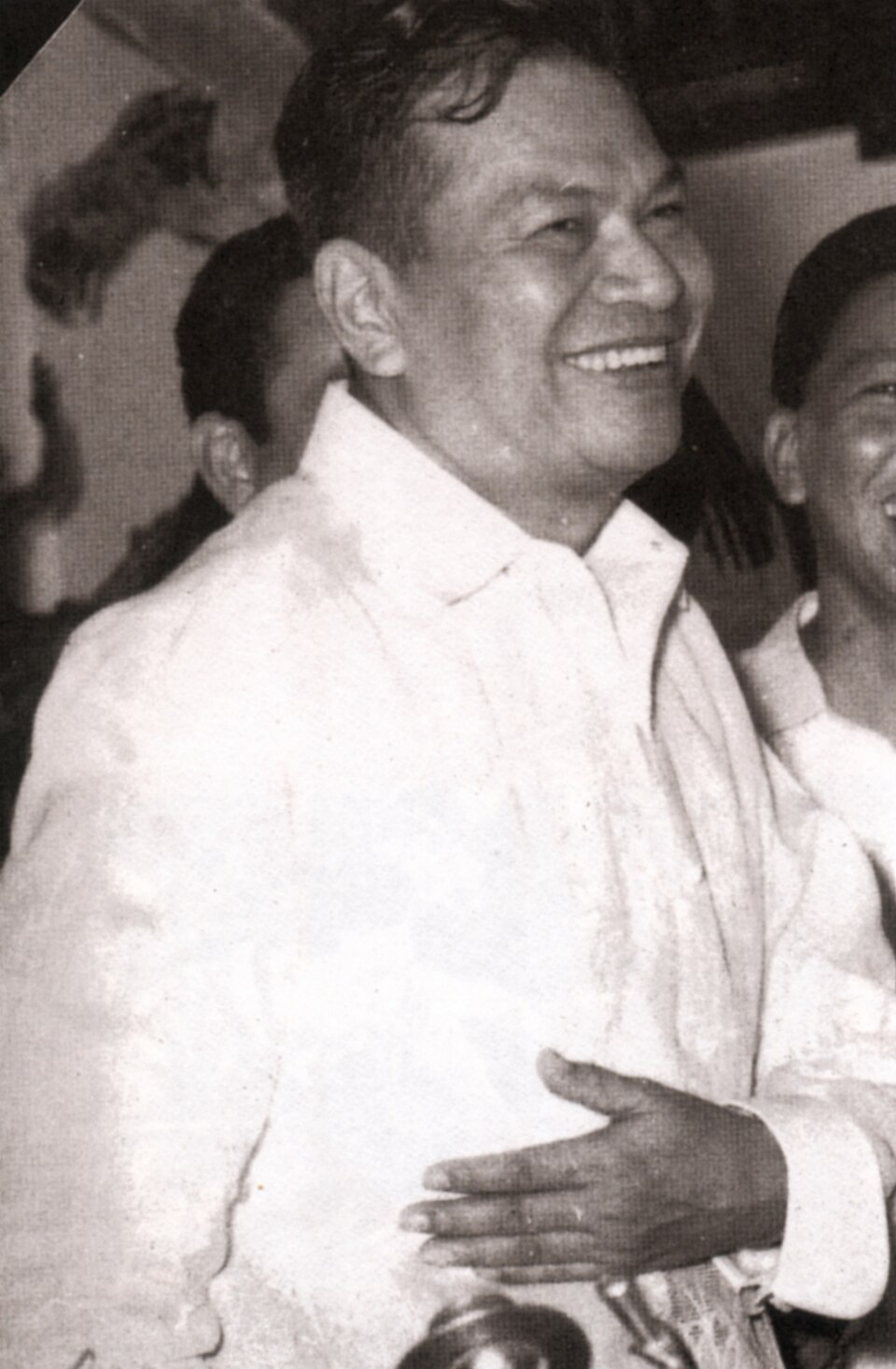
The Ramon Magsaysay Award, often described as Asia's Nobel Prize, was established in April 1957 by the trustees of the Rockefeller Brothers Fund of New York with the concurrence of the Philippine government, to perpetuate the example of Ramon Magsaysay — the seventh President of the Philippines, who served from 30 December 1953 until he was killed in an aircraft crash on Mount Manunggal in Cebu on 17 March 1957. The first awards were given in 1958 and are administered by the Ramon Magsaysay Award Foundation in Manila. It honours individuals and organisations in Asia regardless of race, creed, sex or nationality; as of 2021 recipients had come from twenty-two Asian countries. Its category structure changed decisively in 2009. For half a century the award ran in five categories — Government Service, Public Service, Community Leadership, Journalism, Literature and Creative Communication Arts, and Peace and International Understanding — all of which operated from 1958 to 2008 and were then discontinued. A sixth, Emergent Leadership, was added in 2001 and is the only named category that survives. Everything else has since been conferred without a fixed category, which is why post-2009 laureates are described only by their citation and not by a heading, and why a question about the 2024 class cannot be answered by category logic.
On a 'More than one of the above' item you never need the whole list — you need two confirmed names. The moment any two of options (a), (b) and (c) can be placed in the 2024 class, all three single-name options collapse together and (d) is forced. That is the efficient route here: Miyazaki Hayao is the recognisable anchor, because a Magsaysay to the co-founder of Studio Ghibli was the most reported item of the 2024 announcement; confirm any one of the other two and the item is closed. The trap runs the other way. A candidate who recognises only Miyazaki treats the other two as unknowns, marks (c), and loses 1/3 mark — the classic cost of treating an unrecognised name as a false name. There is a second, sharper trap specific to this exam date. The Foundation announced its 2025 class in the first week of September 2025, and it published the Educate Girls announcement on 3 September 2025 — the first Indian organisation ever to win the award, ten days before this paper was written. Any candidate revising awards in the exam week was reading the 2025 list, and would have found none of these three names on it. The stem says 2024. Reading the year on an awards question is not a formality; on this paper it is the whole discrimination.
Key facts
- The 2024 Ramon Magsaysay Award went to five laureates: Miyazaki Hayao (Japan), Karma Phuntsho (Bhutan), the Rural Doctors Movement (Thailand), Nguyen Thi Ngoc Phuong (Vietnam) and Farwiza Farhan (Indonesia). The Foundation published its official information kit on the 2024 awardees on 4 September 2024.
- Karma Phuntsho is the first Bhutanese ever to receive the award. Farwiza Farhan received hers under Emergent Leadership, the only named category the Foundation still uses, for her work on Indonesia's Leuser Ecosystem.
- The award was established in April 1957 by the trustees of the Rockefeller Brothers Fund, New York, with the concurrence of the Philippine government, in memory of Ramon Magsaysay, seventh President of the Philippines (30 December 1953 to 17 March 1957), who died in an air crash on Mount Manunggal, Cebu. The first awards were conferred in 1958.
- Five of the six categories — Government Service, Public Service, Community Leadership, Journalism/Literature/Creative Communication Arts, and Peace and International Understanding — ran from 1958 to 2008 and were discontinued in 2009. Emergent Leadership, added in 2001, is the only fixed category still awarded; as of 2021 laureates had come from 22 Asian countries.
- India has drawn on the award heavily since Vinoba Bhave took the first Indian one in 1958 under Community Leadership — later Indian laureates include Mother Teresa (1962), Verghese Kurien (1963), Jayaprakash Narayan of Bihar (1965), Satyajit Ray (1967), M. S. Subbulakshmi (1974), Kiran Bedi, Sandeep Pandey, Shanta Sinha, Arvind Kejriwal, T. M. Krishna, Bezwada Wilson, Sonam Wangchuk and Ravish Kumar — but no Indian appears in the 2024 class.
Study next
Common traps
- Marking the one name you recognise. Recognising Miyazaki Hayao proves he is a laureate; it proves nothing about the other two, and under minus-one-third marking a half-checked answer is worse than a skipped one
- Rejecting 'Rural Doctors Movement' because it is an organisation — the Magsaysay has honoured organisations and movements alongside individuals throughout its history
- Answering from the freshest list rather than the stated year — the 2025 laureates were public ten days before this exam, and none of these three names is on that list
BPSC asks the award as a roll-call: name a year, print three real recipients from that year among the options, and let 'More than one of the above' do the work — a format that rewards a memorised year-wise list and punishes partial recall through negative marking. UPSC has never asked who won a Magsaysay in a given year. Both times it has entered this territory it named the laureate in the stem and asked what they are known FOR — Sandeep Pandey's field in 2003, Shanta Sinha's in 2004 — so the UPSC-facing preparation is the citation and the cause behind each name, not the calendar.
Related PYQs
Sandeep Pandey, the winner of Raman Magsaysay Award, is mainly an activist in
- (a) Prevention of child marriages
- (b) Promotion of communal harmony
- (c) Environmental protection
- (d) Education and livelihood projects for Dalits
Answer(d) Education and livelihood projects for Dalits
The same award, tested from the other side. UPSC gives the laureate and asks for the citation; BPSC gives the year and asks for the laureates. Both reward the same underlying preparation — knowing the Magsaysay roll and what each name was actually honoured for.
The Ramon Magsaysay Award winner Shanta Sinha is known as
- (a) A campaigner for urban sanitation
- (b) An anti-child labour activist
- (c) An organizer of rain-water harvesting schemes
- (d) An activist for the welfare of poor rural women
Answer(b) An anti-child labour activist
The second UPSC item on this exact award, again testing the cause rather than the calendar — Shanta Sinha's 2003 citation was for the MV Foundation's work pulling children out of labour and into school, the same laureate-to-citation mapping that identifies Karma Phuntsho or the Rural Doctors Movement in the 2024 class.
Practice
- practice — not a real PYQ
Who among the following was the first Indian recipient of the Ramon Magsaysay Award ?
- (a)Jayaprakash Narayan
- (b)Vinoba Bhave
- (c)Mother Teresa
- (d)Verghese Kurien
Answer(b) Vinoba Bhave — he received the award in 1958, its very first year, under the Community Leadership category. Mother Teresa followed in 1962, Verghese Kurien in 1963 and Jayaprakash Narayan in 1965. - practice — not a real PYQ
The Ramon Magsaysay Award is named after a former President of which country ?
- (a)Indonesia
- (b)Thailand
- (c)The Philippines
- (d)Vietnam
Answer(c) The Philippines — Ramon Magsaysay was its seventh President, from December 1953 until his death in an air crash in March 1957. The award was established in April 1957 by the trustees of the Rockefeller Brothers Fund with the concurrence of the Philippine government, and first conferred in 1958.