
What is true of the GSLV-F15 mission by ISRO?
- (a)It carried the NVS-02 satellite
- (b)It marked ISRO’s 101st launch from Sriharikota
- (c)It marked ISRO’s 100th launch from Sriharikota
- (d)More than one of the above
Answer
Why
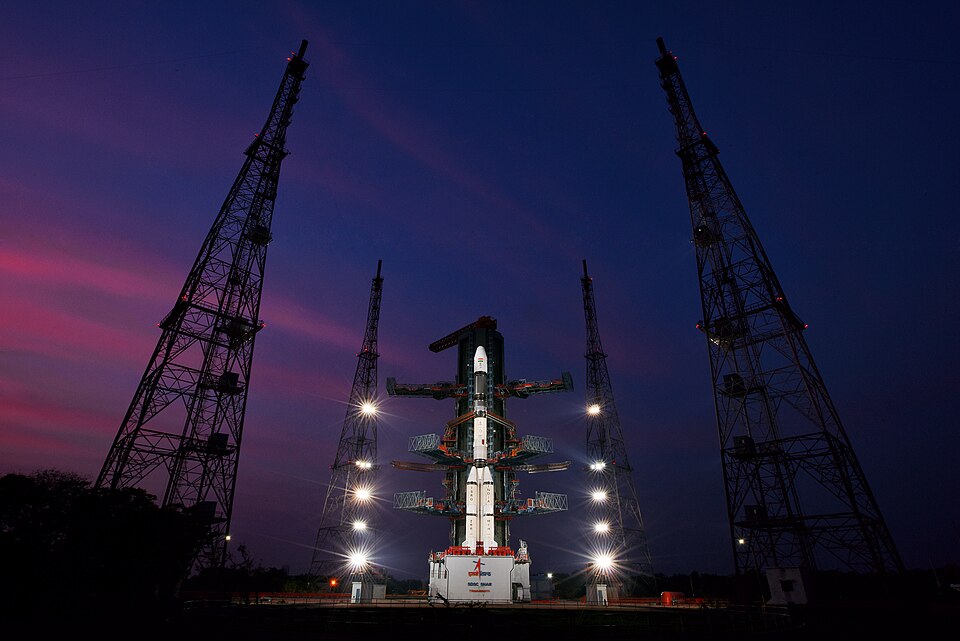
Correct — D, More than one of the above. GSLV-F15 lifted off from the Second Launch Pad of the Satish Dhawan Space Centre SHAR, Sriharikota, at 06:23 IST on 29 January 2025, and two of the three statements offered are true of that flight. Statement (a) is true: the payload was NVS-02, the second satellite of the second-generation NavIC series — a 2,250 kg spacecraft on the I-2K bus with about 3 kW of power, carrying navigation payloads in the L1, L5 and S bands plus a ranging payload in C band, and intended to replace IRNSS-1E in the inclined geosynchronous slot that crosses the equator at 111.75° E. Statement (c) is also true: ISRO marked the flight as the 100th launch from Sriharikota, the hundredth launch-vehicle mission flown from the spaceport since the first experimental SLV-3 flight of 10 August 1979, and the centenary was the headline the agency itself led with. That leaves (b) as the single false claim in the set — 101st is one out, and it is planted to punish a candidate who remembers 'century at Sriharikota' as a slogan rather than as a number. Two of three statements standing means no single lettered statement can be the answer, and only (d) accommodates both. Note carefully what the question does not ask, because this is where well-prepared candidates over-think it: it asks what is true of the mission, not whether the mission succeeded. It did not. GSLV-F15 performed, injecting NVS-02 into a geostationary transfer orbit of roughly 165 km by 36,577 km about nineteen minutes after lift-off, but the satellite's own orbit-raising burns were never carried out, because the valves admitting oxidiser to its main engine did not open, and it never reached its operational slot. That failure is a fact about the spacecraft's fate, not about what the rocket carried or which number the launch was, so it falsifies neither (a) nor (c).
Why the others are wrong
- (a)It carried the NVS-02 satellite — True as a statement, wrong as an answer — and that distinction is the whole question. GSLV-F15 did carry NVS-02, the 2,250 kg second-generation NavIC satellite meant to replace IRNSS-1E. But in a 'more than one of the above' item a true statement does not automatically become the key. Statement (c) is equally true, so marking (a) alone reports half the fact set and forfeits the mark.
- (b)It marked ISRO’s 101st launch from Sriharikota — The only genuinely false statement in the set, and the planted one. GSLV-F15 was Sriharikota's 100th launch, not its 101st — the count runs over launch-vehicle missions flown from SDSC-SHAR since the maiden SLV-3 flight of 10 August 1979, and ISRO publicised the round hundred. '101' is what a candidate writes who recalls that a milestone was crossed but not which milestone, and it sits directly above the right number so a fast scan can catch it.
- (c)It marked ISRO’s 100th launch from Sriharikota — The mirror image of (a): true, but not the whole truth. This was indeed the 100th launch from Sriharikota, and also ISRO's first flight of 2025, the 17th GSLV mission overall and the 11th of the Mk II variant. Because statement (a) is true as well, ticking (c) alone is the same half-answer, and the paper's own fourth option exists precisely to absorb both.
Concept
NavIC — Navigation with Indian Constellation, formerly IRNSS — is India's own regional satellite-navigation system, built so that positioning over Indian territory does not depend on a foreign constellation that a foreign government can degrade. Its architecture is deliberately regional rather than global: seven satellites, three of them geostationary at 32.5° E, 83° E and 131.5° E, and four in inclined geosynchronous orbits crossing the equator at 55° E and 111.75° E. Because India lies in low latitudes, that geometry buys continuous visibility over the subcontinent with a fraction of the spacecraft a worldwide system needs — GPS runs roughly 24 to 31. The declared service volume is India plus about 1,500 km around it, with a stated position accuracy of about 5–10 m over the Indian landmass and about 20 m over the surrounding ocean, delivered at two levels: an open Standard Positioning Service, and an encrypted Restricted Service for authorised users, largely military. The second-generation NVS series — NVS-01 on GSLV-F12 (29 May 2023) and NVS-02 on GSLV-F15 (29 January 2025) — exists because the rubidium atomic clocks aboard the first-generation IRNSS satellites failed repeatedly, crippling the constellation's ability to compute position. The NVS spacecraft carry indigenous atomic clocks developed by the Space Applications Centre, Ahmedabad, lift design life from 10 to 12 years, and add the L1 band at 1575.42 MHz — the frequency civilian GPS already uses — so that ordinary phone and IoT chipsets can receive NavIC without new hardware.
This is a 'more than one of the above' item, and BPSC sets a great many of them, so read the format first as information in its own right. When options (a), (b) and (c) are three independent claims rather than three rival answers, the task is not to pick the best one — it is to audit all three and count how many survive. A candidate who stops at the first statement they recognise as true has misread the question type, and that, not ignorance of ISRO, is what this item actually punishes. Audit them in order. (a) NVS-02 on GSLV-F15 is true, and reachable even without the mission name, because the GSLV is exactly the vehicle India uses to throw payloads towards geosynchronous orbit, while the PSLV flies polar and sun-synchronous missions — a navigation satellite headed for a 111.75° E slot belongs on a GSLV. (b) and (c) cannot both be true; they differ by exactly one. So the entire question collapses onto a single fact — was this Sriharikota's 100th launch or its 101st? It was the 100th, and ISRO's own centenary publicity is the reason the number is memorable at all. Two survivors means (d). The single discriminator is therefore the number 100, and the trap is positional: the wrong number is printed immediately above the right one, so a hurried reader scanning for 'Sriharikota launch milestone' can tick (b) and never compare it with (c). The second trap is knowledge working against you — a candidate who remembers that NVS-02 was stranded in transfer orbit starts hunting for a 'none of these' option that this question does not offer.
Key facts
- GSLV-F15 lifted off at 06:23 IST on 29 January 2025 from the Second Launch Pad, Satish Dhawan Space Centre SHAR, Sriharikota — ISRO's first launch of 2025, the 17th GSLV flight, the 11th of the Mk II variant, and the 100th launch from the spaceport since SLV-3's maiden flight on 10 August 1979.
- NVS-02 has a lift-off mass of 2,250 kg on the I-2K bus with roughly 3 kW of power, carries navigation payloads in the L1, L5 and S bands plus a C-band ranging payload, and was built to replace IRNSS-1E at the 111.75° E inclined geosynchronous slot.
- The mission failed after separation: NVS-02 reached a geostationary transfer orbit of about 165 km by 36,577 km, but orbit-raising could not be performed because the valves admitting oxidiser to the main engine did not open; the failure-analysis committee traced it to the ignition signal not reaching the oxidiser-line pyro valve through disengaged connector contacts.
- NavIC's seven-satellite constellation is three geostationary satellites at 32.5° E, 83° E and 131.5° E plus four in inclined geosynchronous orbits crossing the equator at 55° E and 111.75° E; the service area is India plus about 1,500 km beyond, with roughly 5–10 m position accuracy over the landmass and about 20 m over the ocean.
- Second-generation NVS satellites carry indigenous atomic clocks built by the Space Applications Centre, Ahmedabad, raise design life from 10 to 12 years, and add the L1 band at 1575.42 MHz for interoperability with civilian GPS receivers; NVS-01 flew on GSLV-F12 on 29 May 2023.
Study next
Common traps
- Marking (a) or (c) because the statement itself is true — in a 'more than one of the above' item a true statement is not automatically the key; you must check the others too
- Writing 101st: the milestone was Sriharikota's 100th launch, and the two options are printed one line apart and differ by exactly one
- Assuming the mission succeeded because the launch was celebrated — the rocket performed, but NVS-02's own engine never lifted it out of transfer orbit, and this question is about the mission's facts, not its outcome
BPSC asks space current affairs as a fact-audit: one named recent mission, three one-line claims about it, and a 'more than one of the above' escape hatch — so the mark goes to whoever can verify three statements in forty seconds, not to whoever understands orbital mechanics. UPSC almost never names a single recent flight. Its space questions are conceptual and durable — the IRNSS constellation's orbital make-up in 2018, and in the very same paper what separates a PSLV payload from a GSLV payload — because a question on architecture is still valid five years later while a question about launch number 100 expires the moment launch 101 flies.
Related PYQs
With reference to the Indian Regional Navigation Satellite System (IRNSS), consider the following statements: 1. IRNSS has three satellites in geostationary and four satellites in geosynchronous orbits. 2. IRNSS covers entire India and about 5500 sq. km beyond its borders. 3. India will have its own satellite navigation system with full global coverage by the middle of 2019. Which of the statements given above is/are correct?
- (a) 1 only
- (b) 1 and 2 only
- (c) 2 and 3 only
- (d) None
Answer(a) 1 only
The same constellation, tested the UPSC way — three geostationary plus four inclined geosynchronous satellites, and the fact that NavIC is regional rather than global. NVS-02 was flying to that very constellation, and the 111.75° E slot it was meant to occupy is one of the four inclined ones this question counts.
With reference to India's satellite launch vehicles, consider the following statements: 1. PSLVs launch the satellites useful for Earth resources monitoring whereas GSLVs are designed mainly to launch communication satellites. 2. Satellites launched by PSLV appear to remain permanently fixed in the same position in the sky, as viewed from a particular location on Earth. 3. GSLV Mk III is a four-stage launch vehicle with the first and third stages using solid rocket motors; and the second and fourth stages using liquid rocket engines. Which of the statements given above is/are correct?
- (a) 1 only
- (b) 2 and 3
- (c) 1 and 2
- (d) 3 only
Answer(a) 1 only
Why the payload in the BPSC question was riding a GSLV at all. This item rewards knowing that the GSLV is India's vehicle for geosynchronous-bound payloads while the PSLV serves polar and sun-synchronous orbits — the division of labour that makes 'GSLV-F15 carried a navigation satellite' a sensible pairing rather than something to be memorised.
Practice
- practice — not a real PYQ
Which one of the following statements about NavIC is correct ?
- (a)It is a global navigation system with a constellation of 24 satellites
- (b)It covers India and an area extending about 1,500 km beyond India's borders
- (c)Its satellites transmit navigation signals only in the L5 band
- (d)It is owned and operated by the Indian Air Force
Answer(b) It covers India and an area extending about 1,500 km beyond India's borders — NavIC is regional, not global, with a seven-satellite constellation; its signals use the L5 and S bands, with L1 added on the second-generation NVS satellites; and it is operated by ISRO, not by the Air Force. - practice — not a real PYQ
NVS-02, launched by GSLV-F15 in January 2025, was intended to replace which first-generation satellite of the Indian navigation constellation ?
- (a)IRNSS-1A
- (b)IRNSS-1C
- (c)IRNSS-1E
- (d)IRNSS-1G
Answer(c) IRNSS-1E — NVS-02 was to take over the inclined geosynchronous slot at 111.75° E held by IRNSS-1E. IRNSS-1G was the satellite that NVS-01, the first of the second-generation series, was launched to replace in May 2023.