
Which Indian languages are accorded the status of Classical Language?
- (a)Telugu
- (b)Marathi
- (c)Bengali
- (d)More than one of the above
Answer
Why
Correct — D, More than one of the above. All three named languages carry Classical Language status, so no single-language option can be the answer and only the compound option survives. Telugu received the status in 2008, in the same round as Kannada. Marathi and Bengali both received it on 3 October 2024, when the Union Cabinet cleared five languages at once — Marathi, Pali, Prakrit, Assamese and Bengali. That decision took the list from six to eleven, and eleven is where it stood on the day of this paper, 13 September 2025. The full sequence is worth carrying whole: Tamil first, on 12 October 2004; Sanskrit on 25 November 2005; Kannada on 31 October 2008 with Telugu in the same year; Malayalam on 23 May 2013; Odia on 20 February 2014; then the five of October 2024. Notice how the question is built. The stem uses the plural — 'Which Indian languages are accorded the status' — and then offers three singular options. That is BPSC signalling its own answer, and it is a habit worth exploiting: where a stem asks in the plural and the first three options are single items that are each individually true, the compound fourth option is almost always the key. The status is not a constitutional listing but an executive recognition. It is conferred by the Government of India on the recommendation of the Linguistic Experts' Committee, with the Ministry of Culture as the notifying ministry — the subject sat with the Ministry of Education until 2020 — and it brings concrete benefits set out in Government of India Resolution No. 2-16/2004-US (Akademies) of 1 November 2004: two annual international awards for eminent scholars of classical Indian languages, a Centre of Excellence for Studies in Classical Languages, and professional chairs created through the UGC in central universities. What it is NOT is the Eighth Schedule, and that confusion is the single most productive source of wrong answers in this area.
Why the others are wrong
- (a)Telugu — True but incomplete, which is the hardest kind of wrong option to refuse. Telugu is genuinely a classical language — recognised in 2008 alongside Kannada, with its earliest attestation placed around 575 CE and its classical claim resting on inscriptional evidence from the Andhra country. A candidate who stops here has verified one fact correctly and still loses the mark, because the stem asked which languageS, plural, and two more of the options are equally true.
- (b)Marathi — True but incomplete, for the same reason. Marathi was one of the five languages granted classical status by the Union Cabinet on 3 October 2024, its earliest attestation placed between 500 and 700 CE in Old Marathi. It is the freshest of the three names in this question, so a candidate who last revised the list before October 2024 may reject it outright — and rejecting a true statement is worse here than merely under-selecting.
- (c)Bengali — True but incomplete. Bengali entered the list on 3 October 2024 in the same Cabinet decision as Marathi, Pali, Prakrit and Assamese, its earliest attestation placed between 600 and 700 CE. The trap for Bengali specifically is that its literary prestige is so obvious that candidates assume it must have been classical for years and then doubt themselves on the date; the date does not matter here, only that the status exists before the exam.
Concept
India maintains two entirely separate official lists of languages, and telling them apart is most of what this topic tests. The Eighth Schedule of the Constitution is a constitutional list of 22 languages, amended by Parliament — Sindhi came in by the 21st Amendment in 1967, Konkani, Manipuri and Nepali by the 71st Amendment in 1992, and Bodo, Dogri, Maithili and Santali by the 92nd Amendment in 2003, which raised the count from 18 to 22; the 96th Amendment in 2011 only changed the spelling 'Oriya' to 'Odia'. Classical Language status is a different animal altogether: an executive recognition begun in 2004, with no constitutional basis, conferred by the Government of India on the advice of the Linguistic Experts' Committee and notified by the Ministry of Culture. The two lists overlap heavily but neither contains the other — Maithili is in the Eighth Schedule and is not classical, while Pali and Prakrit are classical and are not in the Eighth Schedule. The criteria have been revised three times. The 2004 test, framed for Tamil, asked for antiquity over a thousand years; the 2005 revision for Sanskrit raised that to 1500-2000 years and allowed the classical form to be discontinuous with its later offshoots; the 2024 revision by the Ministry of Culture added knowledge texts, especially prose in addition to poetry, together with epigraphical and inscriptional evidence — and quietly dropped the old requirement that the literary tradition be original and not borrowed, the Expert Committee reasoning that all ancient languages borrowed from each other, so archaeological, historical and numismatic evidence is the tangible test.
Two moves get this right without recalling the whole list. First, read the stem's grammar: it asks which languageS, in the plural, and then hands you three singular options. A question written that way cannot be answered by any one of them unless the other two are false, so the fastest check is not 'is Telugu classical?' but 'can I find a second true one?' The moment you confirm two, option (d) is forced. Second, if you must decide language by language, use the date the status was granted rather than any impression of a language's antiquity or prestige. The single discriminating fact here is the Cabinet decision of 3 October 2024, which added Marathi, Pali, Prakrit, Assamese and Bengali in one stroke and took the list from six to eleven. Every candidate who prepared from pre-2024 material knows the six-language list — Tamil, Sanskrit, Kannada, Telugu, Malayalam, Odia — and on that stale list only Telugu among the three options qualifies, which points straight at option (a) and straight at a wrong answer. That is precisely the reasoning BPSC set the question to punish: it is testing whether you updated in the eleven months between the Cabinet decision and the exam. The other live trap is substituting the Eighth Schedule for the classical list. Bengali, Marathi, Telugu, Assamese and Maithili are all in the Eighth Schedule, so a candidate reasoning from that list would find all three options true and arrive at (d) for the wrong reason — right answer, wrong concept, and the next question on Pali or Bhojpuri will collect the debt.
Key facts
- Eleven languages held Classical Language status on the 13 September 2025 exam date: Tamil (12 October 2004), Sanskrit (25 November 2005), Kannada (31 October 2008) and Telugu (2008), Malayalam (23 May 2013), Odia (20 February 2014), and Marathi, Pali, Prakrit, Assamese and Bengali, all cleared on 3 October 2024.
- The status is executive, not constitutional: recommended by the Linguistic Experts' Committee and notified by the Ministry of Culture, which took over the subject from the Ministry of Education in 2020 — it is not an amendment of the Eighth Schedule and requires no Act of Parliament.
- Benefits flow from Government of India Resolution No. 2-16/2004-US (Akademies) dated 1 November 2004 — two major international awards each year for eminent scholars, a Centre of Excellence for Studies in Classical Languages, and professional chairs created through the UGC in central universities.
- The 2024 criteria set by the Ministry of Culture require high antiquity of early texts or recorded history over 1500-2000 years, a body of ancient literature treated as heritage by generations of speakers, knowledge texts — especially prose as well as poetry — with epigraphical and inscriptional evidence, and allow the classical form to be distinct from or discontinuous with its later offshoots; the earlier 'original and not borrowed' requirement was dropped.
- The Eighth Schedule is the other list and must not be substituted for this one: 22 languages, with Bodo, Dogri, Maithili and Santali added by the Constitution (Ninety-second Amendment) Act, 2003, taking the count from 18 to 22, and the 96th Amendment of 2011 changing 'Oriya' to 'Odia'.
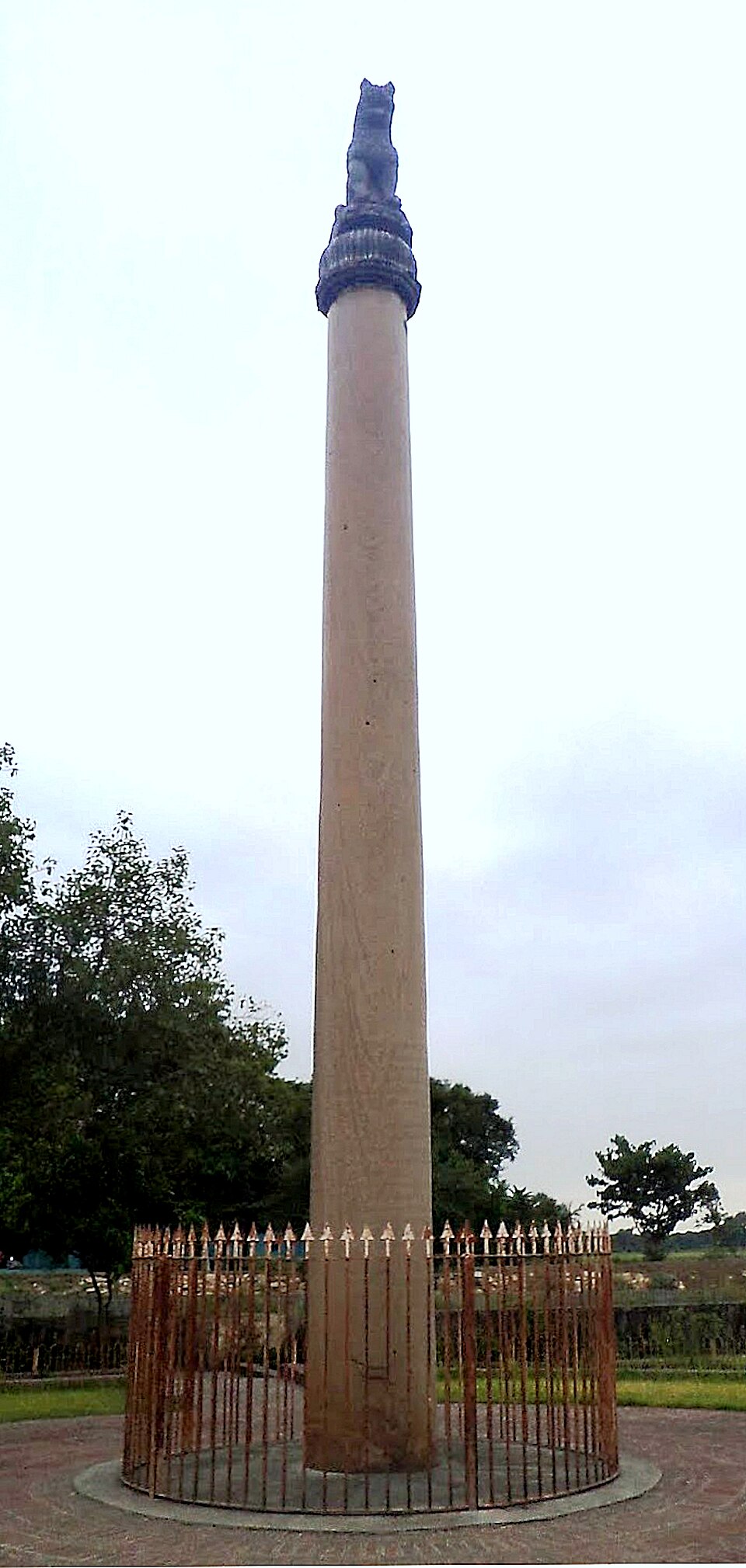
- Bihar's stake is large and often missed: Pali and Prakrit, both added in October 2024, are the canonical languages of the Buddhist and Jain traditions whose historical heartland was Magadha, and Ashoka's edicts — including the inscribed pillar at Lauria Nandangarh in West Champaran — are written in Prakrit in the Brahmi script. Maithili, the language of Mithila in north Bihar, is in the Eighth Schedule but not on the classical list; Bhojpuri and Magahi are on neither.
Study next
Common traps
- Using a pre-October-2024 list: on the old six-language list only Telugu among these three qualifies, which drives a candidate straight to option (a)
- Substituting the Eighth Schedule for the classical list — they overlap but neither contains the other; Maithili is scheduled and not classical, Pali and Prakrit are classical and not scheduled
- Assuming classical status needs a constitutional amendment — it is an executive decision of the Government of India notified by the Ministry of Culture
- Rejecting a true single option because it feels too easy: (a), (b) and (c) are each individually correct here, and the mark turns only on noticing that more than one is
BPSC asks this as bare list membership with its signature compound fourth option, and it deliberately mixes one old entry with two new ones so that a candidate revising from year-old notes picks a single language and loses the mark — the update, not the concept, is what is being marked. UPSC has asked the same list twice and both times as a filter: in 2014 it planted Gujarati among Kannada and Telugu to see who could reject a non-classical language, and in 2015 it asked which language had 'recently' been given the status, with Konkani, Bhojpuri and Assamese as decoys against Odia. UPSC also likes to pivot the topic into polity, asking which Amendment added which languages to the Eighth Schedule.
Related PYQs
Consider the following languages: 1. Gujarati 2. Kannada 3. Telugu Which of the above has/have been declared as 'Classical Language/Languages' by the Government?
- (a) 1 and 2 only
- (b) 3 only
- (c) 2 and 3 only
- (d) 1, 2 and 3
Answer(c) 2 and 3 only
The identical concept, tested from the opposite direction. UPSC gave three languages of which two were classical and one, Gujarati, was not, so the mark went to whoever could reject a false member; BPSC gave three of which all three were classical, so the mark goes to whoever refuses to stop at the first true one. Between them the two questions define the whole skill — know the list, and count.
Which one of the following was given classical language status recently?
- (a) Odia
- (b) Konkani
- (c) Bhojpuri
- (d) Assamese
Answer(a) Odia
The same list, examined for currency. Odia had just become the sixth classical language on 20 February 2014, and the decoys were an Eighth Schedule language (Konkani), a language on neither list (Bhojpuri) and Assamese — which was not classical in 2015 but became so on 3 October 2024. That one option shows exactly why a classical-language answer must always be dated to the exam.
Practice
- practice — not a real PYQ
As of 2025, how many Indian languages have been accorded Classical Language status by the Government of India?
- (a)6
- (b)9
- (c)11
- (d)22
Answer(c) 11 — six languages up to 2014 (Tamil, Sanskrit, Kannada, Telugu, Malayalam, Odia) plus the five cleared on 3 October 2024 (Marathi, Pali, Prakrit, Assamese, Bengali). 22 is the number of languages in the Eighth Schedule, a different list. - practice — not a real PYQ
Which one of the following was NOT among the languages granted Classical Language status in October 2024?
- (a)Pali
- (b)Prakrit
- (c)Maithili
- (d)Assamese
Answer(c) Maithili — the five languages cleared on 3 October 2024 were Marathi, Pali, Prakrit, Assamese and Bengali. Maithili is in the Eighth Schedule, added by the 92nd Amendment in 2003, but has not been given classical status.