
In the following question, out of four words given below, three are alike in some manner and fourth word is different. Find the different one.
- (a)MICROSCOPE
- (b)TELESCOPE
- (c)STETHOSCOPE
- (d)PERISCOPE
Answer
Why
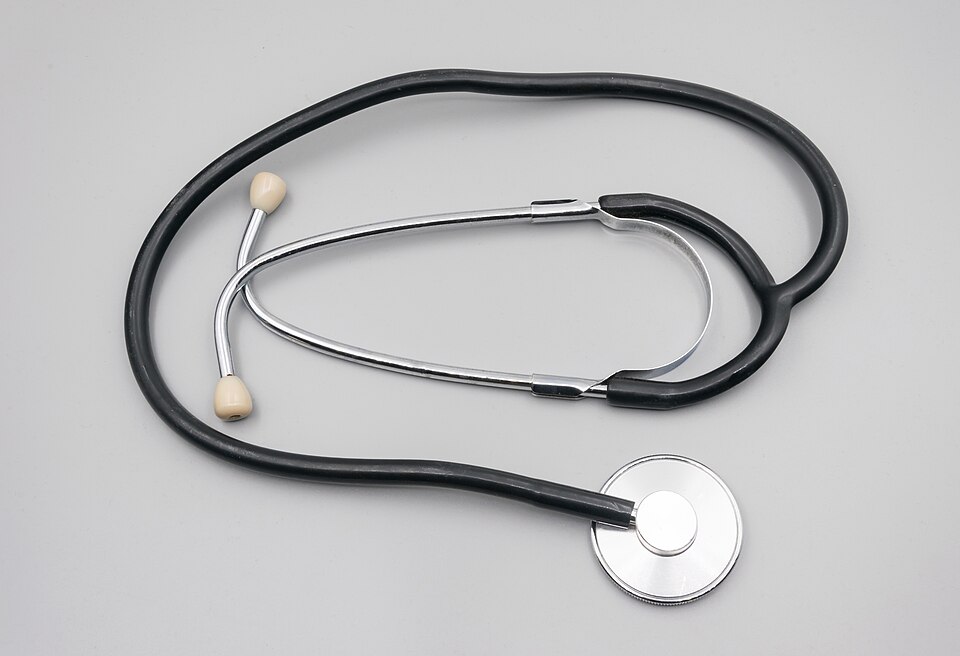
Correct — C, STETHOSCOPE. All four words end in -SCOPE, so the setter has deliberately removed the easiest classifier: a feature shared by four options out of four can separate none of them. The classifier that does work is function. A microscope forms a magnified image of something too small for the eye, using an objective and an eyepiece whose powers multiply — a 40x objective with a 10x eyepiece gives 400x. A telescope gathers light from something too far away, either by refraction through lenses (Hans Lippershey's patent application of 1608, Galileo's instrument of 1609) or by reflection off a curved mirror (Newton's reflector, 1668). A periscope sees past an obstacle: two plane mirrors, or two right-angle prisms, are fixed parallel at 45 degrees to the tube, each turning the light through 90 degrees, so the line of sight is shifted bodily along the tube without changing its direction — the arrangement that let submarine crews and trench soldiers look up and out while staying down. All three end at the eye and all three work with light. The stethoscope does not. Rene Laennec built the first one at the Necker Hospital in Paris in 1816 by rolling sheets of paper into a cylinder, and what it carries is sound, not light: the chest-piece picks up heart, breath and bowel sounds and the tubing conducts them to the ear. The clinical act is auscultation — listening. Nothing is ever seen through a stethoscope, which is why it is the one that does not belong.
Why the others are wrong
- (a)MICROSCOPE — An optical instrument you look through: lenses refract light to form a magnified image of an object too small for the naked eye, and total magnification is the objective power multiplied by the eyepiece power. It shares the group's defining feature — an image delivered to the eye — so it cannot be the different one. Candidates who choose it are usually splitting the set by distance ('three examine things that are far off or hidden, one examines something near'), a split that collapses because a periscope also looks at objects only a few metres away.
- (b)TELESCOPE — Also optical, and also ending at the eye: lenses in a refractor, of the kind Galileo turned on Jupiter in 1610, or a curved primary mirror in a reflector after Newton's 1668 design, collect light from a distant object and bring it to a focus the eye can use. Being the most familiar word in the set makes it a tempting 'safe' pick for a candidate who is guessing rather than classifying, but familiarity is not a category, and on the light-versus-sound test the telescope sits squarely with the microscope and the periscope.
- (d)PERISCOPE — Optical as well, and mechanically the most interesting of the three: two plane mirrors or right-angle prisms set parallel at 45 degrees reflect the incoming ray twice through 90 degrees, displacing the line of sight along the length of the tube — the principle of the submarine periscope and of the trench periscopes of the First World War. This is the wrong answer the set is built to attract, because it is the least familiar word and therefore feels odd. Unfamiliarity is a feeling, not a classification; the instrument still delivers an image to the eye.
Concept
An odd-one-out item is built on two features, one superficial and one deep. The superficial feature is chosen to cover all four options so that it can decide nothing — here, the suffix -SCOPE. The deep feature is chosen to cover exactly three — here, forming an image with light. Your task is never to notice what the four have in common; it is to find the single attribute under which the set splits three-to-one. The linguistics is part of the trap and is worth knowing. The suffix comes from the Greek skopein, 'to look at, to examine', and most instruments carrying it are indeed visual: microscope, telescope, periscope, endoscope, kaleidoscope, ophthalmoscope. But when Rene Laennec named his 1816 invention he took the broader sense, 'examine', and joined it to stethos, 'chest'; the stethoscope therefore examines the chest without looking at anything at all. That is exactly why a classification by word form fails here and a classification by function succeeds. The physics behind the split is equally clean. Optical instruments work by refraction through lenses or reflection from mirrors and need no material medium at all, while an acoustic instrument conducts pressure waves and cannot work without one — which is the reason a stethoscope has to be pressed against the patient while the other three work across a gap.
Work it in two moves. First, refuse the ending: four options out of four end in -SCOPE, so that feature has zero discriminating power, and if it did separate anything the question would have no defensible answer. Second, write one functional label beside each option — microscope, sees the very small; telescope, sees the very far; periscope, sees around an obstacle; stethoscope, hears the body. Three labels begin with 'sees' and one begins with 'hears'. That is the three-to-one split, and the single fact that discriminates is the sense organ at the output end: eye, eye, eye, ear. The booklet itself hands this to a Hindi-medium candidate. The Hindi options printed alongside are सुक्ष्मदर्शी यन्त्र, दूरबीन, स्टैथोस्कोप (परिश्रावक) and परिदर्शी यंत्र — three of them are built on दर्शी or बीन, which mean seeing, while the stethoscope's gloss परिश्रावक is built on श्रवण, hearing. Read down the Hindi column and the answer takes two seconds. There are two ways to lose the mark. One is to choose PERISCOPE because it is the least familiar word. The other is subtler: to split the set by distance — 'three examine what is far away or hidden, one examines what is near' — and land on MICROSCOPE. That split feels reasonable, but it rests on a continuous attribute with no sharp boundary, since a periscope looks at objects a few metres off and a microscope at objects a few millimetres off. The reusable rule is to prefer a categorical attribute (light or sound, eye or ear) over a continuous one (near or far, big or small); an examiner can only defend a key built on the categorical kind.
Key facts
- The suffix -scope is from the Greek skopein, 'to look at, examine'; Rene Laennec used the broader sense when he coined 'stethoscope' in 1816 from stethos, 'chest', which is precisely why the shared ending cannot classify these four words.
- Laennec built the first stethoscope at the Necker Hospital, Paris, in 1816 by rolling sheets of paper into a cylinder; the monaural wooden tube followed, and the two-eared binaural design of the early 1850s — Arthur Leared's model of 1851 and George Cammann's of 1852 — became the modern instrument. The technique of listening with it is called auscultation.
- A periscope carries two plane mirrors, or two right-angle prisms, fixed parallel at 45 degrees to the tube: each surface turns the light through 90 degrees, so the line of sight is displaced along the tube without any change of direction.
- A compound microscope's magnification is the objective power multiplied by the eyepiece power, so a 40x objective with a 10x eyepiece gives 400x. The refracting telescope dates from Hans Lippershey's patent application of 1608 and Galileo's instrument of 1609; Isaac Newton built the first reflecting telescope in 1668.
- Light crosses a vacuum but sound cannot, because sound is a pressure wave that needs a material medium (the audible range is roughly 20 Hz to 20,000 Hz). That is the physical reason a stethoscope must touch the chest while the microscope, telescope and periscope all work across a gap.
Study next
Common traps
- Grouping by the shared -SCOPE ending: every option has it, so it cannot possibly be the distinguishing feature
- Choosing PERISCOPE because it is the least familiar word — unfamiliarity is a feeling, not a category
- Splitting the set on a continuous attribute such as near-versus-far and landing on MICROSCOPE, instead of on a categorical attribute such as light-versus-sound
BPSC opens Paper-I with a ten-question reasoning block and puts a classification item first in almost every cycle: four one-word options, a single flat line of instruction, and no subject knowledge needed beyond knowing what each object does. UPSC removed this material from GS Paper-I after 2010 and moved it to the CSAT Paper-II, so in the modern UPSC prelims the same instinct surfaces either as an analogy or buried inside a subject question — 'which one does not belong to the class of the other three', asked in 2014 about crab, mite, scorpion and spider. BPSC asks the skill bare; UPSC hides it inside content.
Related PYQs
In the context of ancient Indian society, which one of the following terms does not belong to the category of the other three?
- (a) Kula
- (b) Vamsa
- (c) Kosa
- (d) Gotra
Answer(c) Kosa
The identical classification move on different material: Kula (family), Vamsa (lineage) and Gotra (clan) are all kinship categories while Kosa is a treasury, so the set splits three-to-one on function exactly as the BPSC instruments split on light versus sound.
Among the following organisms, which one does not belong to the class of other three?
- (a) Crab
- (b) Mite
- (c) Scorpion
- (d) Spider
Answer(a) Crab
UPSC's modern form of the same question type — mite, scorpion and spider are arachnids and the crab is a crustacean, so again three share a deep category while the fourth only looks similar on the surface.
Practice
- practice — not a real PYQ
Out of the four instruments given below, three are alike in what they observe and the fourth is different. Find the different one.
- (a)Anemometer
- (b)Hygrometer
- (c)Seismograph
- (d)Barometer
Answer(c) Seismograph — the anemometer (wind speed), hygrometer (atmospheric humidity) and barometer (atmospheric pressure) all measure properties of the atmosphere, while the seismograph records ground movement during an earthquake. - practice — not a real PYQ
A periscope of the kind used in a submarine works mainly on the principle of
- (a)reflection of light by plane mirrors or right-angle prisms
- (b)refraction of sound waves in sea water
- (c)absorption of X-rays by a metal tube
- (d)dispersion of white light into its constituent colours
Answer(a) reflection of light by plane mirrors or right-angle prisms — two reflecting surfaces set parallel at 45 degrees turn the ray through 90 degrees twice, shifting the line of sight along the tube.