
The hundred years of Indian National Congress in Bihar was edited by
- (a)P. N. Ojha
- (b)K. K. Dutta
- (c)B. B. Mishra
- (d)A. R. Desai
Answer
Why
Correct: A, P. N. Ojha. The book the stem is describing is the centenary volume 'History of the Indian National Congress in Bihar, 1885-1985': literally the hundred years of the Congress in Bihar, running from the party's first session in December 1885 to its centenary in 1985. It was edited by P. N. Ojha and published in 1985 by the Kashi Prasad Jayaswal Research Institute, Patna, and the attribution can be checked in ordinary library catalogue records rather than in exam material: the Google Books catalogue entry for the title gives 'Editor: P. N. Ojha, Publisher: Kashi Prasad Jayaswal Research Institute, 1985', and the WorldCat and HathiTrust records for the same title carry the same editor. The publisher matters as much as the editor here, because it tells you what kind of book this is. The Kashi Prasad Jayaswal Research Institute was established in October 1950 by the Government of Bihar, is run under the state's education department and is housed in the Patna Museum building; it exists to produce scholarly work on Bihar's history, archaeology and culture. A centenary history of the Congress in Bihar published from there in 1985 is therefore a state-sponsored research volume, not a party pamphlet, which is exactly why it is the kind of title a state commission expects its candidates to know. The three wrong options are all real and serious names, and the item is testing whether you can attach a specific volume to a specific editor rather than recognise a historian's name.
Why the others are wrong
- (b)K. K. Dutta: The strongest distractor by far, because K. K. Datta is the historian most associated with exactly this field: he edited the Government of Bihar's three-volume 'History of the Freedom Movement in Bihar', published from 1957, which remains the standard official account. But that is a different work, from nearly thirty years earlier, and not the centenary volume the question asks about.
- (c)B. B. Mishra: A genuine historian of modern India whose work on administration and social change is widely cited, which makes the name feel right in a list of this kind. He is not credited as the editor of this centenary volume in the library records that carry it.
- (d)A. R. Desai: The odd one out on grounds a candidate can actually use. A. R. Desai was a Bombay-based Marxist sociologist, best known for 'Social Background of Indian Nationalism': a national, theoretical study of the nationalist movement with no particular Bihar connection. A volume produced by a Patna research institute on the Congress in Bihar would not naturally be edited by him.
Concept
Bihar has an unusually well-developed body of state-sponsored historical writing, and BPSC draws on it directly. Three institutions and their products account for most of what the paper can ask. The Kashi Prasad Jayaswal Research Institute, set up by the Government of Bihar in October 1950 and named after the historian and lawyer K. P. Jayaswal, publishes research on Bihar's history and archaeology from the Patna Museum building; the centenary volume on the Congress in Bihar is one of its titles. The Government of Bihar's own freedom-movement project produced K. K. Datta's three-volume 'History of the Freedom Movement in Bihar' in the late 1950s, which prints the documentary record: including, for instance, the schedules of publications the provincial government forfeited in the 1930s. And the Congress's own institutional memory in the state is anchored at Sadaqat Ashram in Patna. The practical consequence for a candidate is that Bihar-specific history questions are answered from Bihar-specific books, and a national textbook will not contain them; the names of the standard volumes and their editors are part of the syllabus in practice, even though no syllabus says so.
There is no way to deduce an editor's name, so the value of this card lies in how you store the four names, and the useful storage is by association rather than by list. K. K. Datta goes with the 1957 official freedom-movement volumes. P. N. Ojha goes with the 1985 Congress centenary volume from the Jayaswal Institute. A. R. Desai goes with 'Social Background of Indian Nationalism' and with sociology rather than with Bihar. Attach one work to each name and the question answers itself; carry four bare names and it becomes a one-in-four guess with negative marking attached. Two cues in the stem help even a candidate who has not met the book. The phrase 'hundred years' points to 1985, the Congress centenary, which immediately weakens any name whose principal work belongs to the 1950s. And the subject is Bihar, which weakens a name associated with national or all-India studies. Neither cue is decisive on its own, but together they narrow the field before any recall is attempted, and narrowing the field is what turns a guess into a defensible attempt on a paper that penalises wrong answers by a third of a mark.
Key facts
- The centenary volume is 'History of the Indian National Congress in Bihar, 1885-1985', edited by P. N. Ojha and published in 1985 by the Kashi Prasad Jayaswal Research Institute, Patna
- The Kashi Prasad Jayaswal Research Institute was established in October 1950 by the Government of Bihar, functions under the state education department and is housed in the Patna Museum building
- K. K. Datta edited the Government of Bihar's three-volume 'History of the Freedom Movement in Bihar', published from 1957: the standard official account and a different work entirely
- The Indian National Congress held its first session in Bombay from 28 to 31 December 1885, which is the date the volume's title counts a hundred years from
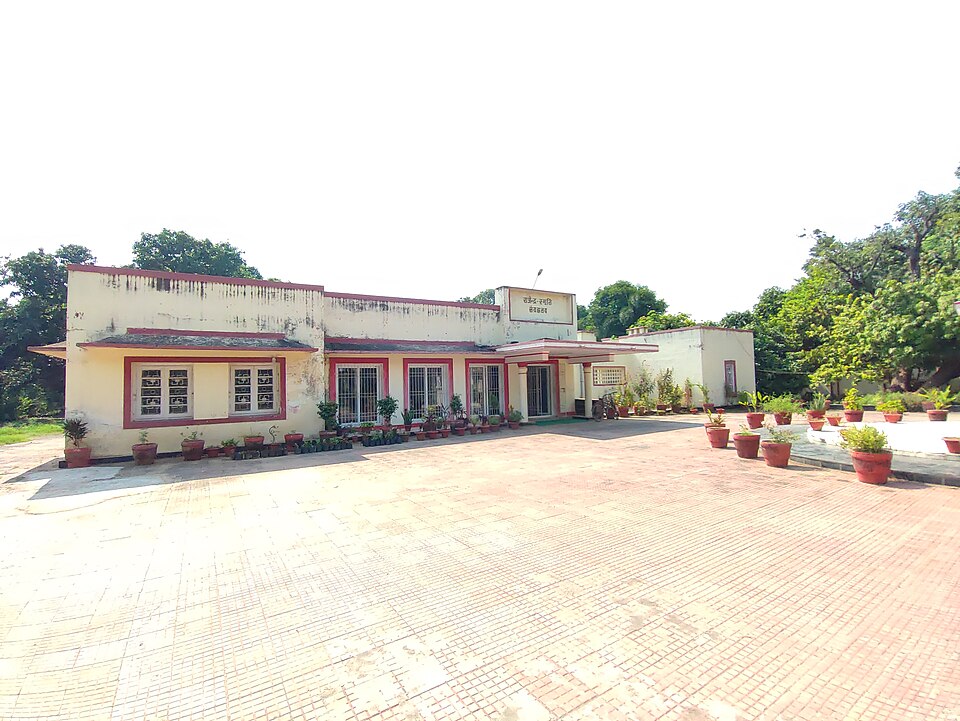
- Sadaqat Ashram in Patna, established in 1921 by Maulana Mazharul Haque, houses the Bihar Pradesh Congress Committee, Bihar Vidyapeeth and the Rajendra Smriti Sangrahalaya, and is where Rajendra Prasad spent his last days
Study next
Common traps
- Choosing K. K. Dutta because he is the best-known historian of Bihar's freedom movement: his volumes are of 1957 and are a different work
- Missing the date cue in 'hundred years', which points to the 1985 centenary and away from writers whose principal work is much earlier
- Treating all four as interchangeable Bihar historians; A. R. Desai is a Bombay sociologist of Indian nationalism, not a Bihar specialist
BPSC asks Bihar's historiography directly (who wrote or edited a named provincial volume) and expects a candidate to have read Bihar-specific material rather than a national textbook, because the answer exists nowhere else. UPSC asks book-and-author only for nationally famous titles, usually as a matching grid of four books against four authors, so the same skill is tested but the reading list is entirely different.
Related PYQs
Match List I with List II and select the correct answer using the codes given below the Lists: List I (Books) I. The First Indian War of Independence II. Anand Math III. Life Divine IV. Sadhana List II (Authors) A) Rabindranath Tagore B) Sri Aurobindo C) Bankim Chandra Chatterji D) Vinayak Damodar Savarkar
- (a) I-D, II-C, III-B, IV-A
- (b) I-C, II-D, III-A, IV-B
- (c) I-D, II-A, III-C, IV-B
- (d) I-C, II-B, III-A, IV-D
Answer(a) I-D, II-C, III-B, IV-A
Book-to-author attribution asked as a four-way grid: the same skill this BPSC question tests with one book and four names, and the same defence against it: store each name with one work attached.
Where was the First Session of the Indian National Congress held in December 1885?
- (a) Ahmadabad
- (b) Bombay
- (c) Calcutta
- (d) Delhi
Answer(b) Bombay
Fixes the date the centenary volume counts from (December 1885 at Bombay) which is the cue in the phrase 'hundred years' and the reason the book belongs to 1985 rather than to any earlier project.
Futuhat-i-Alamgiri was written by
- (a) Ishwardas Nagar
- (b) Bhimsen
- (c) Haridas
- (d) None of them
Answer(a) Ishwardas Nagar
The Commission's standing habit: name a single, not-very-famous book and ask who wrote it, with three real authors from the same field as distractors, so recognition of the names is worth nothing without the attribution.
Practice
- practice, not a real PYQ
The three-volume 'History of the Freedom Movement in Bihar', published by the Government of Bihar from 1957, was edited by
- (a)P. N. Ojha
- (b)K. K. Datta
- (c)R. C. Majumdar
- (d)Jata Shankar Jha
Answer(b) K. K. Datta: the official provincial account of the freedom movement, distinct from the 1985 Congress centenary volume edited by P. N. Ojha. - practice, not a real PYQ
The Kashi Prasad Jayaswal Research Institute, which publishes research on Bihar's history and archaeology, is located at
- (a)Bodh Gaya
- (b)Nalanda
- (c)Patna
- (d)Muzaffarpur
Answer(c) Patna: established by the Government of Bihar in October 1950 and housed in the Patna Museum building.