
In October 1943, Subhash Chandra Bose set up a provisional government of free India which was recognized by how many countries including Japan ?
- (a)5
- (b)4
- (c)9
- (d)10
Answer
Why
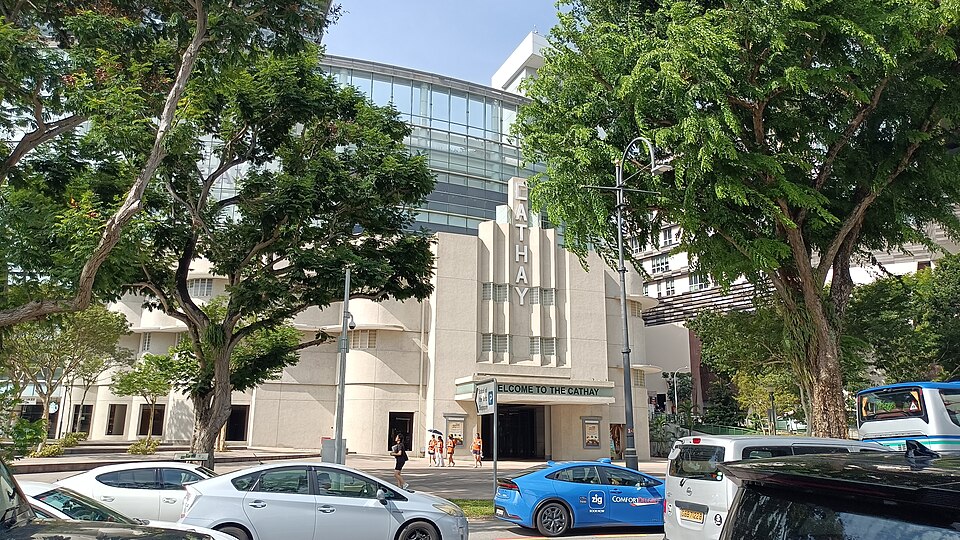
Correct: C, 9. The government in question is the Arzi Hukumat-e-Azad Hind, the Provisional Government of Free India, which Subhas Chandra Bose proclaimed at the Cathay Building in Singapore on 21 October 1943, taking on himself the offices of Head of State, Prime Minister, Minister of War and Minister of Foreign Affairs. Nine states extended it diplomatic recognition, and the list is worth knowing rather than the number alone, because the list explains the number. Eight are named consistently across accounts: the Empire of Japan, Nazi Germany, the Italian Social Republic, that is, Mussolini's rump Salò state set up in September 1943, not the Kingdom of Italy, which had by then surrendered to the Allies: the Wang Jingwei government at Nanjing, Thailand, the State of Burma under Ba Maw, Manchukuo, and the Second Philippine Republic. The ninth is generally given as the Independent State of Croatia, and it is the one that drops out of shorter summaries, which is why the total sometimes appears as eight in careless retellings. What the list shows is that recognition came entirely from the Axis powers and from the governments the Axis had installed; no Allied or neutral state recognised Azad Hind, and Vichy France, though an Axis collaborator, never granted formal recognition. That is the honest measure of the enterprise: nine recognitions, all from one side of the war, and yet enough to give the government a claim to statehood that it exercised: it declared war on Britain and the United States within days, was granted nominal jurisdiction over the Andaman and Nicobar Islands, and Bose hoisted the tricolour at Port Blair on 30 December 1943.
Why the others are wrong
- (a)5: The figure a candidate arrives at by counting only the states he can name unaided (Japan, Germany, Italy, Burma and Thailand) and stopping. It omits the Nanjing regime, Manchukuo, the Philippines and Croatia, which are exactly the client governments that make the total nine.
- (b)4: Lower still, and it corresponds to nothing in the record. It attracts candidates who remember only the principal Axis powers plus one Asian ally, and it is the option to reject fastest, since Bose's own government listed recognitions well beyond the major powers.
- (d)10: The near-miss, and the most dangerous option on the paper because it is only one away. It is what you get by adding a tenth state to the list: most often Vichy France, which was an Axis collaborator but never extended formal recognition to Azad Hind. The recorded figure is nine.
Concept
The Provisional Government of Free India was an attempt to convert an army into a state. Bose escaped house internment at Elgin Road, Calcutta, on the night of 16-17 January 1941, travelled through Afghanistan and the Soviet Union to Berlin, raised the Free India Legion there from Indian prisoners taken in North Africa, and then crossed to South-East Asia by submarine, reaching Tokyo in May 1943 and Singapore in July. On 4 July 1943 he took over the leadership of the Indian Independence League and the revived Indian National Army, which Mohan Singh and Rash Behari Bose had first raised in 1942. The step from army to government came on 21 October 1943, and it mattered because a government can do things an army cannot: contract recognition, declare war, administer territory, issue its own currency and honours. Azad Hind did all four, at least nominally. Its brigades were named Gandhi, Nehru, Azad and Subhas, and it fielded the Rani of Jhansi Regiment, a women's combat unit under Lakshmi Sahgal. Its military effort ended with the failure of the Imphal-Kohima campaign in 1944, but its political afterlife was decisive: the Red Fort trials of INA officers in 1945-46 produced a wave of public sympathy that historians treat as one of the pressures on British withdrawal.
Numerical questions like this one are answerable only if the number is stored with something that anchors it, because a bare figure will not survive a year of revision. Anchor nine to the composition of the list: three Axis powers proper (Japan, Germany, the Italian Social Republic), Thailand as a sovereign ally rather than an installed regime, four Japanese-sponsored governments in Asia (Nanjing China, Burma, Manchukuo, the Philippines) and one European client state (Croatia). Three plus one plus four plus one is nine, and the structure is easier to hold than the digit. Two further precautions. First, be exact about which Italy: the Kingdom of Italy had already signed an armistice with the Allies in September 1943, so the recogniser was the Italian Social Republic. Second, be exact about the government's name. When BPSC asked this same event on the 71st CCE it printed 'Provincial Government of India', and the Commission itself accepted afterwards that the word should have been 'Provisional': a provincial government in 1943 meant a ministry running one province under the Government of India Act 1935, which is the opposite of what Bose proclaimed. That single word is the kind of thing this examiner tests.
Key facts
- The Provisional Government of Free India (Arzi Hukumat-e-Azad Hind) was proclaimed by Subhas Chandra Bose at the Cathay Building, Singapore, on 21 October 1943
- Nine states recognised it: Japan, Nazi Germany, the Italian Social Republic, the Wang Jingwei government at Nanjing, Thailand, the State of Burma, Manchukuo, the Second Philippine Republic, and the Independent State of Croatia as the ninth
- Recognition came only from the Axis and its client governments; no Allied or neutral state recognised it, and Vichy France never extended formal recognition
- Bose had taken over the Indian Independence League and the revived Indian National Army on 4 July 1943 in Singapore, holding no military rank himself
- Azad Hind was given nominal jurisdiction over the Andaman and Nicobar Islands after the Greater East Asia Conference of November 1943, and Bose hoisted the tricolour at Port Blair on 30 December 1943
Study next
Common traps
- Answering 10 by counting Vichy France, which collaborated with the Axis but never formally recognised Azad Hind
- Naming the Kingdom of Italy as a recogniser: by October 1943 Italy had surrendered to the Allies, and the recogniser was the Italian Social Republic
- Writing 'Provincial Government' for 'Provisional Government'; the two mean entirely different things in 1943, and BPSC has already had to withdraw one question over the slip
BPSC turns this episode into a counting question (how many countries, in which month, in which city) so the exact digit is the mark, and the surrounding narrative earns nothing. UPSC asks the same period through people and consequences instead: who raised the Free India Legion, where the INA came into existence, who Shah Nawaz Khan and his co-accused were. Prepare the topic as a dated narrative with a small set of hard numbers attached, and both styles are covered.
Related PYQs
The Indian National Army (INA) came into existence in 1943 in
- (a) Japan
- (b) Burma
- (c) Singapore
- (d) Malaya
Answer(c) Singapore
The same place and the same year, three months earlier in the story: Bose took over the INA at the Cathay Building in Singapore in July 1943 and proclaimed the provisional government from the same city that October.
In the context of Colonial India, Shah Nawaz Khan, Prem Kumar Sehgal and Gurbaksh Singh Dhillon are remembered as
- (a) leaders of Swadeshi and Boycott Movement
- (b) members of the Interim Government in 1946
- (c) members of the Drafting Committee in the Constituent Assembly
- (d) officers of the Indian National Army
Answer(d) officers of the Indian National Army
The other end of the same story: the three officers of Bose's army tried at the Red Fort in 1945-46, whose trial converted a defeated military campaign into a decisive political pressure.
Who assumed the command of the Indian National Army and gave famous battle cry, 'Chalo Delhi'?
- (a) Rash Behari Bose
- (b) Mohan Singh
- (c) Shah Nawaz Khan
- (d) Subhash Chandra Bose
Answer(d) Subhash Chandra Bose
The Commission came back to Bose and the INA a year later, and the distractors it chose (Rash Behari Bose and Mohan Singh) are precisely the men who ran the army before Bose took it over in July 1943, three months before the provisional government was proclaimed.
Practice
- practice, not a real PYQ
The Provisional Government of Free India proclaimed by Subhas Chandra Bose in October 1943 was set up at
- (a)Tokyo
- (b)Rangoon
- (c)Singapore
- (d)Kuala Lumpur
Answer(c) Singapore: proclaimed at the Cathay Building on 21 October 1943; Rangoon later became the INA's advanced headquarters and Tokyo was where Bose met Hideki Tojo in 1943. - practice, not a real PYQ
The women's combat unit of the Indian National Army was named after
- (a)Begum Hazrat Mahal
- (b)The Rani of Jhansi
- (c)Sarojini Naidu
- (d)Matangini Hazra
Answer(b) The Rani of Jhansi: the Rani of Jhansi Regiment, commanded by Lakshmi Sahgal, alongside the Gandhi, Nehru, Azad and Subhas brigades.