
Which of the following cities is located along the side of river Seine ?
- (a)Belgrade
- (b)Paris
- (c)Budapest
- (d)Lisbon
Answer
Why
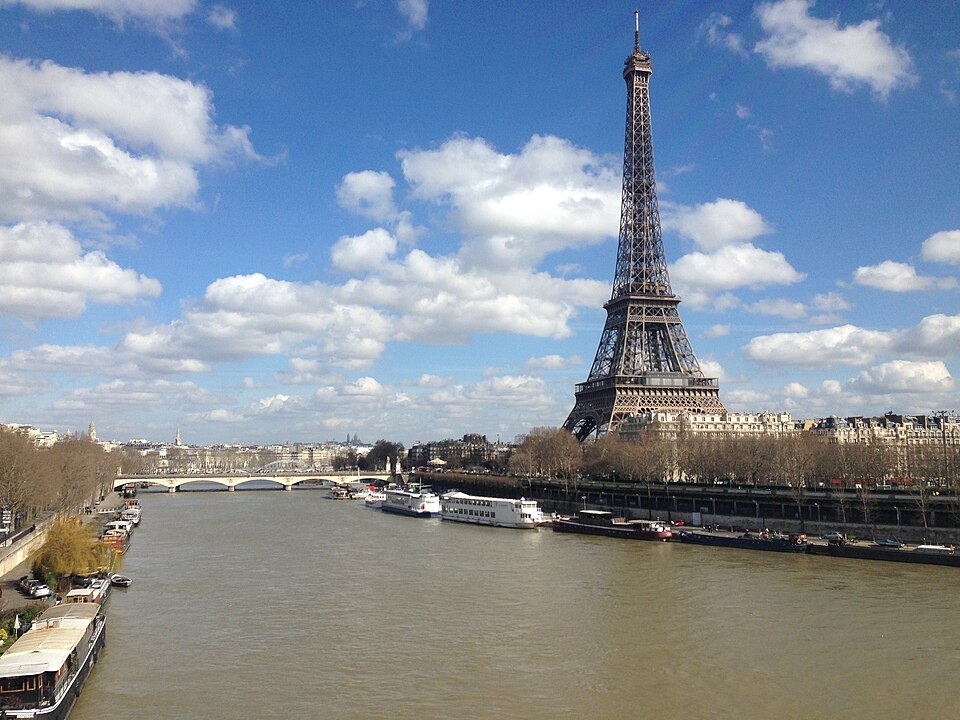
Correct: B, Paris. The Seine rises on the Langres plateau in Burgundy, runs about 777 kilometres north-westward across the Paris basin through Troyes, Paris and Rouen, and empties into the English Channel at Le Havre. Paris was founded on the Île de la Cité, an island in that river, and the city is still administratively divided by it into a Right Bank and a Left Bank; the banks of the Seine through central Paris were inscribed on the UNESCO World Heritage List in 1991, and the opening ceremony of the 2024 Paris Olympic Games was staged along the river rather than in a stadium. The three wrong cities all stand on rivers, which is what makes the question a genuine test rather than a guess, and each is worth learning with its river attached. Belgrade, the capital of Serbia, sits at the confluence of the Sava and the Danube, with the Kalemegdan fortress on the headland between them. Budapest, the capital of Hungary, straddles the Danube, with hilly Buda on the west bank and flat Pest on the east: the two were separate towns until 1873. Lisbon, the capital of Portugal, stands on the estuary of the Tagus, the longest river of the Iberian peninsula, where it opens to the Atlantic. Note the pattern hidden in the option list: two of the three decoys are Danube cities, which is not an accident. The Danube passes through more capital cities than any other river in the world (Vienna, Bratislava, Budapest and Belgrade) so if you know that group of four you can strike two options at once and finish the question in a single step.
Why the others are wrong
- (a)Belgrade: The capital of Serbia, standing where the Sava joins the Danube: one of the four capital cities the Danube flows through. It is the least familiar of the four options to most candidates, which is exactly why it is placed first in the list.
- (c)Budapest: The capital of Hungary and the most photographed Danube city, formed in 1873 by uniting Buda on the hilly west bank with Pest on the flat east bank. Because it is so strongly associated with a river running through the middle of a great European capital, it is the easiest option to confuse with Paris on that image alone.
- (d)Lisbon: The capital of Portugal, on the estuary of the Tagus, the longest river of the Iberian peninsula, where it widens towards the Atlantic. It has no connection to the Seine, and its river is one worth learning separately since the Tagus also flows past Toledo in Spain.
Concept
Great cities grew on rivers because rivers gave them water, defence, food and a transport route to the sea, and world geography questions exploit the resulting city-and-river pairs relentlessly. The set worth committing to memory is small. On the Danube: Vienna, Bratislava, Budapest and Belgrade: four national capitals on one river, more than any other river in the world, and the Danube also passes through or touches ten countries, again a record. On the Seine: Paris and Rouen, with the port of Le Havre at its mouth. On the Thames: London. On the Spree: Berlin, which is the standard trap because candidates guess the Rhine. On the Tagus: Lisbon at the estuary and Toledo upstream in Spain. On the Tiber: Rome. On the Manzanares: Madrid. On the Potomac: Washington D.C. On the Hudson: New York. The Seine itself is a lowland river of the Paris basin: slow, navigable well inland, and heavily locked and embanked, which is why Paris could function as an inland port far from the coast.
Approach a question of this shape by working from the river you are given rather than from the cities. Ask first which country the named river is in (the Seine is French) and then look for a French city among the options. Only Paris qualifies, and you are done without needing to know anything about the other three. If no city in the list is obviously from the right country, invert the method and attach each option to its own river, which is why the pairs above are worth memorising as a block rather than encountered one at a time. The specific trap here is the Danube cluster. Belgrade and Budapest are both Danube capitals, so a candidate who has vaguely filed 'famous European city on a big river' will find two of the four options equally plausible and may pick by feel. Recognising that two options share a river is itself the clue: an examiner rarely gives you two correct answers, so a pair that belongs to the same river is usually a pair of decoys.
Key facts
- The Seine rises on the Langres plateau in Burgundy, runs about 777 kilometres through Troyes, Paris and Rouen, and enters the English Channel at Le Havre
- Paris began on the Île de la Cité, an island in the Seine, and the banks of the Seine in central Paris were inscribed as a UNESCO World Heritage Site in 1991; the 2024 Olympic Games opened along the river
- The Danube flows past Vienna, Bratislava, Budapest and Belgrade (more national capitals than any other river in the world) and passes through or borders ten countries
- Belgrade stands at the confluence of the Sava and the Danube; Budapest was formed in 1873 by uniting Buda on the west bank of the Danube with Pest on the east
- Lisbon lies on the estuary of the Tagus, the longest river of the Iberian peninsula, which also flows past Toledo in Spain before reaching Portugal
Study next
Common traps
- Assuming Berlin is on the Rhine; it stands on the Spree, and this is the single most frequently set error in city-and-river questions
- Treating two options that share the same river as independent possibilities: Belgrade and Budapest are both Danube cities and therefore both decoys
- Confusing the Tagus with the Douro for Portuguese cities; Lisbon is on the Tagus, Porto on the Douro
BPSC sets world geography as a one-line identification with a named river or feature and four cities, and expects instant recall rather than reasoning. UPSC prefers the same content as a matching or 'which pair is NOT correctly matched' item, which forces you to know all four pairs instead of just one, and it has used the Paris–Seine pair itself in exactly that format.
Related PYQs
Match List-I with List-II and select the correct answer using the codes given below the lists: List-I (City) A. Washington D.C. B. Berlin C. Paris D. Madrid List-II (River) 1. River Manzanares 2. River Seine 3. River Spree 4. River Potomac
- (a) A-2 B-3 C-4 D-1
- (b) A-4 B-1 C-2 D-3
- (c) A-2 B-1 C-4 D-3
- (d) A-4 B-3 C-2 D-1
Answer(d) A-4 B-3 C-2 D-1
The identical pairing, including Paris with the Seine, but as a four-part match where recognising one pair is not enough. Learning Berlin with the Spree and Madrid with the Manzanares at the same time is what turns a lucky single answer into reliable knowledge.
Which one of the following pairs is not correctly matched ? City — River (a) Berlin : Rhine (b) London : Thames (c) New York : Hudson (d) Vienna : Danube
- (a) Berlin : Rhine
- (b) London : Thames
- (c) New York : Hudson
- (d) Vienna : Danube
Answer(a) Berlin : Rhine
The same table asked negatively, and it carries the Danube point directly: Vienna is one of the four capitals on that river, alongside Bratislava, Budapest and Belgrade, two of which appear as decoys in the BPSC question.
Which is the largest river Island in the world?
- (a) Srirangam Island
- (b) Majuli Island
- (c) Bhavani Island
- (d) Agatti Island
Answer(b) Majuli Island
The Commission keeps a single-line world river fact in the paper every cycle, phrased as a superlative or a location. Both this and the Seine question reward a memorised table rather than reasoning, which is why the river pairs are worth writing out once and revising.
Practice
- practice, not a real PYQ
Which one of the following capital cities does NOT stand on the river Danube ?
- (a)Vienna
- (b)Bratislava
- (c)Bucharest
- (d)Belgrade
Answer(c) Bucharest: the Romanian capital stands on the Dâmbovița, well north of the Danube; Vienna, Bratislava, Belgrade and Budapest are the four capitals the Danube actually flows through. - practice, not a real PYQ
The city of Lisbon is situated on the estuary of which river ?
- (a)Douro
- (b)Ebro
- (c)Tagus
- (d)Guadalquivir
Answer(c) Tagus: the longest river of the Iberian peninsula, which reaches the Atlantic through the wide estuary on which Lisbon stands; Porto is the city on the Douro.