
Motorcycle is related to battery in the same way as Life is related to
- (a)Earth
- (b)Moon
- (c)Sun
- (d)Star
Answer
Why
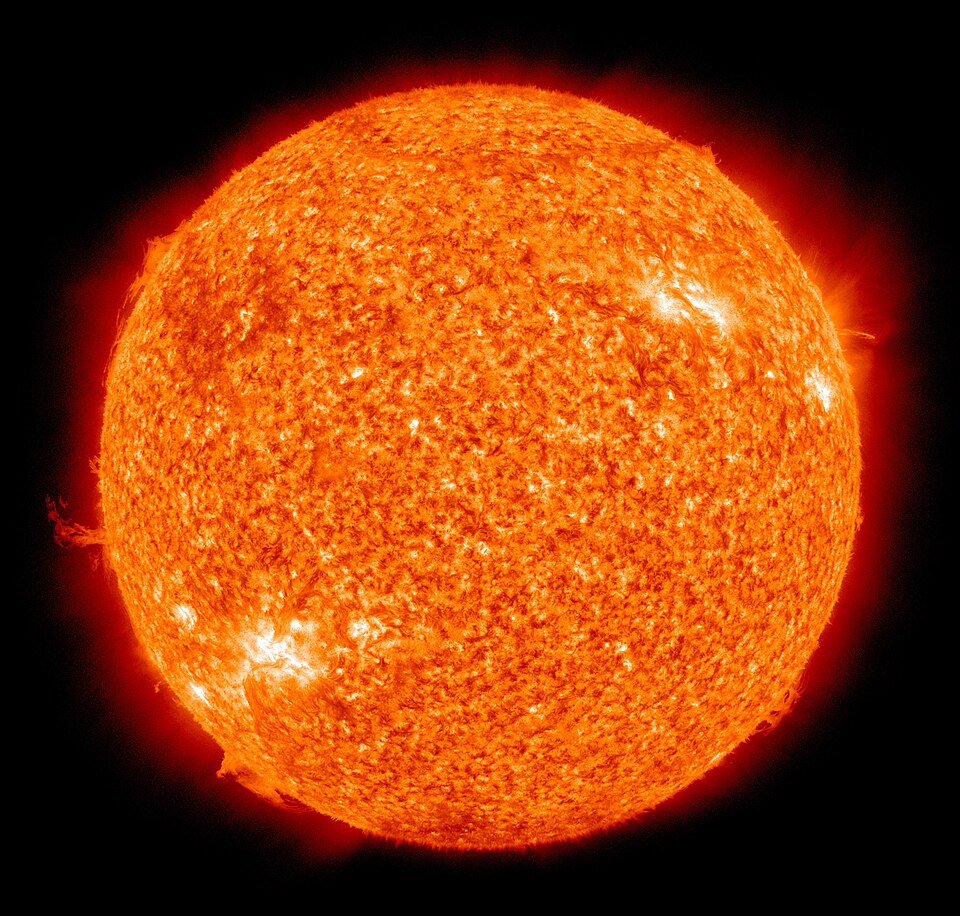
Correct: C, Sun. Begin by putting the first pair into a full sentence, because a vague relationship is what makes analogies feel arbitrary. A battery is the source of the energy that a motorcycle runs on: it turns the starter, fires the ignition and powers the lights and horn, and without it the machine will not come alive. So the relationship is 'X is powered by its source of energy Y'. Substitute the second pair and ask what supplies the energy that life runs on. The answer is the Sun. Green plants, algae and cyanobacteria capture solar radiation and convert that free energy into chemical potential energy stored in carbohydrates; every heterotroph, including every animal, then draws on that store through the food chain, and even the fossil fuels that power human civilisation are ancient sunlight. Nothing else in the option list plays that role. The Earth is where life is located and what supplies its water, minerals and atmosphere, but a place is not a power source, and 'motorcycle is related to garage' is not the relationship the first pair sets up. The Moon influences tides and stabilises the planet's axial tilt, but it contributes no significant energy to the biosphere: the light it gives is reflected sunlight. That leaves 'Star', which is where honesty is owed: the Sun is a star, so option (d) is not false in a loose sense. It fails the analogy on a different ground. 'Battery' names a specific object, not the category 'power source', so the second pair must also name the specific body (the Sun) and not the class it belongs to. Matching the level of specificity is the standard rule for resolving exactly this kind of near-tie, and it gives (c).
Why the others are wrong
- (a)Earth: The most common answer given at speed, because 'life on Earth' is a phrase everyone carries around. But the relationship being tested is source of energy, not place of residence. Earth supplies the habitat, the water and the mineral nutrients; it does not supply the energy, which arrives from outside as solar radiation.
- (b)Moon: The Moon governs the tides and helps stabilise the Earth's axial tilt, so it is not irrelevant to the conditions for life, but it generates no energy of its own, and moonlight is only reflected sunlight. On the energy relationship the first pair establishes, it contributes essentially nothing.
- (d)Star: The near-tie, and it deserves a straight answer: the Sun is a star, so this option is not factually wrong. It is wrong as an analogy, because it changes the level of description. The first pair names a specific component, a battery, rather than the category 'power source', so the second pair must name the specific body rather than its class.
Concept
A verbal analogy asks you to identify a relationship in one pair and apply it unchanged to another. The relationships that recur in this examination are a small, learnable set: object and its power source, worker and tool, part and whole, cause and effect, product and raw material, instrument and the quantity it measures, animal and its young, and word and its synonym or antonym. The single technique that makes them reliable is to convert the first pair into a complete sentence with a verb: 'a battery supplies the energy that runs a motorcycle', and then read the same sentence with the second pair's terms substituted, rejecting every option that does not fit the verb. The science behind this particular item is the trophic structure of the biosphere. Photosynthesis converts free radiant energy into stored chemical potential energy, and every subsequent link in a food chain lives on that stored energy, with only about a tenth of it passing from one trophic level to the next. The Sun is therefore not merely one influence on life; it is the input at the base of nearly every food chain on the planet.
Two habits decide this question. First, name the relationship before you look at the options at all: if you read the four choices first, 'Earth' will attach itself to 'Life' by sheer familiarity and you will be arguing yourself out of it rather than into the right answer. Second, when two options both satisfy the relationship, decide by specificity. 'Star' and 'Sun' both name something that could power life; only one of them sits at the same level of description as 'battery'. That tie-break is what makes the item medium rather than easy, and it is fair to say the question would have been cleaner without 'Star' in the list. There is also a genuine scientific caveat that a well-read candidate might raise and should not be marked down for thinking about: not quite all life runs on sunlight. The communities around deep-sea hydrothermal vents are built on chemosynthesis, where bacteria oxidise hydrogen sulphide rather than capture light. That is an exception at the margins of the biosphere and does not disturb the analogy, but knowing it is the difference between memorising a slogan and understanding it.
Key facts
- A motorcycle battery is typically a 12-volt lead-acid unit that drives the starter motor and powers the ignition, lights and horn; the alternator recharges it while the engine runs
- Photosynthesis converts free radiant energy from sunlight into chemical potential energy stored in carbohydrates: the process that puts solar energy into the biosphere
- Only a small fraction of the sunlight falling on green plants, on the order of one per cent, is fixed as biomass, and roughly ten per cent of the energy at one trophic level passes to the next
- The Sun is a main-sequence star about 150 million kilometres away; its light takes about eight minutes and twenty seconds to reach the Earth, and the solar constant at the top of the atmosphere is roughly 1,361 watts per square metre
- The exception to solar dependence is chemosynthesis: bacteria at deep-sea hydrothermal vents draw energy from oxidising chemicals such as hydrogen sulphide rather than from light
Study next
Common traps
- Choosing the option that shares the most familiar phrase with the stem: 'life on Earth': instead of the one that satisfies the stated relationship
- Ignoring the level of specificity when two options both fit; a specific first term demands a specific second term
- Deciding the relationship after reading the options, which lets the options define the relationship rather than the other way round
BPSC embeds two or three pure reasoning items in the general studies paper, and its analogies are usually one-line 'A is related to B in the same way as C is related to' constructions with one near-miss option planted to punish loose reading. UPSC does not set analogies in General Studies Paper I at all; the same skill belongs to the qualifying CSAT paper, while the science behind this particular item (energy flow and photosynthesis) is examined directly in Paper I.
Related PYQs
Which one of the following is the process involved in photosynthesis?
- (a) Potential energy is released to form free energy
- (b) Free energy is converted into potential energy and stored
- (c) Food is oxidized to release carbon dioxide and water
- (d) Oxygen is taken in, and carbon dioxide and water vapour are given out
Answer(b) Free energy is converted into potential energy and stored
The mechanism that makes the analogy true. Sunlight is free energy; photosynthesis converts it into the stored chemical energy every organism afterwards lives on, which is precisely the sense in which the Sun is life's battery.
Consider the following kinds of organisms: 1. Copepods 2. Cyanobacteria 3. Diatoms 4. Foraminifera Which of the above are primary producers in the food chains of oceans?
- (a) 1 and 2
- (b) 2 and 3
- (c) 3 and 4
- (d) 1 and 4
Answer(b) 2 and 3
Where solar energy actually enters the living world. Only the photosynthetic organisms (cyanobacteria and diatoms in the ocean) are primary producers; everything above them in the chain is spending energy the Sun supplied.
Mukesh said to his friend, “Rita is the mother of my son’s wife’s daughter”. How is Mukesh related to Rita?
- (a) Father
- (b) Son-in-law
- (c) Son
- (d) Father-in-law
Answer(d) Father-in-law
The same slot one edition later: a relationship puzzle solved by writing the relationship out in full rather than guessing at it. In both cases the discipline is to state the link as a sentence before touching the options.
Practice
- practice, not a real PYQ
Thermometer is related to temperature in the same way as barometer is related to
- (a)Humidity
- (b)Atmospheric pressure
- (c)Wind speed
- (d)Rainfall
Answer(b) Atmospheric pressure: the relationship is instrument to the quantity it measures; humidity is measured by a hygrometer, wind speed by an anemometer and rainfall by a rain gauge. - practice, not a real PYQ
In a grassland food chain, approximately what proportion of the energy at one trophic level is transferred to the next ?
- (a)1 per cent
- (b)10 per cent
- (c)50 per cent
- (d)90 per cent
Answer(b) 10 per cent: the ten per cent law of energy transfer, which is why food chains rarely extend beyond four or five links.