
Which of the following is a cause of rural to urban migration in India ?
- (a)High labour demand in cities
- (b)Unbalanced rural-urban development
- (c)Few jobs in rural areas
- (d)All the above
Answer
Why
Correct: D, All the above. An inclusive-set option is right only when every item listed survives on its own, so the work is to hunt for one false item, and here there is none. High labour demand in cities is the textbook pull factor: construction, small manufacturing, transport and personal services in towns absorb unskilled labour at wages well above the prevailing rural agricultural wage, and that wage gap sits at the centre of both Everett Lee's 1966 push–pull framework and the Lewis two-sector model of surplus labour transfer. Few jobs in rural areas is the matching push factor: Indian agriculture carries chronic disguised unemployment (extra hands on the same holding whose marginal contribution to output is effectively zero) alongside a sharply seasonal work calendar, shrinking average operational holdings and a thin rural non-farm economy in most districts. Unbalanced rural-urban development is the structural cause that manufactures the other two: when schools, hospitals, electricity, metalled roads, credit and industry cluster in a few urban nodes, the return to living in a town rises while the return to staying in a village rises far more slowly, so the gap itself keeps generating movement decade after decade. The aggregate result is visible in the Census: India's urban share rose from 27.81 per cent in 2001 to 31.16 per cent in 2011, and 2001–11 was the first decade since Independence in which the absolute increase in urban population exceeded the absolute increase in rural population. Since (a), (b) and (c) are each separately documented causes and none of them is false, the only option that is not partially wrong is (d).
Why the others are wrong
- (a)High labour demand in cities: True in itself (it is the classic pull half of the push–pull pair) but choosing it alone asserts that the other two statements are false. Rural distress moves people even in years when urban labour demand is flat, so urban demand cannot be the whole story, and a single true cause can never beat an option that already contains it.
- (b)Unbalanced rural-urban development: Also true, and arguably the parent of the other two: the town–village gap in wages, schooling, health care and infrastructure is exactly what makes moving rational. It is offered here as though it were an alternative to the push and pull factors rather than their source, so picking it alone silently denies both of them.
- (c)Few jobs in rural areas: True, and the most frequently cited push factor: disguised unemployment on family holdings, long idle stretches in the agricultural calendar, and the thinness of rural non-farm work. It tempts anyone who has learned migration purely as a distress phenomenon, but it describes only the origin end of what is by definition a two-ended process.
Concept
Migration is explained in the syllabus through the push–pull model, formalised by Everett S. Lee in 'A Theory of Migration' (1966): factors at the place of origin that push people out, factors at the destination that pull them in, intervening obstacles such as distance, cost and language, and personal factors such as age and education. Applied to India, the push is agrarian (small and fragmented holdings, disguised unemployment, seasonality, indebtedness) and the pull is urban wage work in construction, manufacturing, transport and services. The Census does not merely count migrants; it classifies each move into one of four streams (rural to rural, rural to urban, urban to urban, urban to rural) and records a reason for it (work or employment, business, education, marriage, moved after birth, moved with household). Rural-to-rural is the largest stream by sheer number because most female migration in India is on account of marriage, but it is the rural-to-urban stream that changes the urban share of the population and produces the phenomenon this question is about.
Two habits decide questions of this shape. First, an 'All the above' option is not a lazy answer to be rejected on principle: it is a claim that can be tested, and the only valid test is to look for one item that is actually false. Read (a), (b) and (c) as three independent assertions and try to break each; if all three stand, (d) follows mechanically. Second, do not treat push and pull as rival explanations competing for a single slot. Migration requires both a reason to leave and somewhere worth going, which is why any option set that offers you one of them alone is offering an incomplete cause. The one place a careful candidate could hesitate is (b), because 'unbalanced rural-urban development' sounds like a consequence of migration rather than a cause of it. It is in fact both: the regional concentration of investment, services and industry creates the differential that people then move across, and the movement in turn reinforces the concentration.
Key facts
- Census 2011: India's urban population was 37.71 crore, or 31.16 per cent of the total, against 27.81 per cent in 2001, and for the first time since Independence the absolute decadal increase in urban population exceeded the increase in rural population
- The Census sorts internal migration into four streams: rural to rural, rural to urban, urban to urban, urban to rural. Rural-to-rural is the largest by volume, driven mainly by marriage migration of women; rural-to-urban is the stream that raises the urban share
- Everett S. Lee's 'A Theory of Migration' (1966) is the standard framework, with four elements: push factors at origin, pull factors at destination, intervening obstacles, and personal factors
- Disguised unemployment: the state in which an additional worker's marginal productivity is zero: is the specific form rural under-employment takes on Indian family farms, and is the push factor most often named in economics textbooks
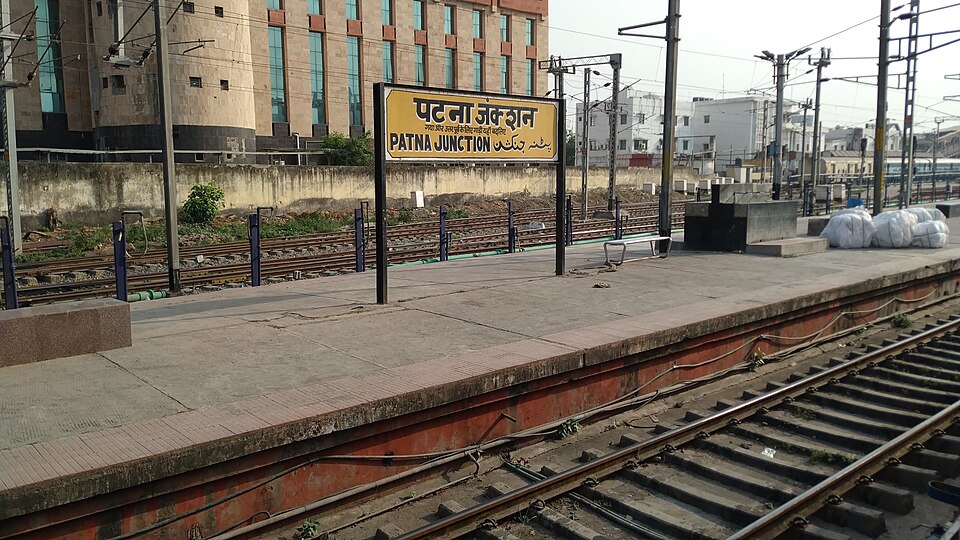
- Bihar is among India's least urbanised states, about 11.3 per cent urban in Census 2011 against the national 31.2 per cent, and is a major source region for out-migrant workers
Study next
Common traps
- Rejecting 'All the above' on instinct. On an inclusive-set stem the only legitimate ground for rejecting it is naming an item that is false
- Treating push and pull as competing explanations, when migration needs both a reason to leave and a destination worth reaching
- Confusing the largest migration stream with the largest work-driven stream: by volume rural-to-rural leads because of marriage migration, while rural-to-urban is what shifts the urban share
BPSC likes the short inclusive-set form: three plausible causes and an 'All the above' or 'More than one of the above' fourth option, which turns the item into a hunt for one false statement rather than a ranking exercise. UPSC almost never asks 'what causes migration' in the abstract; it converts the same syllabus area into data, offering statements about rural workforce shares, non-farm employment growth or worker productivity and asking how many are correct.
Related PYQs
Disguised unemployment generally means
- (a) large number of people remain unemployed
- (b) alternative employment is not available
- (c) marginal productivity of labour is zero
- (d) productivity of workers is low
Answer(c) marginal productivity of labour is zero
The push factor in option (c) of the BPSC stem, defined precisely. 'Few jobs in rural areas' in Indian conditions usually means disguised unemployment rather than open joblessness: the worker is on the farm but adds nothing to output, which is what makes leaving costless.
With reference to the Indian economy after the 1991 economic liberalization, consider the following statements: 1. Worker productivity (per worker at 2004-05 prices) increased in urban areas while it decreased in rural areas. 2. The percentage share of rural areas in the workforce steadily increased. 3. In rural areas, the growth in non-farm economy increased. 4. The growth rate in rural employment decreased. Which of the statements given above is/are correct?
- (a) 1 and 2 only
- (b) 3 and 4 only
- (c) 3 only
- (d) 1, 2 and 4 only
Answer(b) 3 and 4 only
The same rural–urban imbalance, asked as data rather than as a cause. A falling rural share of the workforce and a decelerating rural employment growth rate are precisely the statistical signature of the movement the BPSC question is asking you to explain.
Practice
- practice, not a real PYQ
Which of the following is the largest stream of internal migration in India by number of migrants, as recorded by the Census ?
- (a)Rural to rural
- (b)Rural to urban
- (c)Urban to urban
- (d)Urban to rural
Answer(a) Rural to rural: the largest stream by sheer volume, because most female migration in India is recorded under 'marriage' and takes place between villages; rural to urban is the stream that raises the urban share. - practice, not a real PYQ
As per Census 2011, approximately what percentage of India's population lived in urban areas ?
- (a)25.7 per cent
- (b)27.8 per cent
- (c)31.2 per cent
- (d)35.9 per cent
Answer(c) 31.2 per cent: 37.71 crore people, up from 27.81 per cent in 2001, which is the figure quoted in option (b).