
Which of the following bacterial disease that is called as spleenic fever ?
- (a)Typhoid
- (b)Anthrax
- (c)Cholera
- (d)None of the above
Answer
Why
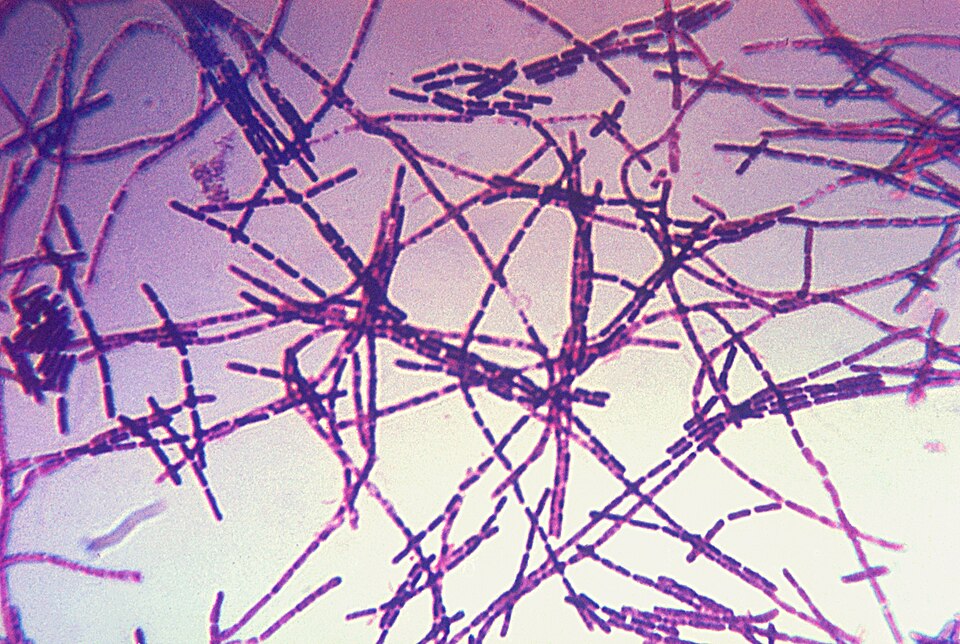
Correct: B, Anthrax. Anthrax is caused by Bacillus anthracis, a large, Gram-positive, rod-shaped, spore-forming bacterium, and it has carried the name splenic fever for well over a century: the stem's 'spleenic' is simply a misspelling of splenic. The name comes from the post-mortem picture in infected herbivores: the spleen is grossly enlarged, dark and soft, so characteristically that veterinarians used it as a diagnostic sign long before the organism was identified. The disease has three other historic names, and each names a route of infection rather than an organ. 'Woolsorter's disease' is the inhalational form, contracted by workers breathing spores from contaminated fleece and hair; 'ragpicker's disease' is the same route from hides; and 'malignant pustule' or malignant carbuncle is the cutaneous form, in which the sore develops a coal-black necrotic centre: the Greek anthrakis, meaning coal, is where the disease's own name comes from. Anthrax also occupies a unique place in the history of medicine. Robert Koch worked out the organism's full life cycle in 1876 and used it to prove for the first time that one specific microbe causes one specific disease, the demonstration behind Koch's postulates. Five years later, in 1881 at Pouilly-le-Fort, Louis Pasteur publicly vaccinated sheep against anthrax: the first public field trial of a bacterial vaccine. (His attenuated chicken-cholera vaccine had come first, in February 1880, and his notebooks show the Pouilly-le-Fort preparation itself was chemically killed rather than live-attenuated.) What makes the disease persist is the spore: B. anthracis forms spores that survive in soil for decades and infect grazing animals long after the outbreak that produced them, which is why anthrax remains a livestock disease of pastoral districts rather than a crowd disease of cities.
Why the others are wrong
- (a)Typhoid: Typhoid is a genuine near-miss and deserves a careful answer. It is caused by Salmonella enterica serovar Typhi, spreads by the faeco-oral route through contaminated water and food, and it does enlarge the spleen: splenomegaly is a recognised sign in the second week, alongside step-ladder fever and rose spots. But its established name is enteric fever, from the ulceration of Peyer's patches in the ileum, and 'splenic fever' has never been used for it.
- (c)Cholera: Cholera is caused by Vibrio cholerae, a comma-shaped Gram-negative bacterium whose toxin drives a massive secretory diarrhoea: the painless 'rice-water' stool that kills by dehydration, not by organ enlargement. Its historical associations are with water supply, from John Snow's Broad Street pump in 1854 to Robert Koch's isolation of the organism in 1883, and it has no splenic name.
- (d)None of the above: This option would only stand if none of the three named diseases were splenic fever. Anthrax is, under a name in continuous use in veterinary and medical texts, so the escape option fails. Reach for 'None of the above' only after positively rejecting every named option, never as a hedge when one of them is unfamiliar.
Concept
A great many diseases are known by an older popular name that describes a symptom, an organ or an occupation, and examiners exploit the gap between that name and the modern one. Anthrax alone has four: splenic fever from the swollen spleen at autopsy, woolsorter's disease from inhaled spores in fleece, ragpicker's disease from hides, and malignant pustule from the black skin eschar. Its clinical forms follow the route of entry. Cutaneous anthrax accounts for the overwhelming majority of natural human cases and is the mildest; inhalational anthrax is the rarest and the most lethal; gastrointestinal anthrax follows eating undercooked infected meat. Because Bacillus anthracis sporulates on exposure to air and its spores endure in soil for decades, anthrax behaves as a soil-borne zoonosis of grazing animals: cattle, sheep and goats infect themselves at pasture and humans are infected from them, not usually from each other. Those same durable spores are what made anthrax the classic agent of biological warfare, as the posted-letter attacks in the United States in 2001 showed.
The question is decided by one association, so build the association rather than trying to reason it out: splenic fever equals anthrax equals Bacillus anthracis. The trap is that typhoid also enlarges the spleen, so a candidate reasoning from symptoms rather than from names can talk himself into option (a), which is why the discriminating fact is the disease's traditional NAME, not its pathology. Enteric fever is typhoid's name, splenic fever is anthrax's. A second, faster route works if the names will not come: of the three diseases offered, only anthrax is primarily an animal disease that humans catch from animals, and 'splenic fever' entered medicine through veterinary post-mortems on cattle and sheep. Finally, treat option (d) with the discipline any 'None of the above' deserves: it is correct only when you can reject all three named options positively, and here one of them is squarely right.
Key facts
- Anthrax is caused by Bacillus anthracis, a Gram-positive, aerobic, spore-forming rod; its other historic names are woolsorter's disease, ragpicker's disease and malignant pustule
- 'Splenic fever' comes from the grossly enlarged, dark, softened spleen found at post-mortem in infected herbivores
- Robert Koch established the anthrax bacillus as the cause of the disease in 1876: the first proof that a specific microbe causes a specific disease, the basis of Koch's postulates
- Louis Pasteur's trial of an anthrax vaccine on sheep at Pouilly-le-Fort in 1881 was the first public field trial of a bacterial vaccine; his attenuated chicken-cholera vaccine had been presented in February 1880, and his notebooks show the Pouilly-le-Fort preparation was chemically killed rather than live-attenuated
- The three natural clinical forms are cutaneous (most common, with a black eschar), inhalational (most lethal) and gastrointestinal; spores persist in soil for decades, keeping the disease endemic in grazing areas
Study next
Common traps
- Choosing typhoid because it too enlarges the spleen; typhoid's established name is enteric fever, and splenic fever belongs to anthrax
- Treating 'None of the above' as a safe hedge when one option is unfamiliar: it is correct only if every named option can be positively rejected
- Confusing anthrax with anthracosis, the coal-dust lung disease of miners; both take their name from the Greek word for coal but are otherwise unrelated
BPSC's science questions are usually one-fact recall dressed as recognition (a popular disease name, an abbreviation or a classic example) and here the whole item is the single equation splenic fever equals anthrax. UPSC almost never asks the alternative name; it embeds the disease in a statement set about transmission, vectors, animal reservoirs or vaccine type, as it did when it listed anthrax among the infectious diseases of milch animals.
Related PYQs
Which one of the following diseases of milching animals are infectious? 1. Foot and Mouth disease 2. Anthrax 3. Black Quarter 4. Cowpox Select the correct answer using the codes given below:
- (a) 1, 2 and 3
- (b) 2, 3 and 4
- (c) 1 and 4
- (d) 1, 2, 3 and 4
Answer(d) 1, 2, 3 and 4
Anthrax asked in its natural setting: as a contagious disease of cattle and other milch animals. That is exactly why it acquired the name splenic fever: the diagnosis was first made on the enlarged spleen of dead livestock.
Consider the following statements: 1. Femur is the longest bone in the human body. 2. Cholera is a disease caused by bacteria. 3. ‘Athlete’s foot’ is a disease caused by virus. Which of the statements given above are correct?
- (a) 1 and 2
- (b) 2 and 3
- (c) 1 and 3
- (d) 1, 2 and 3
Answer(a) 1 and 2
The same underlying demand (match a disease to the right class of pathogen) using cholera, one of the distractors in the BPSC stem. Statement 3 fails for the classic reason: athlete's foot is fungal, not viral.
Consider the following statements : 1. Taeniasis is an intestinal infection caused by three species of tapeworm— Taenia solium, Taenia saginata and Taenia asiatica. 2. When cysts develop in the brain, the condition is referred to as neurocysticercosis (NCC). Which of the above statements is/are correct?
- (a) Only 1
- (b) Only 2
- (c) Both 1 and 2
- (d) None of the above
Answer(c) Both 1 and 2
The 69th tested the same skill on a different organism: hold the disease, its causative species and its alternative clinical name together. Taeniasis and neurocysticercosis there, anthrax and splenic fever here.
Practice
- practice, not a real PYQ
‘Woolsorter’s disease’ is another name for which of the following ?
- (a)Silicosis
- (b)Inhalational anthrax
- (c)Byssinosis
- (d)Asbestosis
Answer(b) Inhalational anthrax: contracted by breathing Bacillus anthracis spores from contaminated wool or hair; byssinosis is the cotton-dust lung disease. - practice, not a real PYQ
Which scientist ran the first public field trial of a bacterial vaccine, on sheep at Pouilly-le-Fort in 1881 ?
- (a)Robert Koch
- (b)Edward Jenner
- (c)Louis Pasteur
- (d)Alexander Fleming
Answer(c) Louis Pasteur: Koch had proved the anthrax bacillus caused the disease in 1876; Jenner's 1796 work used cowpox against smallpox, and Fleming discovered penicillin in 1928.